
Parametric design has evolved from an experimental tool in cutting-edge studios to a new language for high-end residential architecture. In contemporary mansions, this approach not only redefines aesthetics, but also introduces a more intelligent, efficient, and personalized way of conceiving the home. Architectural elites no longer seek only luxury, but precision, adaptation, and a beauty that responds directly to the context.
1. Farewell to predictable forms
The mansions of the future are leaving behind rigid volumes and conventional compositions. The parameterization of architecture allows projected geometries to emerge from data: solar incidence, topography, possible views, or even the habits of those who inhabit the home. The result is not a formal whim, but a coherent system that gives rise to fluid, enveloping, and highly efficient lines.
These homes are no longer designed "from the outside in," but rather from a logic that integrates climate behavior, privacy, and comfort. Every curve has a meaning; every opening has an energetic or spatial reason.
2. Energy optimization converted into aesthetics
Parametric design allows us to accurately simulate how light, heat, and wind will behave at every point in the house. This information translates into active envelopes: facades that regulate their porosity, lattices that change density, and roofs that adjust to maximize shade or ventilation.
In this new paradigm, luxury is not only material, but also climatic. Parametric buildings consume less energy, reduce maintenance costs, and offer continuous comfort without relying on excessive mechanical systems.
3. New materials for new shapes
Digital construction is accelerating the introduction of materials capable of adapting to complex geometries: 3D-printed concrete, high-performance composite panels, metal skins cut with millimeter precision, and fibers that allow for seamless surfaces.
The result is buildings that appear to be sculpted rather than constructed, where technique disappears behind a perception of total fluidity.
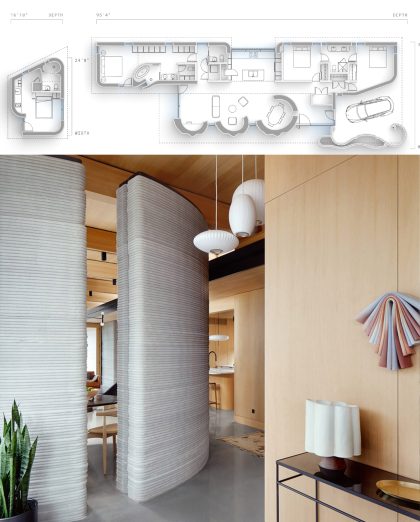
House Zero. Lake Flato. Housing designed with parametric tools dedicated to 3D concrete printing.
4. Radical personalization
Whereas luxury homes used to offer aesthetic options, they now offer customization. The design is based on an analysis of the owner's lifestyle: their routines, their workspaces, how they use light, their relationship with nature, and their level of privacy.
This data is transformed into algorithms that generate multiple versions of the house until the most balanced one is found. It is digital craftsmanship applied on a large scale: a tailor-made home.
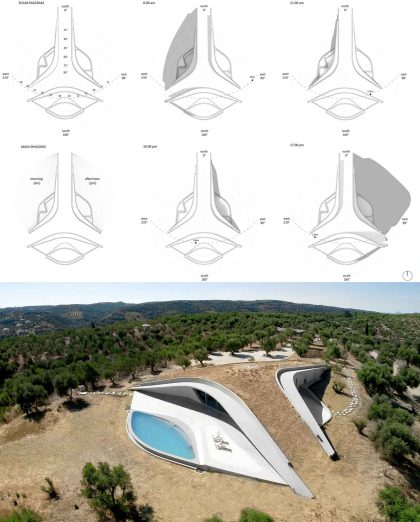
Villa Ypsilon – Greece. LASSA Architects. Parametric solar design, defining uses according to the position of the sun.
5. Immersive spatial experiences
The parameterized mansions offer dynamic journeys where architecture accompanies the experience of the day. Spaces that open and contract, courtyards that act as climatic lungs, staircases that seem to flow, and ceilings that undulate to direct views and light.
The goal is not just to inhabit, but to feel. The house becomes an emotional environment that guides the rhythm and perception of time.
6. Architecture as an ecosystem
Integration with nature becomes more sophisticated: topographic gardens designed based on drainage models, pools that follow the contours of the land, terraces calculated to promote biodiversity, and even digitally managed microclimates.
The mansion ceases to be an isolated object and becomes an ecosystem that regulates its own resources and improves its immediate environment.
Parametric design is not a technological fad, but a profound change in the way we think about high-end housing. It allows us to create mansions that are more efficient, more personalized, and more connected to their surroundings. In a world that seeks precision and sustainability, these architectures represent a natural evolution: homes where technology becomes beauty, and beauty becomes performance. The mansion of the future already exists, and its form is not a whim: it is the logical consequence of data, technology, and a new sensibility towards life.
Author
Cabana Team
Author information