
The orientation of a home is one of the most decisive factors in its design. Beyond a technical issue, the way in which the house opens up to the sun, wind, and landscape defines its comfort, energy efficiency, and the way in which it is lived in. Proper orientation can transform an ordinary space into a warm, bright, and healthy home, while the wrong choice can lead to excessive heat, lack of natural light, or high energy consumption.
1. The sun as a starting point
Understanding the sun's path is essential when deciding how to orient a home. In the northern hemisphere, the south receives the most sunlight throughout the day, making it the main focus of the design. Orienting the most frequently used rooms, such as the living room or kitchen, towards the south allows you to take advantage of natural light throughout the day and reduce the use of heating in winter. On the other hand, north-facing facades are colder and receive less direct sunlight, so it is best to use them for secondary spaces or service areas.
In addition to the importance of the north-south axis, it is also essential to consider the intended uses for the east and west. The east, with its soft morning light, is ideal for bedrooms, as it promotes a natural awakening with the sunrise. The west, on the other hand, receives the most intense light in the afternoon, which can be pleasant in winter but excessive in summer if the windows are not adequately protected.
Designing sun protection such as overhangs, blinds, or strategic vegetation helps balance heat gain and maintain a comfortable environment year-round.
2. Energy orientation and efficiency
Good orientation not only influences the thermal and light sensation, but also energy consumption. Bioclimatic architecture, which is based on improving the thermal performance of a building using natural resources (wind, sun, or shade), emerges as a solution for saving energy consumption through design itself. The clearest practice and strategy is to take advantage of solar radiation in winter and protect against it in summer, thereby reducing the need for artificial heating and air conditioning.
Well-oriented homes can save between 30% and 70% of energy compared to poorly positioned ones. In addition, the correct layout of openings, walls, and roofs, together with the right choice of materials and systems, can complement the orientation: materials with thermal inertia, solar control glass, or cross-ventilation systems help stabilize the interior temperature and improve comfort while reducing energy consumption.
3. Wind, landscape, and environment
The sun is not the only factor that determines the ideal orientation. The direction of prevailing winds, views, and the immediate environment also play a decisive role in the design of a home. In warm areas, taking advantage of natural breezes can help cool the home passively. In contrast, in cold or windy areas, it is advisable to protect the most exposed facades and reinforce insulation.
The built environment also has an influence: nearby buildings, trees, or mountains can cast shadows or block solar radiation. Therefore, the orientation study must always be carried out in conjunction with an analysis of the terrain, taking into account its topography, vegetation, and urban or natural environment.
4. Adapt guidance to each way of life
There is no single perfect orientation, and each project requires its own nuances. In Mediterranean climates, the balance between light and sun protection is key; in cold areas, the aim is to capture as much radiation as possible; and in very hot regions, shade and cross ventilation are prioritized.
In addition, the orientation must be in line with the lifestyle of those who will live in the house. For example, a vacation home is not the same as a permanent residence due to its use in different seasons, the number of hours spent in the house and in the different rooms, and other conditions that determine different requirements.
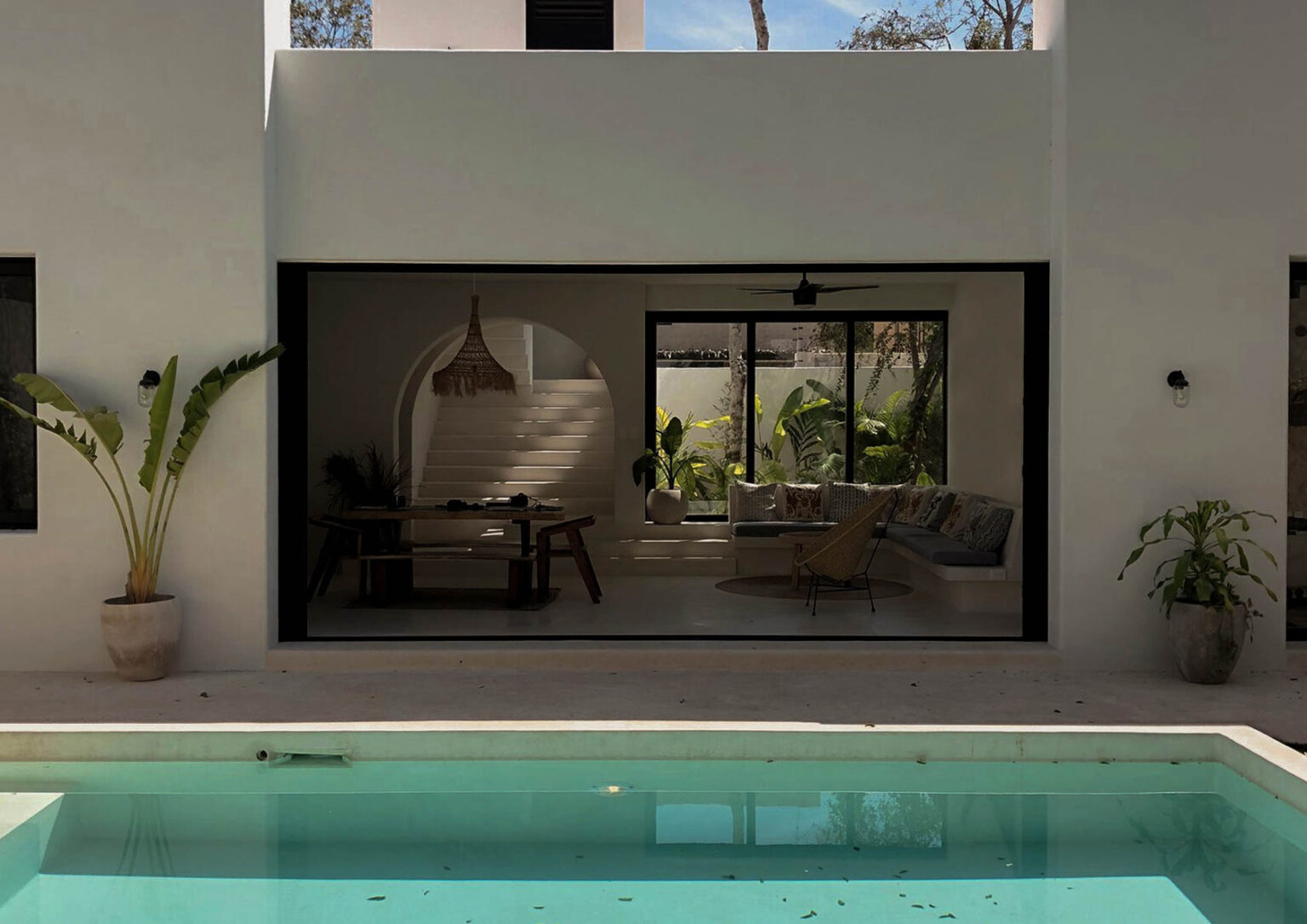
Can Ros – Ibiza, Spain.
The best orientation is not chosen at random, it is designed. It is analyzed, adapted, and integrated into the architectural project as a whole. A well-oriented home takes advantage of nature, generates well-being, and becomes more sustainable over time.
At Cabana, we understand orientation as the first architectural gesture: the point where technique meets lifestyle. We study each location so that the home interacts with the sun, the landscape, and the people, creating bright, efficient, and lively spaces that adapt to each person's use and lifestyle.
Author
Cabana Team
Author information