How can cultural values be reinterpreted without falling into parody?
Can Ros
Customer
Location
Category
Photograph
Video
Furniture
Private
Ibiza, Spain
Residential
David Zarzoso
Workshops
Pedrali, Sancal & Contain
Can Ros: Project report
How can architecture evoke and reflect cultural and geographical values without resorting to caricature?
Faced with forces as powerful as those that define Ibiza, the challenge lies in perceiving its essential virtues and, without resorting to clichés or literal interpretations, translating them into the architectural project.
Ibiza is more than just a place. Can Ros offers the opportunity to express its natural and organic nuances, free from prejudice. It invites you to enjoy an authentic experience—a rejection of pastiche.
– Ibiza, Spain
SEMPITERNUS "semper" always and "ternus" duration.
PROJECTION OF THE PAST
Traditional Ibizan architecture has remained virtually unchanged in recent years. This continuity is a reflection of the island's historically self-sufficient culture, based on local resources and ancestral knowledge passed down from generation to generation, which have defined the function of each element and its integration into the landscape.
From an architectural point of view, traditional Ibizan houses are characterized by thick stone walls with high insulation capacity, plastered on the outside, rectangular rooms, and horizontal ceilings supported by exposed wooden beams. This sober and essential Mediterranean architecture is developed by adding cubic modules that expand freely, resulting in functional homes with the capacity to grow over time.
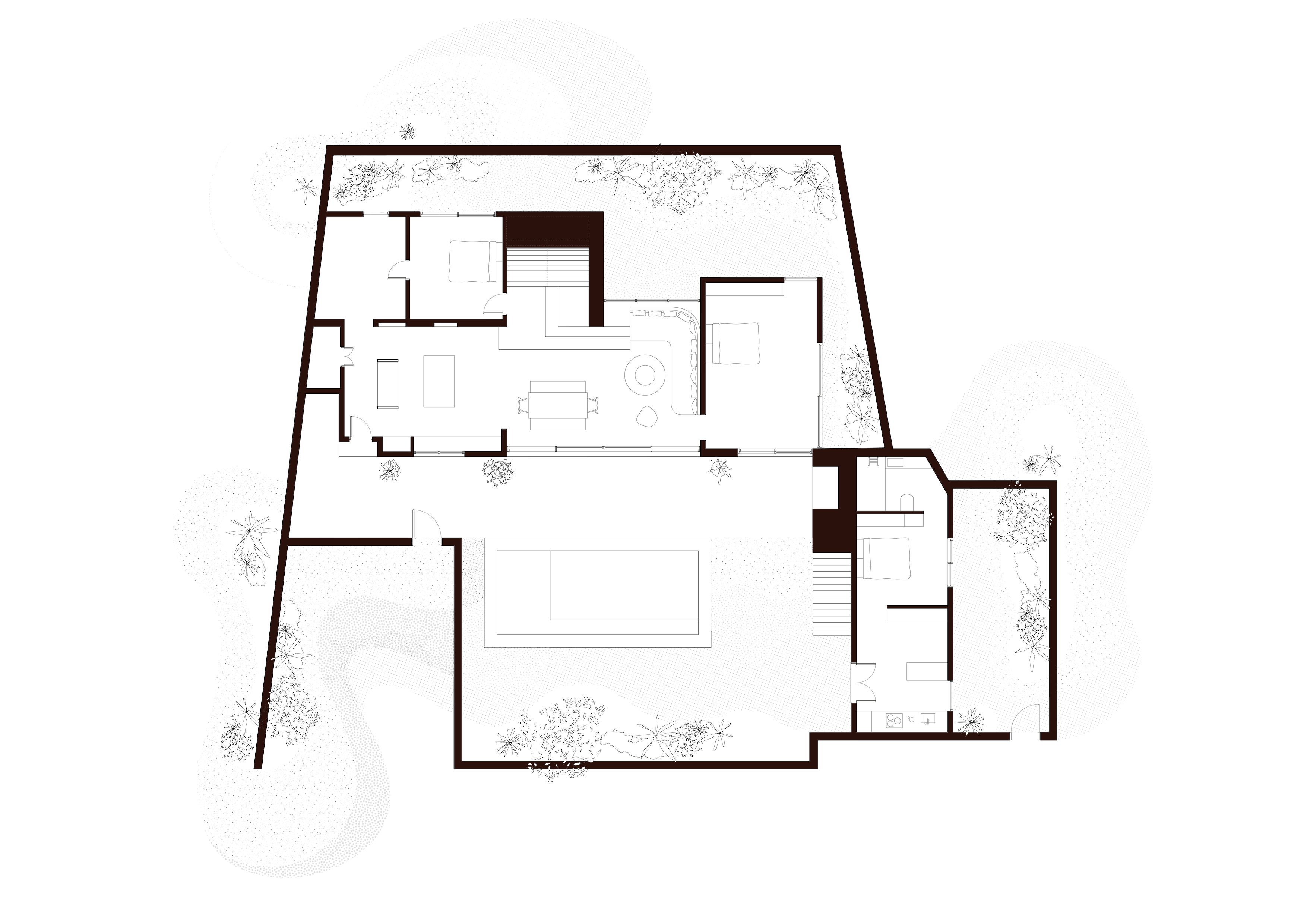
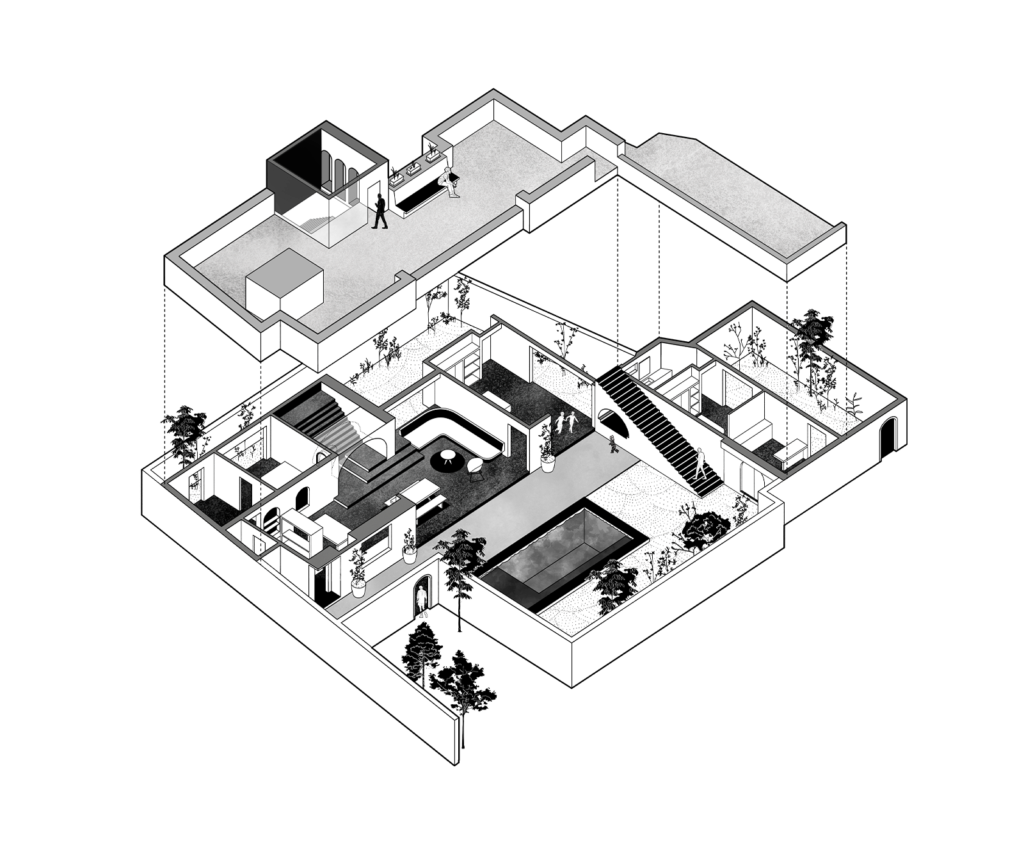
At Can Ros, these traditional features are incorporated and reinterpreted in a project with its own identity. The design plays with juxtaposed volumes on the plot, synthesized into two large rectangular pieces that separate the main house from the guest area. These volumes are arranged orthogonally, facing south to make the most of the abundant natural light, illuminating each interior space in a functional way.
Sempiternus
Building on tradition to innovate
At Can Ros, traditional elements of Ibizan architecture are integrated into a project focused on its own identity. The composition is based on a set of volumes juxtaposed on the plot, summarized in two large rectangular bodies that differentiate the main house from the guest area.
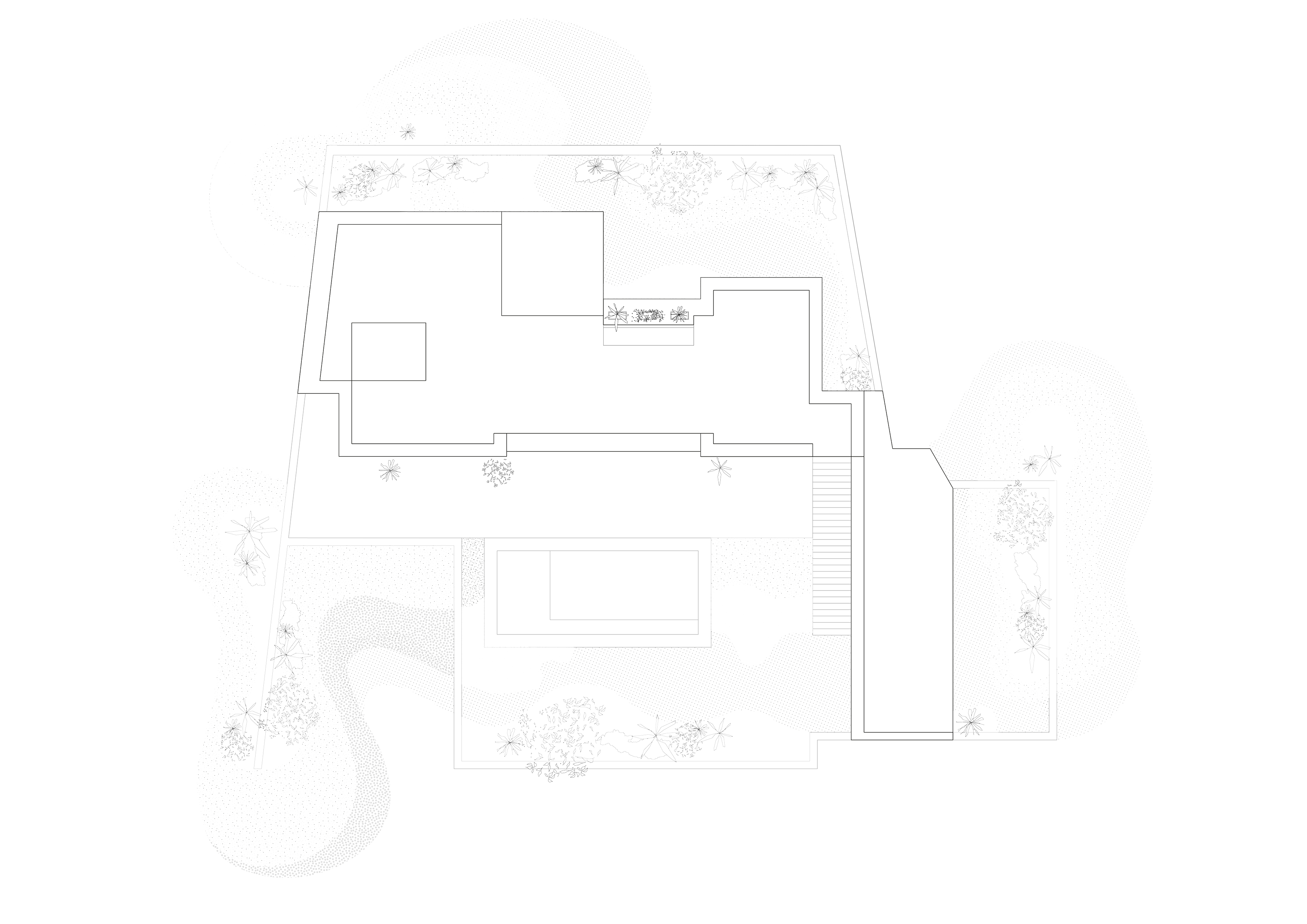
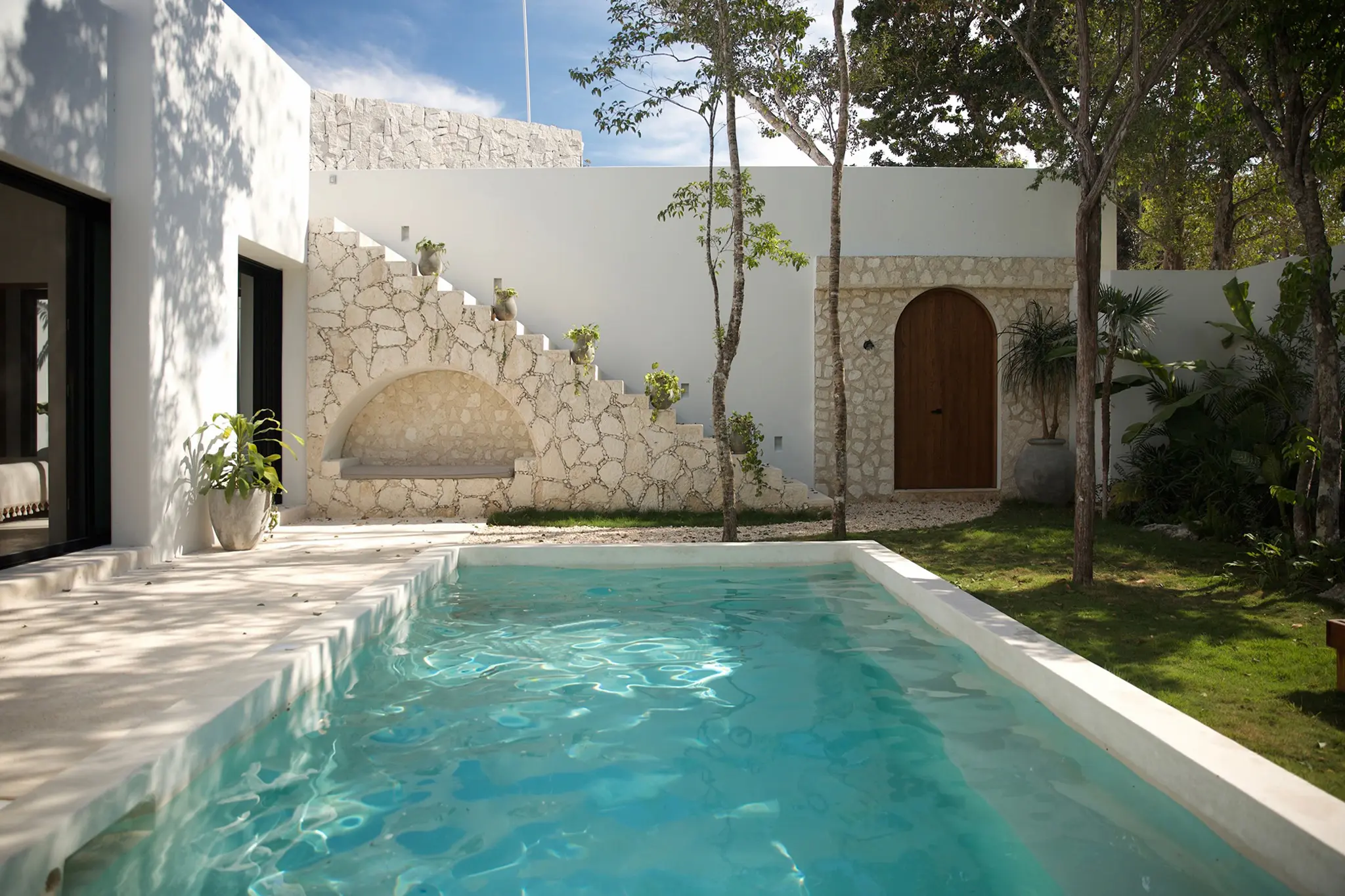
The design highlights the essential role of courtyards as spaces for connection and circulation, adapting organically to the project concept. The built perimeter interrupts the view of the outside horizon, creating a small "oasis": the central courtyard. This strategy makes the house invisible from the outside, turning it inward and highlighting the three courtyards that structure the space.
Time as functionality
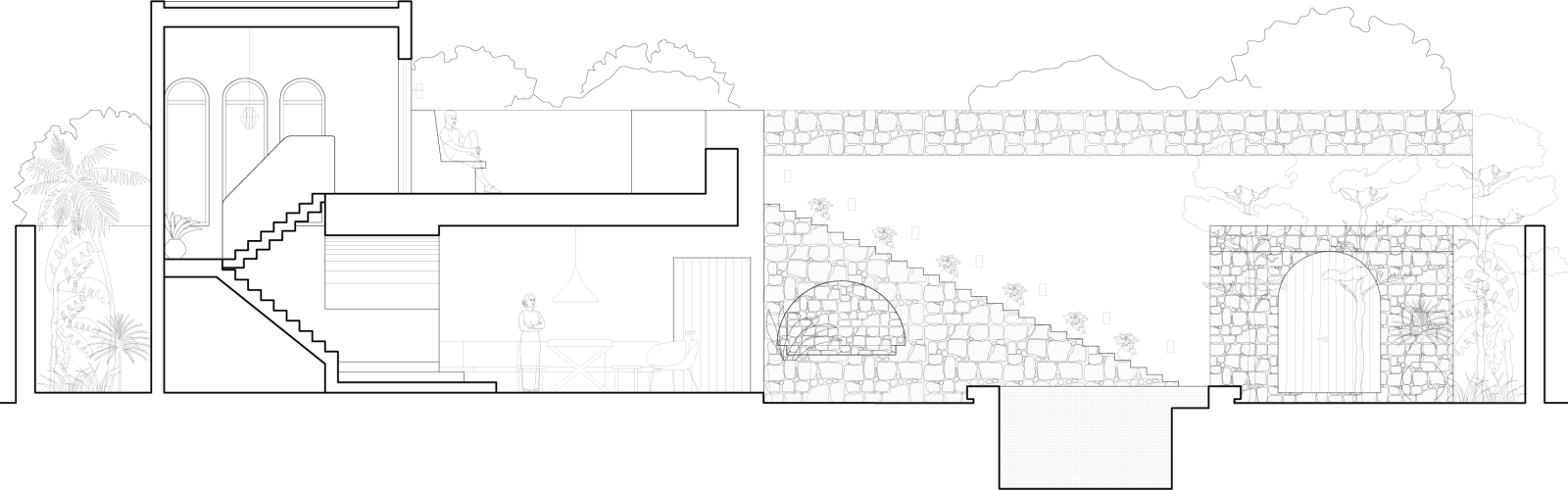
The house has a serene, stereotomic design, in which the main staircase acts as a key element of spatial organization. The project grows out of a central core to which different spaces are added according to the needs of the inhabitants and functional requirements. The outdoor spaces that emerge between these volumes make time a fundamental element of reflection within the project.
Sempiternus 'Semper' always and 'Ternus' duration
It allows us to recognize something that has a beginning but no end.
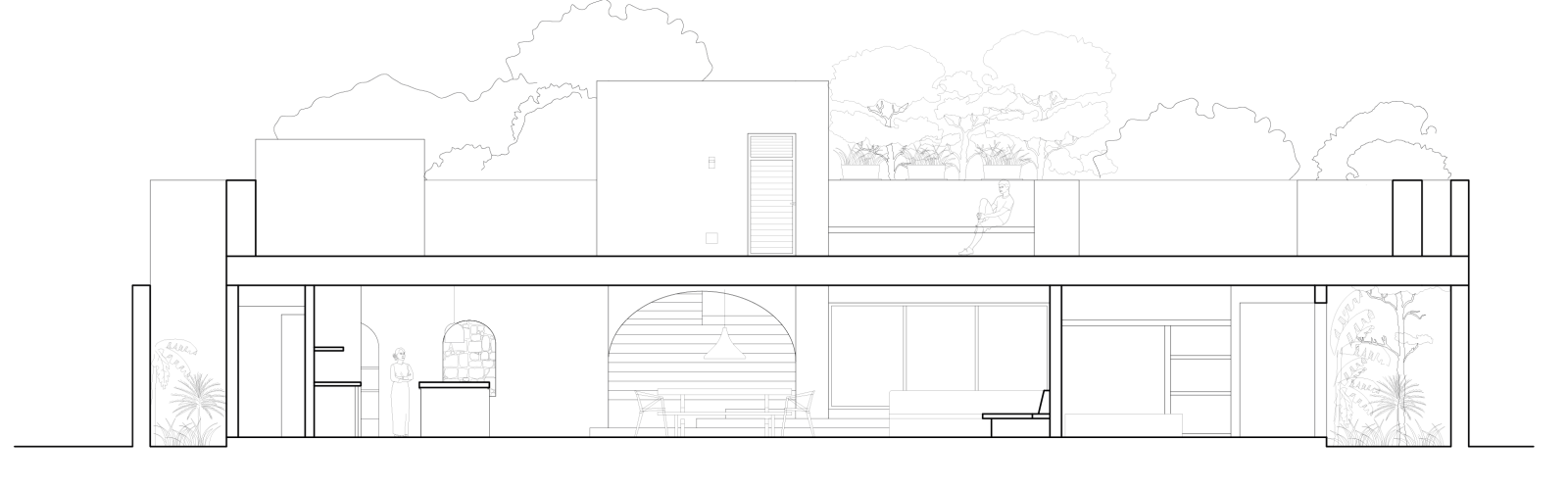
This notion of temporality influences each area of the house differently, interacting with the materials and spatial qualities. The bedrooms, as more intimate spaces, are accompanied by smaller patios, in contrast to the central area, conceived as a large living space for gathering that encourages connection and brings life and time to Can Ros.
Housing can be understood as an intermediary between the exterior and the interior: an envelope that protects the living space and regulates the relationship between its inhabitants and the environment.
The house features timeless, serene, and stereotomic architecture, with the main staircase serving as one of its key elements in the organization of the domestic space.
When designed from a site-specific approach, architecture consciously opens and closes itself to its surroundings to enable the desired living experience.
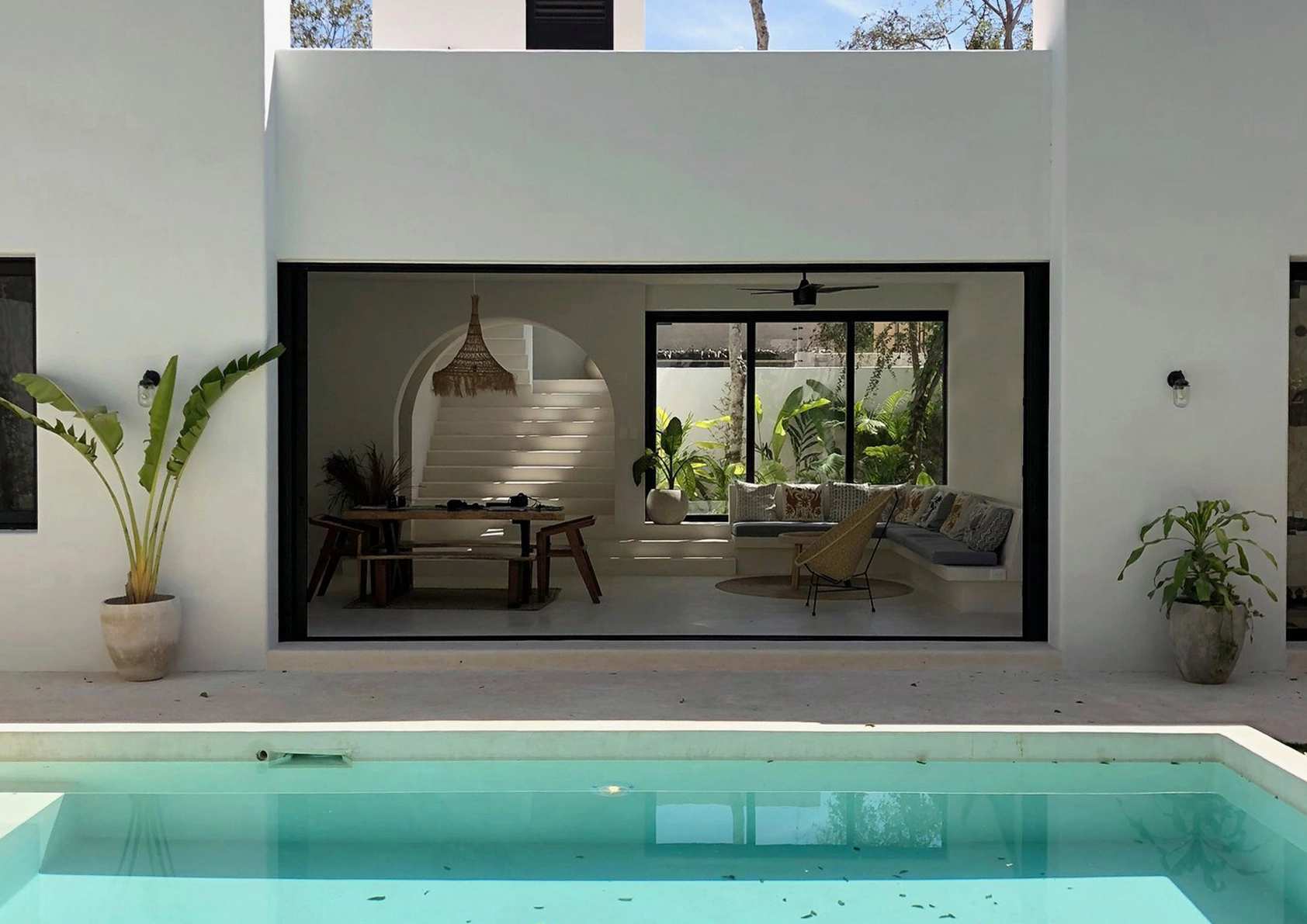
From the outside, the house conceals and protects the diversity of activities it houses, creating a sense of mystery and inviting discovery. At the same time, it expresses the beauty of simplicity that runs throughout the project.
A large floor-to-ceiling window on the south facade frames the local landscape from the double-height living space and from the upper floor.
The house features a timeless, serene, and stereotomic design, evident both in its interiors and its exterior appearance.
"New needs demanded new materials. This implied a new way of life and a new way of living." – Josep Lluis Sert –
El tiempo habita en cada espacio, transformando la tradición en un eterno presente
Time inhabits every space, transforming tradition into an eternal present