
How the environment transforms architecture
Marcel House
Customer
Location
Category
Photograph
Video
Furniture
Private
Residential
David Zarzoso
Marcel House:
Project information
The term "Costa Brava" was first coined by journalist Ferran Agulló in 1908, who described it as: "brave, smiling, fantastic and sweet, shaped by the waves over time like a high relief, embroidered with soft kisses of calm with the patience of a nun for whom hours, days and years have no meaning." With this expression, he sought to capture the rugged and dramatic landscape that defines much of the Girona coastline. With its rocky shores and intense sea, the beauty of this territory has captivated poets and writers throughout history.
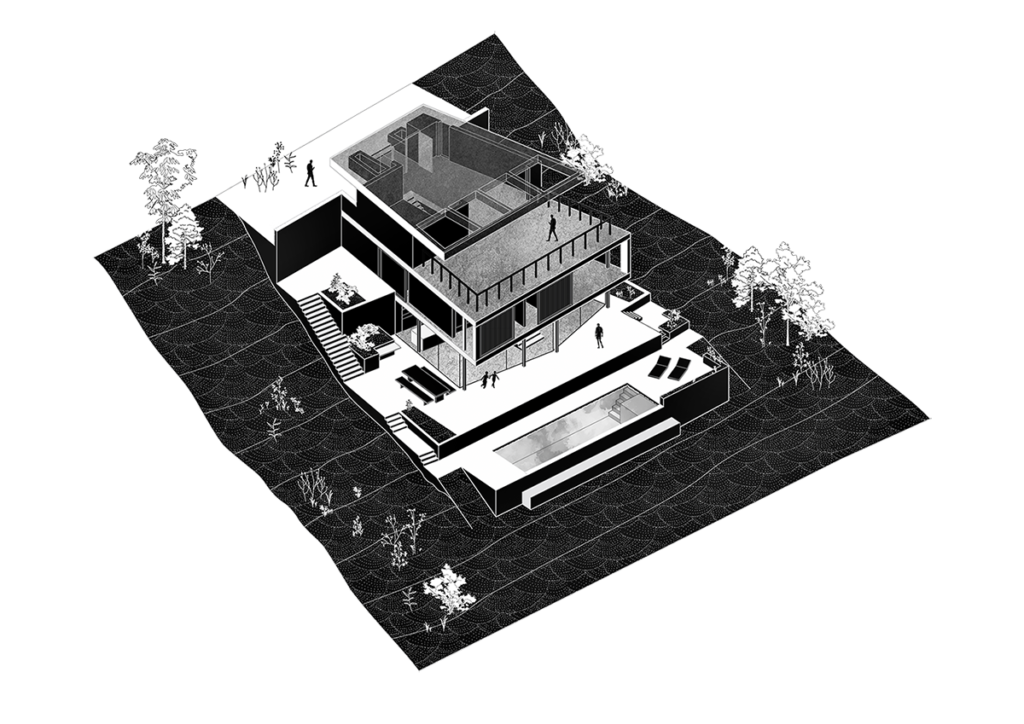
– Palafrugell, Lower Empordà.
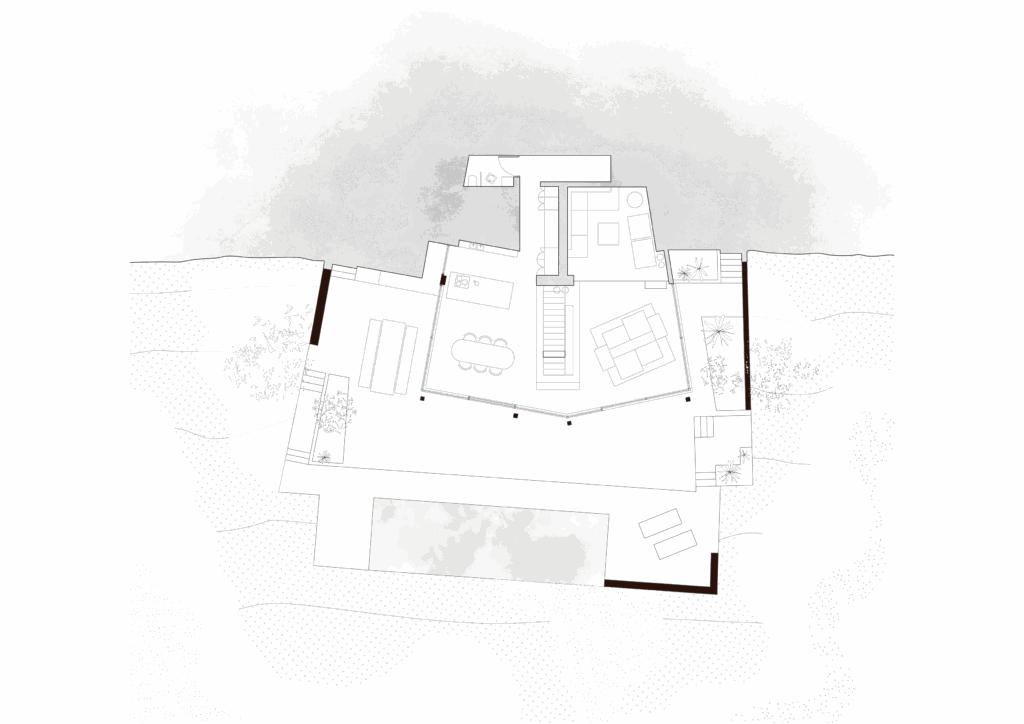
That is why the landscape becomes a key element of architecture: it embodies a fascinating duality. The hardness of the stone, firm and immobile, contrasts with the softness of the sea, which tirelessly seeks to leave its mark by continuously shaping the environment. This constant transformation is what makes the landscape dynamic and ever-changing.
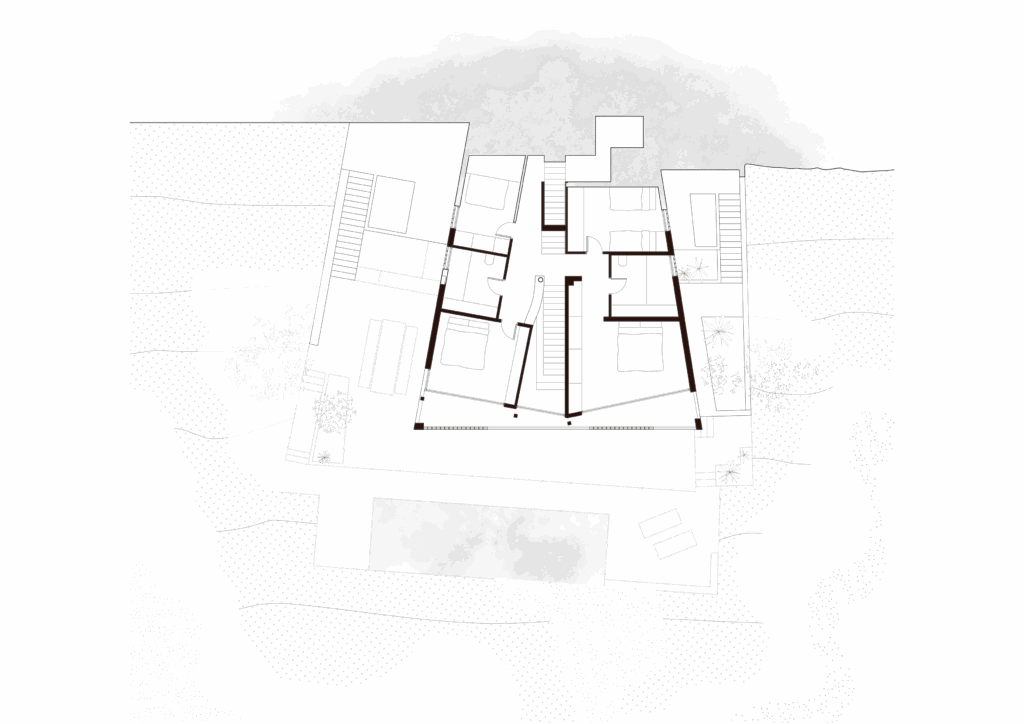
The concrete platforms follow the natural topography, extending the rocky contours of the hill and defining the profile of the house. Although at first glance they appear to be heavy elements anchored to the ground, they transform into floating planes, seemingly infinite sheets that dissolve into the sea and the horizon. Wood penetrates the house, reinforcing this connection, as if the landscape itself were entering and embracing the architecture as part of its surroundings.
Marcel House is an adaptive and harmonious architecture that connects the interior with the exterior, humans with nature.
Fusing architecture with its landscape
Approaching architecture from a design perspective
Toyo Ito said, "Architecture should blend into its surroundings, not stand out from them." Applied to housing design, this idea allows for the creation of coherent architecture that is conscious of its context and capable of learning from it. In Marcel House, this principle is present throughout the project and the experience it offers. Accessing the house becomes a journey of discovery, starting from a more contained central core, where the private spaces are concentrated, and moving towards open areas where the architecture gradually blends into the landscape.
Landscape as architecture
Marcel House is an adaptive and harmonious piece of architecture that connects the interior with the exterior, humans with nature. Located on a cliff, it is developed on different levels that interact with the language of architecture and the surrounding landscape.
Each element plays its role with precision, as in a theatrical production. The concrete platforms follow the topographical lines as an extension of the stone of the hill, defining the profile of the house. At first glance, they appear robust and heavy, but they transform into floating planes, infinite elements that merge with the sea and the horizon. Wood accompanies the architecture, as if the landscape could enter and be accepted as another element of the environment. Finally, glass blurs the separation between both worlds.
Landscape as art
We are talking about a complementary relationship between architecture and landscape, which enhance each other, with Marcel House acting as a stage and its natural "backdrops." From the interior, there are constant visual connections: each platform, at different levels, relates to the terrain, the trees, and finally, the horizon, the sky, and the sea.
A similar effect is produced from the interior. Structural elements are removed from the front and concentrated at the rear, where they are cleverly used to create framed views, as if they were photographs of the landscape. As you walk through the house, these frames give you a glimpse of what lies outside.
A terrace designed where the materials naturally integrate the different elements.
The house and the landscape merge, while the pool seems to extend towards the sea, reinforcing the idea of architecture as an extension of nature.
An open living space where the architecture frames the sea. Large glass panels dissolve boundaries, allowing light and landscape to penetrate the interior and create an ever-changing connection with nature.
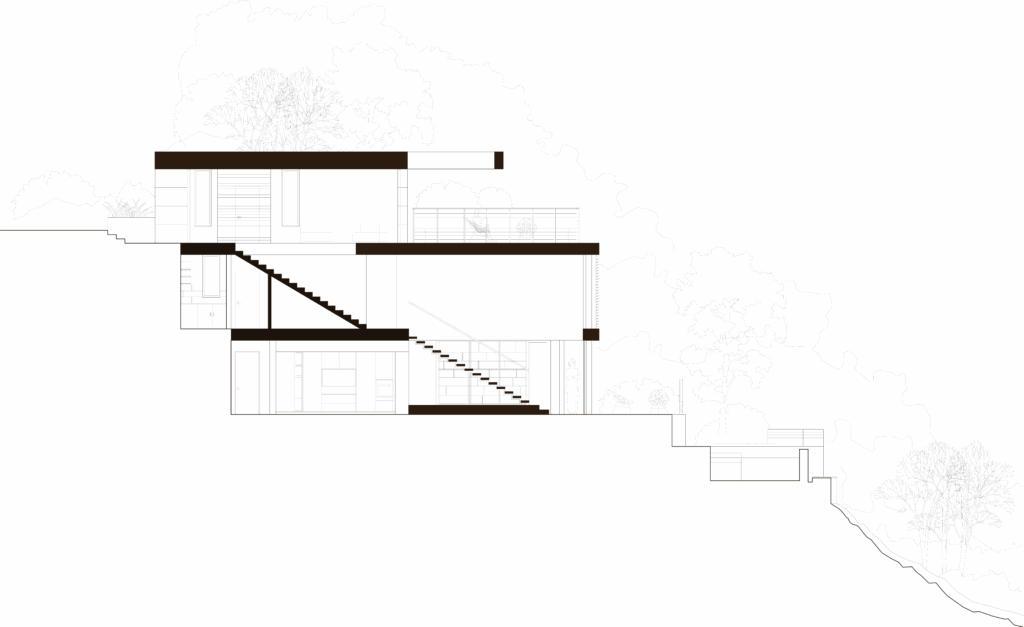
The interior is free of structural elements that obstruct the front view. The structure is concentrated at the rear to create framed views—like photographs—of the landscape. As you walk through the house, these frames constantly anticipate the exterior.
Donde la arquitectura dialoga sin fisuras con la naturaleza
Where architecture becomes a seamless dialogue with nature