
Choosing the right plot of land is one of the first and most important steps when building a home. It is not just a matter of finding a beautiful or affordable space, but of understanding how each characteristic of the location will affect daily life and architectural design. A well-chosen plot can enhance light, ventilation, views, and the relationship with the surroundings, while a poorly chosen one can limit the project from the outset and generate additional costs.
1. The location
One of the initial aspects to consider is location. Choosing between a city, a town, or a rural setting determines not only lifestyle and transportation or service opportunities, but also the relationship between the home and its surroundings. Urban plots tend to offer faster access and comprehensive services, but they are usually more expensive and have space limitations. On the other hand, land in rural or peri-urban settings offers greater design freedom, open views, and contact with nature, although it may lack certain services and infrastructure.
2. Infrastructure and accessibility
The available infrastructure is another decisive factor. Adequate road access, water supply, electricity, telecommunications, and sanitation are some of the essential aspects for the project to be viable. Land without adequate connections can generate significant hidden costs for its adaptation. Proximity to services such as schools, health centers, and public transportation also influences the comfort of daily life and the value of the investment.
3. Orientation and climate
The orientation of the land is essential for comfort and energy efficiency. The incidence of sunlight and the direction of prevailing winds affect indoor temperature, natural lighting, and ventilation. A well-oriented plot maximizes daylight, reduces energy consumption, and creates pleasant and healthy indoor spaces.
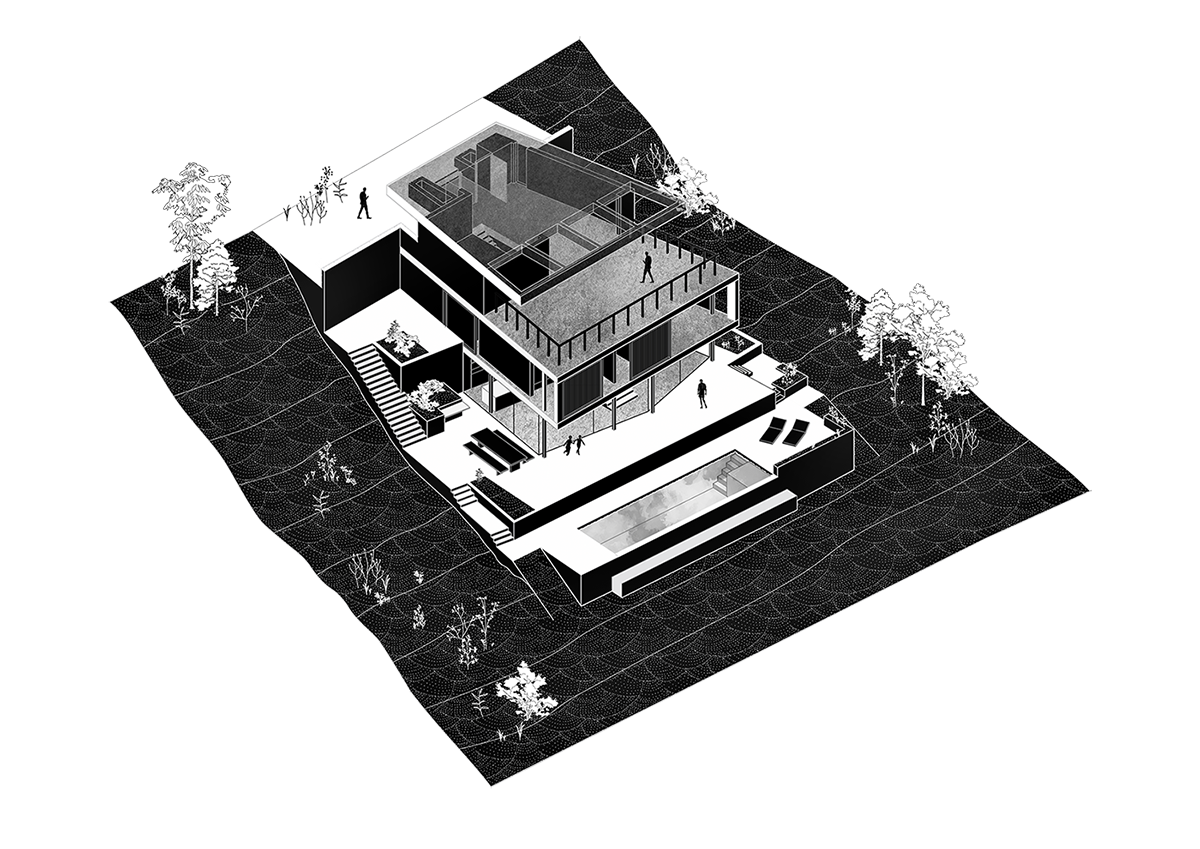
Marcel House – Palafrugell, Girona. Axonometric projection
4. Topography and soil composition
The topography and soil composition are equally decisive factors. Flat land facilitates construction and reduces costs, while uneven terrain offers interesting architectural opportunities, such as terraces, basements, or homes that blend into the landscape. The composition of the soil, determined by the presence of rocks, roots, moisture, or instability, affects the foundation, the durability of the home, and the construction budget. Therefore, it is advisable to carry out geotechnical studies before purchasing the land, and necessary before building to avoid surprises in the execution and initial budget of the home.
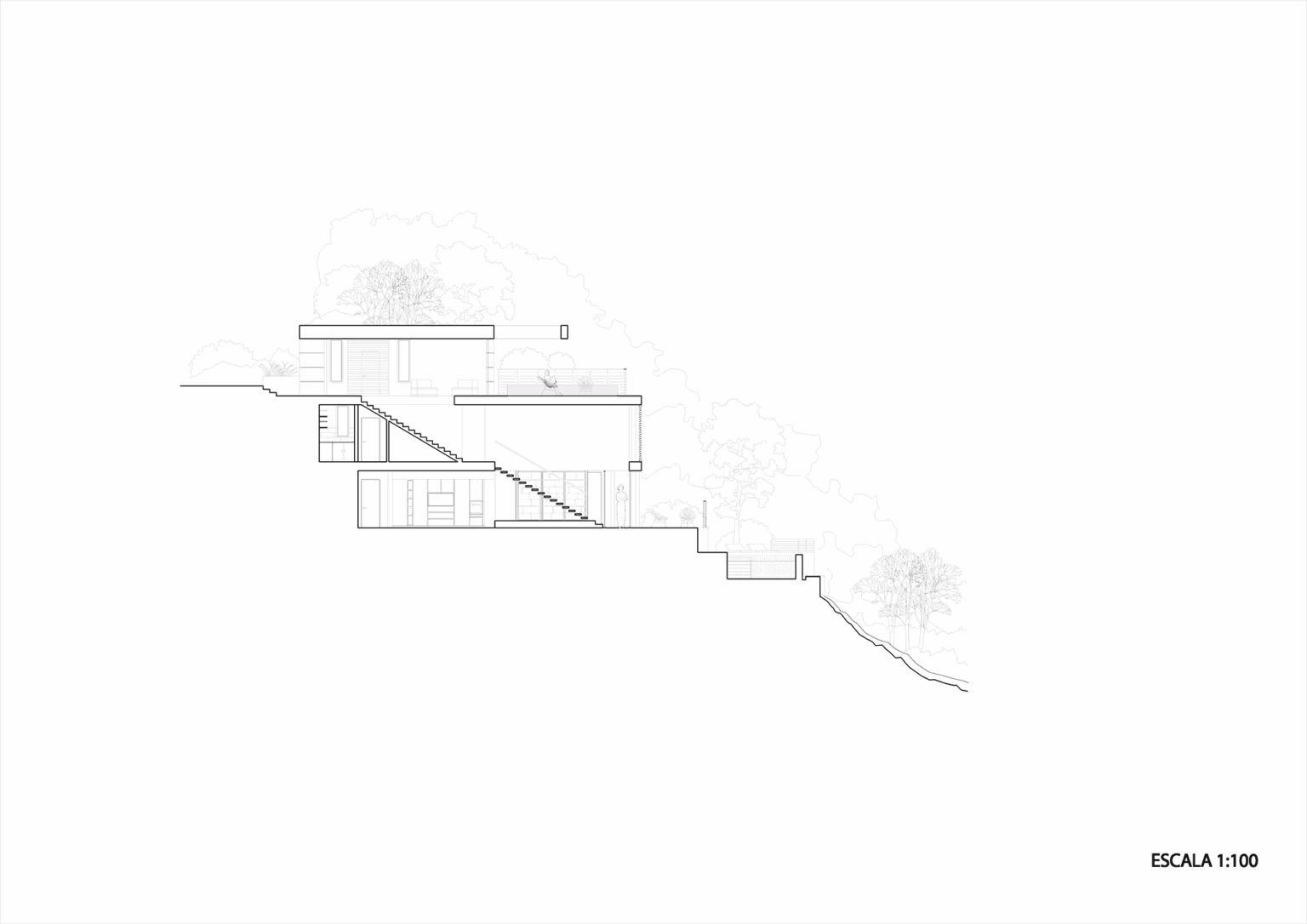
Marcel House – Palafrugell, Girona. Section
5. Value and price of the land
The value and price of the land must also be assessed using technical and investment criteria. Beyond the initial cost, the relationship between location, services, topography, and architectural potential must be considered. More expensive land can easily compensate for ease of construction, views, orientation, and lower risk of unforeseen events, while very inexpensive land can involve higher hidden costs.
6. Natural hazards
Finally, it is important to consider natural hazards such as flooding, landslides, underground streams, or proximity to seismic risk areas. Although some of these plots may be suitable for building, they require specific technical analysis and additional construction measures to ensure the safety and durability of the home. Understanding these conditions allows for proper planning and avoids future problems.
Choosing a plot of land is not just about buying a physical space: it is about understanding its potential and how it can be transformed into a home that reflects the lifestyle of those who live there. The right plot of land inspires the design, gives the home its identity, and allows for the creation of functional, bright, and welcoming spaces.
At Cabana, we understand that land is much more than just a foundation: it is the starting point for a home with soul. Our approach combines technical analysis and sensitivity to help each client identify the strengths of the land we are designing on, transforming every decision into an opportunity for the home to adapt to the conditions of the land, enhance its advantages, and protect or resolve its disadvantages.
Author
Cabana Team
Author information