
The legal height of walls between neighbors depends mainly on your local council's urban planning regulations and, secondarily, on whether the wall is a party wall or a private wall. As a practical guideline: first identify the type of wall and the land (urban/rural), then check the limits in the bylaws/PGOU (General Urban Development Plan), and finally, assess whether you need a license and agreement to avoid conflicts.
Legal height of walls between neighbors: what determines it (and why there is no single figure)
There is no single height that is valid throughout Spain. The permitted height is determined by a combination of:
Type of wall (party wall, private wall, or exterior wall).
Location (inner boundary between plots vs. facing public road).
Land classification (urban, developable, non-developable/rural).
Planning and municipal ordinances (PGOU/Urban Planning Regulations).
Design conditions (whether it should be partially openwork/translucent, materials, aesthetics in residential developments).
Result: you can comply with the Civil Code and still violate urban planning regulations if you exceed the heights or formats limited by the ordinance.
Types of walls between properties: not all are the same
Party wall
It is understood to be shared between two adjoining properties (unless proven otherwise).
Ownership and maintenance, in general, shared.
If one raises the wall, the added part is usually private (and the other party can "acquire" that part by paying half the cost).
Non-party dividing wall (private)
You build it on your plot (usually right on the boundary).
It is not "common," but it is still subject to urban planning regulations and must not encroach on the boundary.
Exterior enclosure wall (facing the street or common areas)
It tends to be more regulated (height, aesthetics, opacity, setbacks, or "openwork" solutions).
It is the one that most often requires a license or prior notification.
We help you design and legalize your project
When a construction project affects boundaries or enclosures, it is important to seek technical advice in order to comply with urban planning regulations.
Civil Code: what it regulates and what it does not regulate
The Civil Code helps resolve issues of ownership, use, and height of walls (especially if they are dividing walls), but it does not set a general maximum height. Therefore:
You may have the right to build a dividing wall at your own expense, but
The final height may be limited by municipal regulations (and that is where many projects "fall through").
Municipal urban planning regulations: the real limit (and how to interpret it)
To find out the actual legal height, check with your local municipality:
Ordinance/Urban Planning Regulations for Enclosures and Fencing.
Conditions by area (residential, historic center, residential developments, rural).
Differences between:
Enclosure facing the street (usually has specific rules),
Interior enclosure (between plots),
And if it requires an opaque part + an openwork part.
Common ranks you will see (approximate, not universal)
Between neighbors (inner boundary): boundaries are often around 1.80–2.20 m.
On public roads (external enclosure): sometimes greater total height is permitted under certain conditions (for example, opaque section and the rest openwork).
Rural/non-developable land: this tends to be more restrictive and geared towards light enclosures.
Use them only as a "mind map": the valid figure is the one in your ordinance/PGOU.
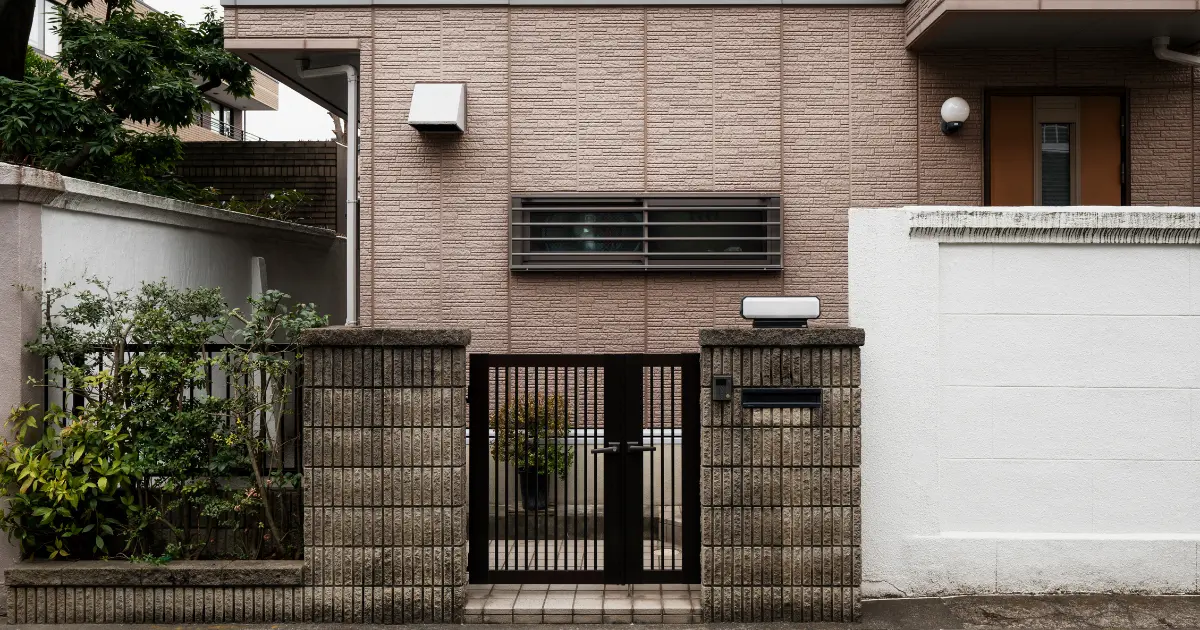
Walls and fences: they're not the same thing (and why it matters)
Many conflicts arise from mixing concepts:
Wall: usually involves opaque construction (block, brick, concrete, stone, etc.).
Fence/enclosure: can be mesh, railings, artificial hedge, or openwork solution.
In many ordinances, it is not only height that is "penalized," but also opacity. Therefore, a mixed solution (baseboard + mesh) may be suitable where a blank wall is not.
Typical cases that trigger complaints or requests
Build a wall "because the neighbor has done so" without checking the regulations.
Building a wall higher than the existing one without a permit (or without notification).
Affect light, ventilation, or views when the area regulates these aspects.
Encroaching on the boundary (even if only by a few inches).
Failure to comply with material/aesthetic requirements in housing developments.
What if there is already a higher wall?
If the wall is old
It may be that it is already established in terms of urban planning or that its adaptation is not required, but:
Do not assume: it is advisable to check whether it is recorded in the file, license, or urban planning status.
If the wall is recent
If it was done without a license or outside of parameters:
An urban planning case may be opened and correction or partial demolition may be ordered .
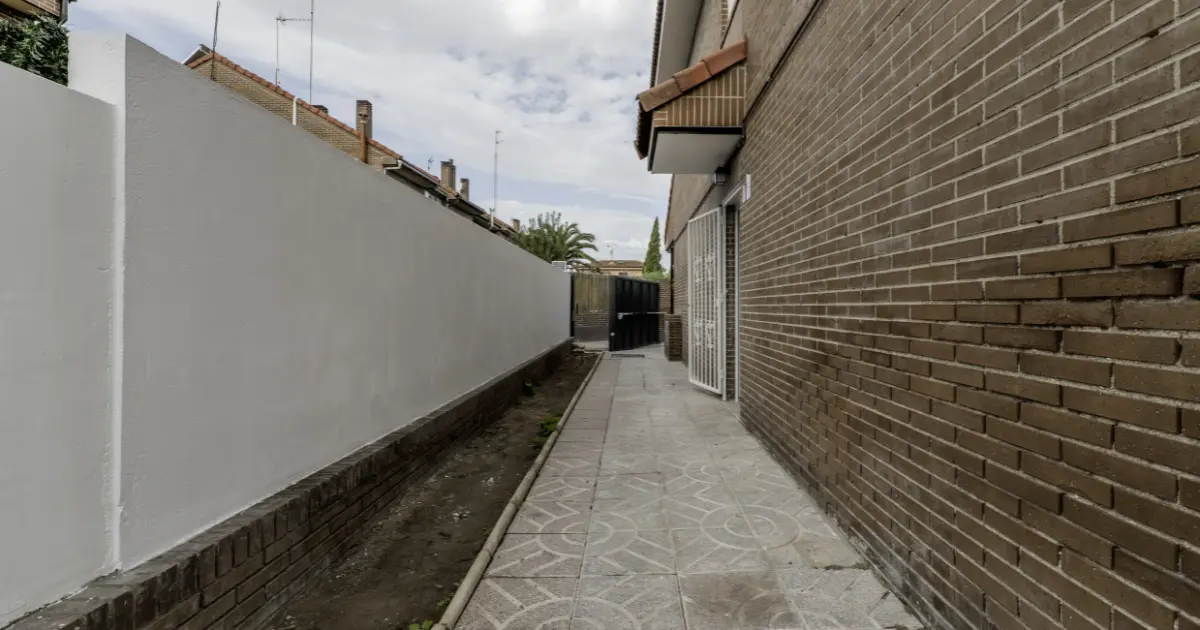
How can you find out the permitted height in your case in 10 minutes?
Define the type: shared / private / facing the street.
Locate the section: interior between plots or facade/street.
Search the municipal website for: "enclosure ordinance," "fencing," "PGOU urban planning regulations."
Check if it requires:
maximum height,
percentage of openwork,
materials,
license or affidavit.
If you are unsure, request an urban planning report/consultation or check with a technician.
Recommendations to avoid problems (without wasting time or money)
Talk to your neighbor before touching a wall that may be a shared wall.
Do not begin any elevation or new enclosure work without reviewing the ordinance/PGOU.
Apply for a license (or the appropriate procedure) if there is new construction or significant modification.
If it is a dividing wall, document it in writing:
what to do,
who pays,
and how it is maintained.
Common mistakes that complicate execution
Confusing a dividing wall with a private wall.
Believing that "if it doesn't bother anyone, it's legal."
To think that the Civil Code "authorizes" heights without considering urban planning.
Building without checking the actual boundary (land registry/survey) and ending up encroaching.
Building a "wall" where the ordinance only allows openwork enclosures.
Frequently Asked Questions
What is the legal height of a wall between neighbors?
The maximum height usually depends on municipal zoning regulations. In many cases, a height of approximately 2 to 2.5 meters is permitted, although this may vary depending on the municipality.
Can a higher wall be built between neighbors?
Only if local regulations allow it or if there is agreement between the parties and the city council grants the corresponding authorization.
Is it necessary to apply for a permit to build a wall?
In most municipalities, yes. Depending on the height and characteristics of the wall, a building permit or prior notification may be required.
What happens if a wall between neighbors exceeds the permitted height?
The city council may require the wall to be modified or demolished if it does not comply with current urban planning regulations.
Are you thinking about doing some construction or renovation work?
Author
Cabana Team
Author information