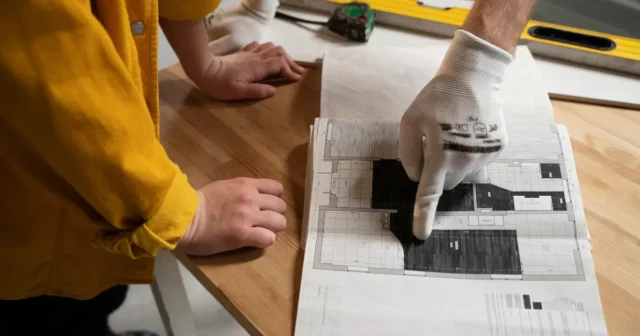


A comprehensive home renovation is the total and coordinated renovation of a home: reconfiguration, updating of systems, improvements to insulation and finishes, plus kitchen and bathroom upgrades, complete with permits and technical supervision. This approach delivers a “like-new,” efficient, and safe home, optimizing timelines, costs, and quality under a single project. Understanding these factors is key to any comprehensive renovation.
Definition and actual scope
Comprehensive home renovation encompasses all the work necessary to update the interior of a property. It involves demolition and new partition walls, renovation of electrical, plumbing, air conditioning, and ventilation systems, reinforcement of insulation, and replacement of woodwork, as well as cladding and painting. Conceived as a whole, it reduces overlap between trades and avoids technical incompatibilities that make the work more expensive.
Differences between partial and comprehensive renovation
While a partial renovation focuses on specific rooms, a comprehensive home renovation transforms the entire property and aligns comfort, efficiency, and market value. A comprehensive approach eliminates “patchwork” and ensures aesthetic and technical consistency.
| Appearance | Partial renovation | Complete home renovation |
|---|---|---|
| Scope | 1–2 stays | The entire house |
| Facilities | Specific actions | Complete and balanced replacement |
| Design | Focal | Overall consistency |
| Permits | Minors | Minors and, if applicable, adults |
| Added value | Limited | Revaluation of assets |
Benefits of a well-planned comprehensive home renovation
The main benefit is consistency: functional layout, coordinated materials, and compatible solutions. In addition, a comprehensive home renovation improves thermal and acoustic comfort, reduces energy consumption thanks to better insulation and equipment, and increases the safety of the facilities. Working with fixed measurements and a milestone-based schedule provides financial predictability and fewer surprises.
Signs that you need a complete home renovation
If your home is over 20 years old without any updates to its facilities, has recurring damp problems, inefficient windows, or a layout that no longer suits your lifestyle (teleworking, growing family), a comprehensive home renovation is usually the most sensible option. When most areas require work, grouping them into a single project reduces disruptions and indirect cost overruns.
Work phases and quality control
Quality is achieved by standardizing the process and documenting decisions.
Analysis and concept
Surveying of current plans, detection of problems, and definition of requirements. Based on this, layout alternatives and a range of quality options are proposed, with estimates of the costs of comprehensive home renovation.
Project and budget
Development of plans, specifications, and measurements. The technical dossier provides a detailed budget and a phased schedule, as well as reference points, payment milestones, and acceptance criteria.
Licensing and coordination
Processing of licenses or prior notification and, if applicable, appointment of project management. A comprehensive home renovation requires coordination of suppliers, logistics of materials, protection of common areas, and compliance with health and safety regulations.
Execution and delivery
Demolition, installation, enclosures, and finishes. Before closing, electrical and watertightness tests, review of finishes, and delivery of an “as-built” dossier with updated plans, warranties, and manuals.
Budget: how it is distributed and why
The cost depends on the surface area, quality, and complexity. In a typical comprehensive home renovation, the approximate breakdown may be as follows:
| Departure | % of total |
|---|---|
| Demolitions and waste | 5–10% |
| Bricklaying and partitioning | 15–25% |
| Electrical and telecommunications installation | 8–15% |
| Plumbing and sanitation | 8–12% |
| Air conditioning/DHW/ventilation | 8–15% |
| Carpentry (interior/exterior) | 10–18% |
| Wall coverings and flooring | 10–18% |
| Kitchen and bathrooms | 12–20% |
| Paint and finishes | 5–10% |
| Project, licenses, and management | 5–12% |
To compare proposals “apple to apple,” use closed measurements and qualities. Set aside a 5–10% contingency.
Deadlines and logistics without surprises
In an average apartment, a well-planned comprehensive renovation takes between 8 and 16 weeks, depending on permits, material availability, and scope. A realistic schedule sequences demolition, installation, enclosure, finishing, and assembly, with individuals responsible for each milestone. Weekly visits with photographic records consolidate decisions and avoid rework.
Permits and regulations you should consider
Each local council sets its own procedures; check whether prior notification is sufficient or whether you need a license. If the structure or façade is affected, you will need an approved project and a project manager. All comprehensive home renovations must comply with the Technical Building Code (safety, health, acoustics, energy): codigotecnico.org.
Materials and quality: where to really invest
Your budget will go further if you prioritize what you use every day. When completely renovating your home, invest in insulation, windows with thermal breaks, and low-emissivity glass. Consider aerothermal energy and heat recovery ventilation when appropriate. For finishes, choose technical porcelain tiles in wet areas, low-VOC washable paints, and custom cabinets that optimize storage. For lighting, combine efficient general lighting with dimmable accent lighting.
Estas decisiones se toman mejor con un criterio de interiorismo definido de antemano, porque condicionan medidas, encuentros entre materiales y plazos de suministro.
Contract, warranties, and after-sales service
The contract must describe the scope, quality, price, deadlines, penalties for unjustified delays, waste management, and change protocol. Any comprehensive home renovation must include liability insurance, health and safety coordination, and written guarantees. Close the project with an acceptance report, review period, and technical dossier.
Sustainability and health: enduring value
A comprehensive home renovation is an opportunity to improve indoor air quality, sound insulation, and water and energy consumption. Low-VOC paints, flow-limiting faucets, and efficient appliances reduce your environmental footprint without compromising on design. Basic home automation (thermostats, sensors, and lighting scenes) adds comfort and control.
How to measure the success of your project
Before you begin, establish key metrics: adherence to deadlines, budget variances, post-renovation energy consumption, and user satisfaction. A comprehensive home renovation is a success when daily living becomes more comfortable, utility bills decrease, noise levels are reduced, and existing issues are resolved. Twelve months later, a general inspection and preventive maintenance help ensure the investment pays off.At Cabana, we plan every home renovation in Madrid to avoid cost overruns.
The quality of the materials, changes to the layout, the fixtures and fittings, and the complexity of the project. Yes, in many cases it requires upgrading facilities and bringing the structure into compliance with regulations. By clearly defining the project from the start and planning each phase of the construction work. These are usually the facilities, the kitchen, and the bathrooms.Frequently Asked Questions
What factors drive up the cost of a home renovation?
Is it more expensive to renovate an older home?
How can you avoid cost overruns during a renovation?
Which part of a renovation is the most expensive?