
For decades, luxury in architecture has been associated with heavy, shiny, and expensive materials: polished marble, exotic woods, or carefully carved noble stones. However, the new luxury that dominates contemporary residences moves away from ornamental excess and seeks something more subtle: surfaces that convey calm, textures that evoke well-being, and materials capable of interacting with light in an honest way. Today, the idea of luxury is not about showing off, but about feeling.
In this changing landscape, materials such as microcement, sintered stone, mineral mortars, and continuous finishes have gained prominence. Not because they are cheaper, but because they are better suited to today's lifestyle: flexible, sustainable, and in search of coherent and sensory spaces.
1. Marble: from classic symbol to new stone minimalism
Marble isn't disappearing; it's transforming. It's no longer used as a massive covering, but as an expressive accent. The dramatic veins of these materials, such as Calacatta Viola, become sculptural canvases that act as visual focal points: a monolithic kitchen island, a block-carved sink, or flooring that blends into the wall in a continuous gesture. The key to using these materials today lies in contrast, in combining marble with matte textures and more restrained surfaces, allowing its presence to be powerful without being ostentatious.
2. Microcement: spatial continuity and quiet luxury
The rise of microcement responds to a fundamental need: continuity. No joints, no interruptions, no visual noise. This material creates spaces that flow, expand, and convey a sense of calm that is difficult to achieve with traditional coatings.
Its slightly imperfect, almost artisanal aesthetic introduces a quiet luxury, closer to touch than to shine. In addition, its versatility makes it one of the star materials of new residential interior design, being suitable for bathrooms, kitchens, furniture, and exteriors.
Luxury is no longer measured by the rarity of the material, but by the quality of the experience.
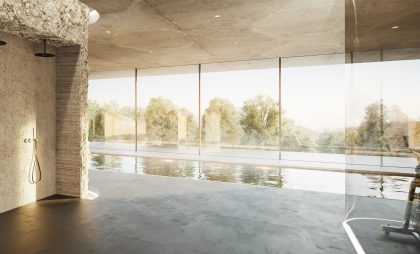
Valhauss – Porto, Portugal. Designed by Cabana Partners
3. Sintered stone and technical surfaces
The emergence of surfaces such as Dekton, Neolith, or Lapitec has revolutionized the design of kitchens and high-use spaces. These technical surfaces imitate marble or natural stone with extraordinary aesthetic precision, but offer superior performance: resistance to heat, stains, impacts, and solar radiation.
In the new luxury, beauty must be functional. These surfaces allow for extremely pure designs: thin countertops, integrated sinks, continuous paneling, and large-format pieces that reduce joints and enhance the perception of space.
4. Treated wood and natural tones: sophisticated warmth
When it comes to wood, luxury is not about the species. The treatment of the wood (from bleached oak to smoked walnut, each finish helps to create warm, meditative atmospheres) takes center stage, with the common use of toasted, brushed, or heat-treated woods that accentuate their grain and give them a more organic character. Combined with matte mineral surfaces, wood creates a perfect balance between naturalness and sophistication.
5. Mineral mortars, lime, and clays: the return of touch
Handcrafted lime or clay-based coatings are associated with sensory luxury: surfaces that breathe, display nuances and variations, and feel alive. These materials create velvety walls and textures that react subtly to natural light.
In the new luxury, materials are no longer an external sign of status but rather tools that elevate the everyday experience. Marble, microcement, wood, and technical surfaces coexist to create sensory, calm, and deeply human spaces. Their value no longer lies in excess but in their ability to generate honest, tactile, and lasting atmospheres.
At Cabana, we work with this same perspective: selecting materials that not only define a style, but also build a way of living. Materials that age well, that bring coherence to the project, and that convey that quiet elegance that makes a space feel truly unique.
Author
Cabana Team
Author information