

Building a home is one of the most important and exciting decisions a person or family can make. It is also a long, demanding process full of decisions that will affect both the final result and the subsequent experience of living in it. For this reason, good planning and a clear vision from the outset are essential to avoid unforeseen events, cost overruns, or frustrations.
Below, we review some of the most common mistakes made when building a home and the keys to preventing them.
1. Not clearly defining needs from the outset
One of the most common mistakes happens even before the project begins: not being clear about what is really needed. Often, people start designing without having thought about their lifestyle, daily routines, or future needs, and this can result in a house that is not very functional.
Before designing, it is essential to spend time analyzing how the home will be lived in: which spaces are priorities, how many people will occupy it, what activities will take place there, and how these might change over time.
2. Not having a comprehensive and coordinated plan
Sometimes, construction begins with incomplete plans or without a detailed design that addresses all technical aspects. This lack of planning can lead to problems such as on-site improvisation, conflicts between trades, and budget overruns. A good design for single-family home construction project prevents these mistakes.
3. Choosing the wrong land or failing to study its constraints
The choice of land is a critical point. Aspects such as orientation, slope, access, views, and urban planning regulations greatly influence the design and budget. Buying without prior study can lead to technical limitations or added costs.Before purchasing land, it is advisable to evaluate its architectural and regulatory potential. Understanding how the home can be integrated into its surroundings is key to making the most of its possibilities.
4. Not managing the budget realistically
Underestimating costs or failing to anticipate unforeseen events is another common mistake. It is common to focus on the cost of the work and forget other expenses such as licenses, fees, landscaping, or furniture.
The best strategy is to work with detailed, phased budgets, reviewing items before making decisions. Rigorous financial control allows you to maintain a balance between design, quality, and feasibility.
5. Not prioritizing energy efficiency
In the midst of ecological transition, sustainability must be a central focus of any residential project. Poor orientation, insufficient insulation, or the absence of passive strategies can result in uncomfortable homes that are costly to maintain. Bioclimatic design, the choice of appropriate materials, and the incorporation of renewable energies are tools that can reduce consumption and increase comfort.
6. Not relying on a professional team
The last mistake—and perhaps the most critical one—is thinking that you can wing it. Building a home requires experience, coordination, and technical knowledge. Having qualified professionals on hand for single-family home design in Madrid —such as architects, engineers, interior designers, and builders—not only ensures quality but also provides peace of mind throughout the entire process.
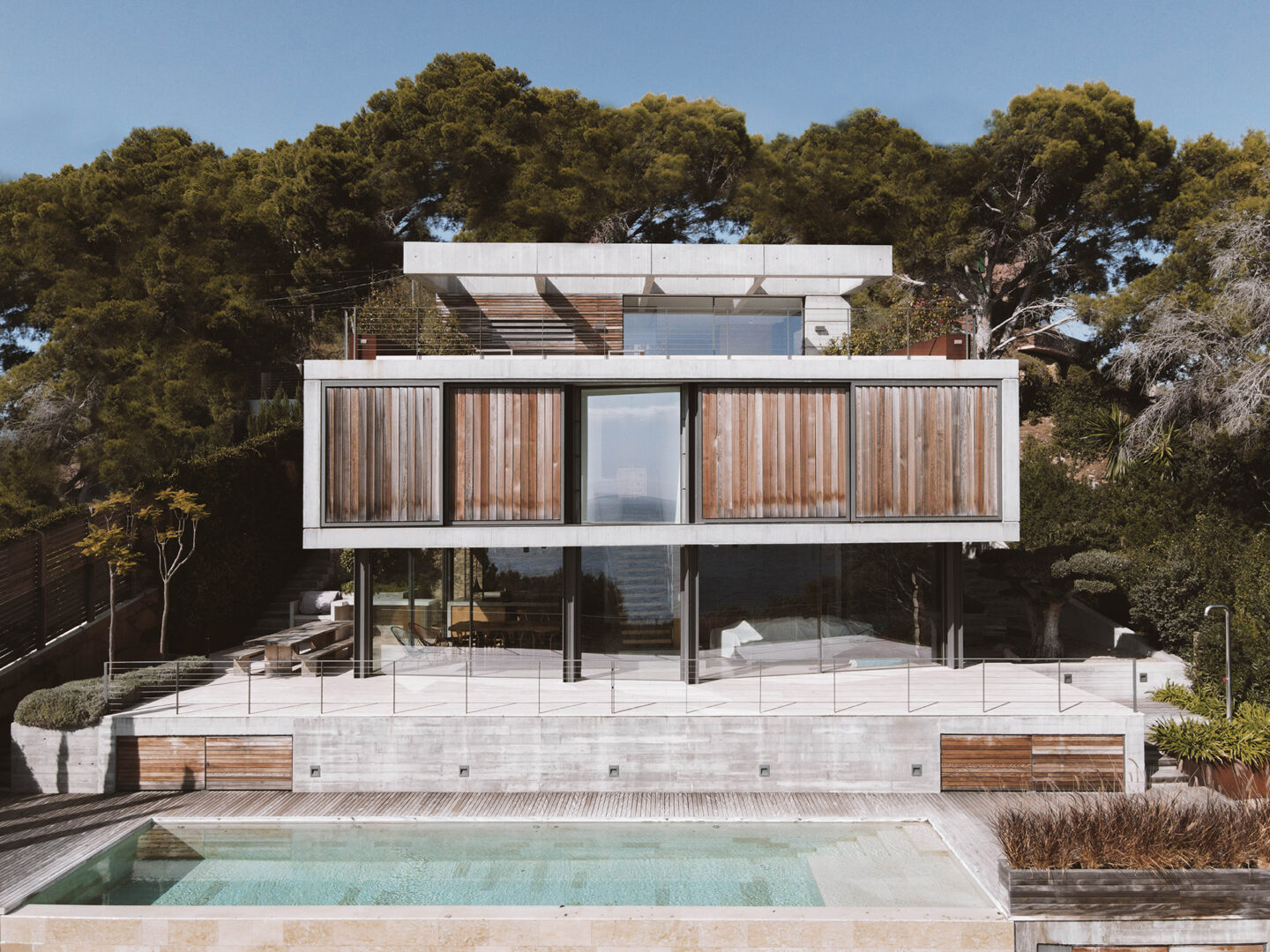
Marcel House – Palafrugell, Girona
At Cabana, we believe that the key to building with excellence lies in anticipating, listening, and accompanying. Avoiding mistakes depends not only on technique, but also on a methodology that combines rigor and sensitivity. Our goal in building this home is to transform this process into a positive and coherent experience, in which each decision adds value to the final result, creating a home designed to last, adapt, and be fully enjoyed, and which is truly a space of its own.