
What makes a house a villa: a single-family dwelling built on a plot of land for exclusive use, with independent access and its own outdoor space, designed to function as an autonomous unit. In addition to the form (detached, semi-detached, or terraced), the relationship with the land, privacy, and freedom of use and distribution are also important.
What is considered a villa and why it is not "any house with a garden"
Although in everyday use many homes are referred to as "chalets," the term is usually reserved for a single-family home that lives "with" its plot of land: it not only occupies a plot, but also integrates it into the residential experience (entrance, exterior, light, privacy, and uses).
More than just an aesthetic label, clearly defining what a villa is helps to avoid confusion with other types of housing (townhouses, terraced houses, modular homes on plots, etc.) and to understand what attributes usually support this designation.
We design custom single-family homes
An architectural project allows the layout, lighting, and relationship with the outside world to be adapted to each lifestyle.
Private plot for exclusive use: the essential requirement
The starting point for a house to be considered a villa is that it must be built on an individual plot of land intended for its exclusive use.
This plot usually translates into private outdoor space (garden, patio, porch, terrace, pedestrian or vehicle access area). In a detached house, the plot is not an "extra": it forms part of the house-land complex.
How to identify whether the plot is truly exclusive
The exterior is not shared as a communal area.
The dwelling does not depend on mandatory passage through common areas to access its "own" exterior.
The use of the land is linked to a single residential unit.
Separate entrance: enter without passing through common areas
A villa is characterized by having private and independent access: it is entered from the street (or private internal road) without gateways, communal staircases, or communal elements.
This is not just about comfort: it reinforces the idea of autonomous unity, with direct control over entrances, enclosures, and use of the immediate environment.
Structural independence: detached, semi-detached, or terraced
A villa does not need to be completely isolated to be considered a "villa." What matters is that, even if it shares a party wall, the dwelling functions as an autonomous residential unit.
Common types of chalets (and what changes in each one)
| Type | Do you share walls? | What do you usually contribute? | What usually limits it? |
|---|---|---|---|
| Detached house | No | Maximum privacy and perimeter freedom | Greater exposure and exterior maintenance |
| Semi-detached house | Yes (1 party wall) | Good balance between independence and efficiency | Less lateral isolation than an isolated unit |
| Semi-detached house | Yes (side panels) | Greater use of the urban complex | Less acoustic/perimeter independence |
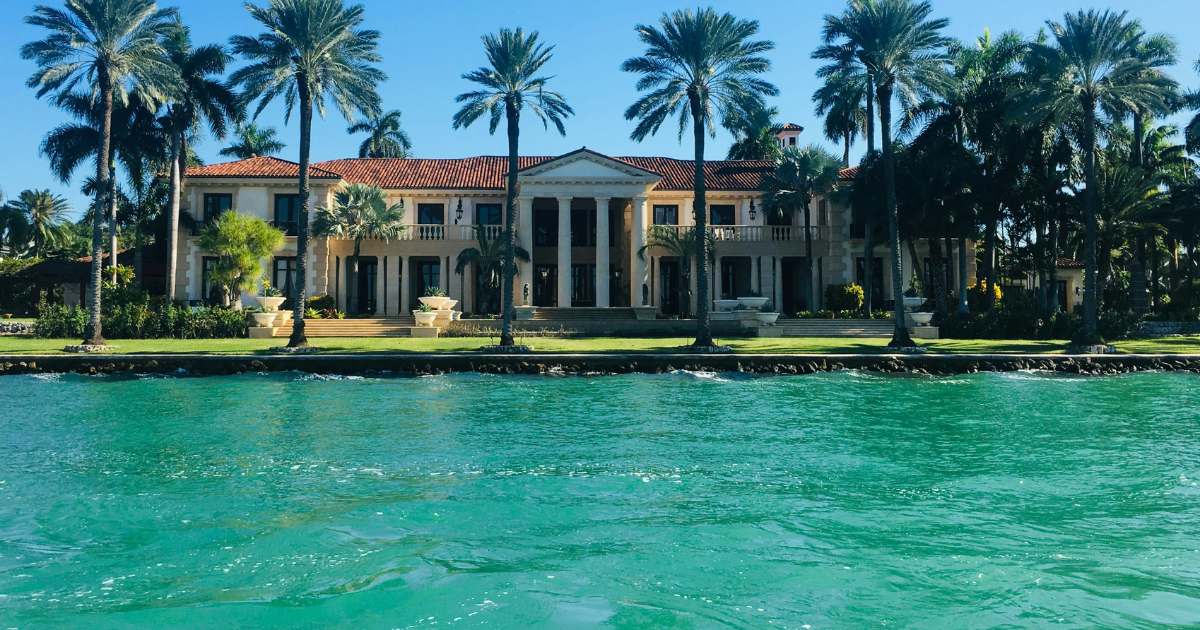
Layout designed for a single family
Another clear sign: the villa is designed for a single family unit, without being divided into several internal dwellings.
This usually allows for more flexible distributions:
Living areas connected to the outside (living/dining room with access to the garden/patio).
Bedrooms on the upper floor and auxiliary spaces (basement/storage room/multipurpose room).
Private staircases, double-height spaces, or "livable" outdoor areas.
Direct connection to the outdoors: the outdoors as "another room"
In a villa, the exterior is not decorative: it is a natural extension of the interior. That is why the following elements often appear:
Large windows and rooms facing the garden/patio.
Porches, terraces, balconies, or shaded areas.
More light and ventilation options.
Functional autonomy: services and facilities as an independent unit
A villa usually operates as a self-managed consumption unit: facilities and services are understood to be for a specific dwelling (electricity, water, air conditioning, telecommunications, and waste disposal).
In residential developments, there may be common maintenance costs for the surrounding area, but the basic idea is that the home does not depend on community decisions for its day-to-day internal functioning.
What that autonomy entails
More freedom to intervene (improvements, reforms, security solutions).
More responsibility: maintenance of the roof, facade, facilities, and exteriors.
Aesthetics and architecture: frequent, but not defining
Many chalets offer more customizable aesthetics (materials, sloping roofs, large windows, porches, etc.), but style is not the main criterion. There are simple chalets and high-end chalets; the determining factors are the combination of plot, access, single-family use, and autonomy.
Differences compared to similar homes
To avoid mixing concepts, these comparisons help:
Villa vs. townhouse
Townhouse: usually located between party walls, with little (or no) land of its own and less outdoor privacy.
Chalet: includes plot and outdoor area as an essential part of the property.
Detached house vs. terraced house / semi-detached house
It may resemble a semi-detached house, but if there are clearly communal areas or access/exterior areas that depend on the complex, it may deviate from the concept of a "detached" house.
Detached house vs. modular or prefabricated housing
The construction system does not define it.
It can be considered a villa if it meets the following criteria: exclusive plot + independent access + single-family use + functional autonomy.
Chalet vs. villa
"Villa" is often used to refer to a high-end home.
It can be understood as a larger, more luxurious, and more exclusive "villa," but the distinction is more commonly used than based on functional criteria.
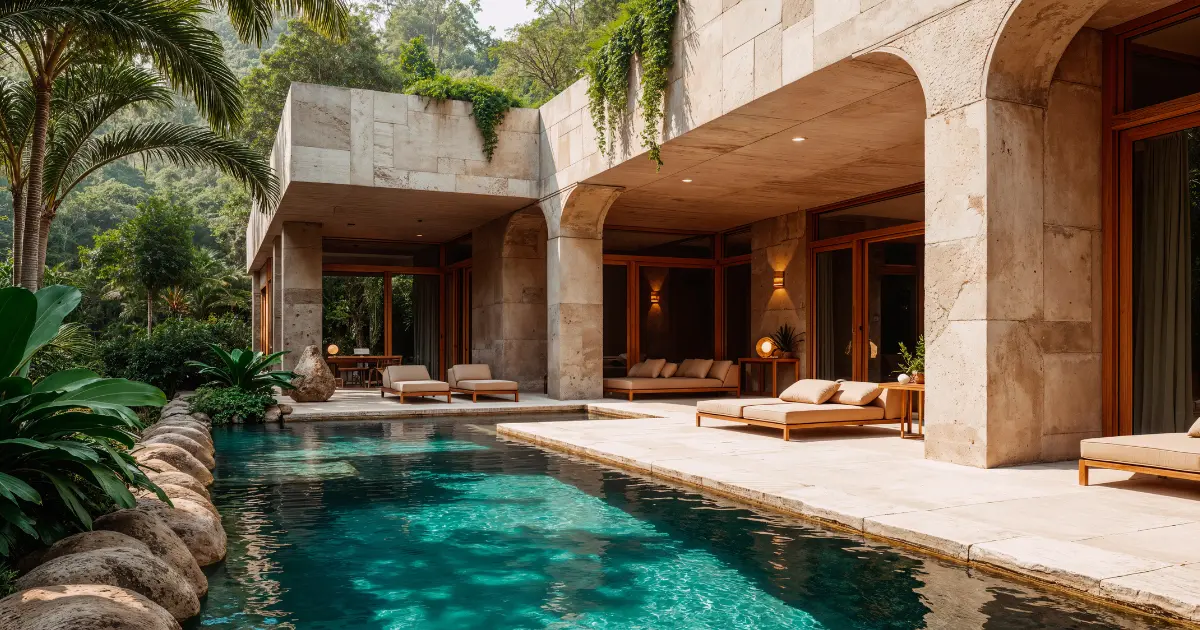
Why the distinction matters
Calling a home a "chalet" is not just a matter of words: it influences how its privacy, use of the outdoors, autonomy, and fit with other types of homes are perceived. It also helps align expectations: living in a chalet usually provides more freedom of use, in exchange for more maintenance and management of the home-plot complex.
Common mistakes that complicate execution
Confusing "single-family home" with "detached house": not all single-family homes have truly independent plots and access.
Assuming that "chalet = detached": semi-detached and terraced houses can be chalets if they maintain autonomous unity.
Consider style (ceiling, materials, "look") as the main criterion: this is common, but not decisive.
Calling an outdoor space a "garden" when it is actually communal or not for exclusive use.
Ignoring that the exterior (plot) is part of the concept: without that relationship between the house and the land, the term loses its meaning.
Frequently Asked Questions
What is the difference between a house and a villa?
A chalet usually refers to a single-family home, typically detached or semi-detached, which has more space and usually has a plot of land or outdoor areas.
What are the characteristics of a villa?
A villa usually has independent access, outdoor spaces such as a garden or terrace, and a layout designed for greater privacy.
Are all the chalets detached houses?
Not necessarily. There are detached, semi-detached, and terraced houses, although they all share the concept of single-family housing.
Can a custom-built villa be designed?
Yes. An architectural project allows the home to be adapted to the land, the owner's needs, and the environment.
Are you thinking about designing your own villa?
Author
Cabana Team
Author information