
Wood is undergoing a period of profound transformation. Far from its exclusively artisanal or traditional image, today it is presented as a highly technical material, capable of responding to the demands of contemporary architecture in terms of stability, durability, sustainability, and construction precision. Laminated, treated, reconstituted, or modified technical woods combine the warm, natural character of the material with advanced industrial processes, giving rise to solutions where innovation does not eliminate the soul, but rather perfects it.
1. What we mean by engineered wood
Engineered woods are products derived from natural wood that have been transformed through industrial processes to improve their performance. This includes everything from glued laminated timber (GLT), cross-laminated timber (CLT), and heat-treated wood to reconstituted solutions that optimize grain, density, and strength.
Unlike traditional solid wood, these variants allow greater control over the material's behavior in response to humidity, temperature changes, or structural loads. The result is a more predictable, stable, and versatile wood, without sacrificing its texture, aroma, or ability to humanize spaces.
2. Industrial precision at the service of design
One of the great advantages of engineered wood is its compatibility with high-precision manufacturing processes. The use of computer numerical control (CNC), prefabrication, and modular systems allows complex parts to be produced with minimal tolerances, which is particularly important in high-end projects.
This precision translates into clean lines, continuous surfaces, and construction solutions where wood interacts with other materials in a contemporary and sophisticated way. In interiors, this is evident in perfectly aligned paneling, custom-made furniture, and cladding that integrates lighting, acoustics, and technology in an almost invisible way.
3. The balance between technology and craftsmanship
Although their origin is industrial, engineered woods do not eliminate the value of craftsmanship; they reinterpret it. The selection of finishes, the orientation of the grain, surface treatments, and assembly systems still require an expert and sensitive eye for the material.
In many projects, these woods are finished by hand, using natural oils or brushing techniques that restore a more organic tactile and visual feel. The contrast between a highly engineered core and a carefully treated surface creates pieces that convey authenticity, even within a clearly contemporary context.
4. Sustainability and material efficiency
Another key aspect of the rise of engineered wood is its contribution to more responsible construction. By optimizing the use of raw materials, reducing waste, and making use of smaller or lower-quality pieces, these systems enable more efficient forest management.
In addition, many engineered woods improve the thermal and structural performance of buildings, reducing the need for other more energy-intensive materials. In architecture, CLT and other wood-based structural solutions are demonstrating that it is possible to build with high technical performance and a significantly lower environmental footprint.
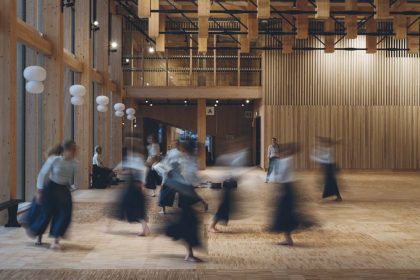
Sara Cultural Center – Skellefteå, Sweden. White Arkiteker
5. Applications in contemporary architecture and interior design
Engineered wood has significantly expanded the scope of application for this material. In architecture, it is used in exposed structures as well as facades, sunshades, and enclosure systems. In interior design, it appears in large-format flooring, continuous cladding, acoustic ceilings, and integrated carpentry elements.
In luxury homes, boutique hotels, or premium commercial spaces, its use provides a sense of comfort and sophistication that is difficult to replicate with other materials. Wood, even in its most technological form, remains an emotional element, capable of connecting the user with nature in highly designed environments.
Engineered wood represents a logical evolution of the material: more precise, more efficient, and better suited to today's needs, without losing touch with its natural origins. It proves that innovation does not have to be cold and distant, and that industry can become an ally of sensitivity and design.
At Cabana, we understand wood not only as a material, but as a language. A language that, thanks to technology, has become more precise and versatile, but still speaks of warmth, time, and craftsmanship. Because even in the most contemporary architecture, the soul of spaces still lies in the materials used to build them.
Author
Cabana Team
Author information