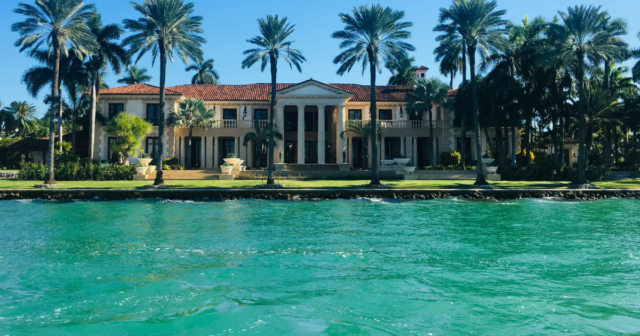


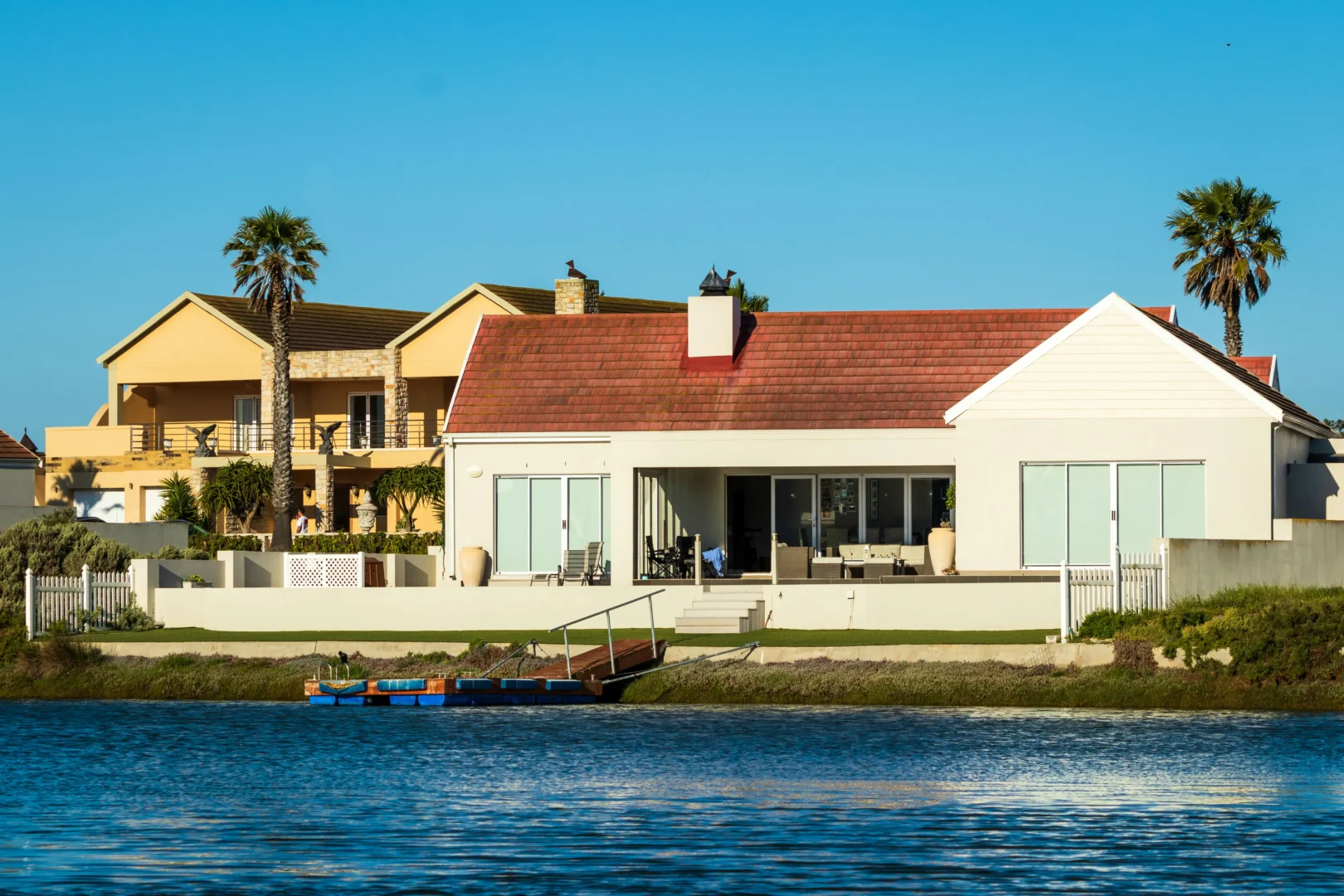
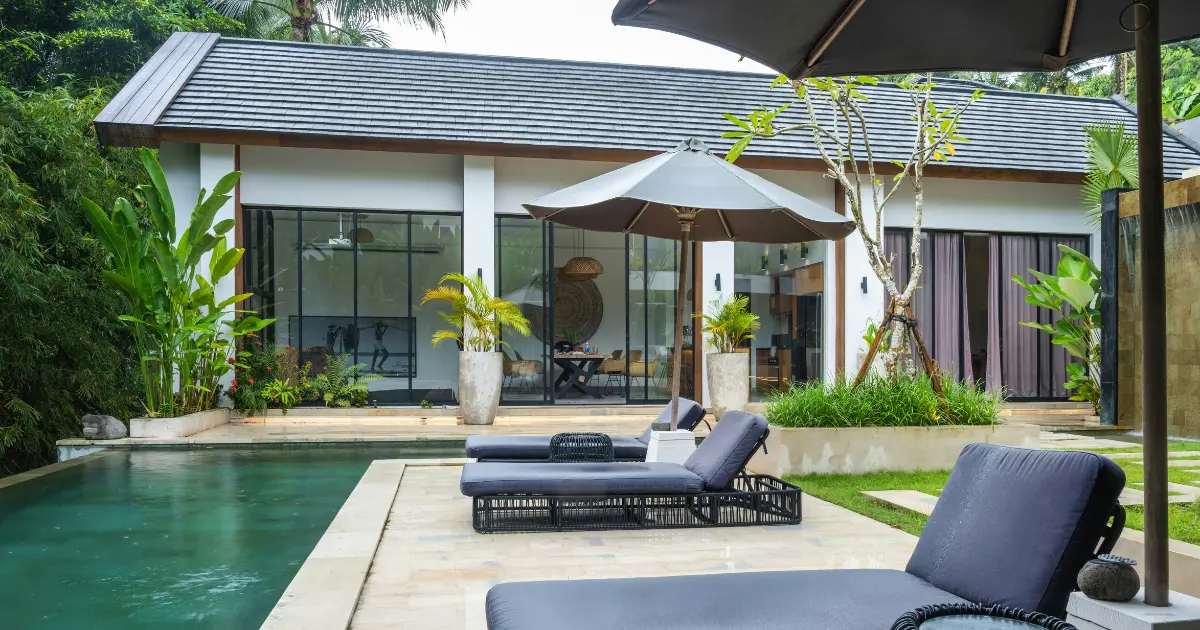
A chalet is a single-family home built on a private plot, usually with outdoor space (garden, patio, or terrace) and independent access. It can be detached, semi-detached, or terraced, and is associated with a lifestyle that offers more privacy, independence, and connection to the surroundings than an apartment building.
What is a villa (clear definition)
A villa is a house designed for a single household, with its own entrance and, generally, an outdoor area connected to the house. Unlike an apartment, it does not depend on common elements such as hallways, landings, or elevators.
In common usage in Spain, “chalet” usually implies:
- Own plot or private outdoor space
- Separate entrance
- More flexible layout (several floors or separate areas)
- Greater sense of privacy compared to apartment buildings
What defines a villa
Although the term is used broadly, there are features that are common to most chalets:
- Plot and exterior: garden, patio, porch, terrace, or landscaped area.
- Independent access: direct entry from the street or from a private entrance.
- Privacy: less “vertical” coexistence than in a building.
- Single-family structure: one dwelling, one functional unit.
- Multiple floors: it often has two or three levels, although this is not mandatory.
Origin and evolution of the concept
The term “chalet” comes from the French chalet, originally associated with rural buildings in mountainous areas and a direct relationship with the natural environment.
Over time, the concept shifted to urban and peri-urban contexts and became associated with homes designed for comfort, independence, and the use of outdoor spaces (both as primary residences and vacation homes, depending on the area and stage of life).
Standard technical and aesthetic features
There is no single “model” of villa, but these patterns tend to appear:
- Total or partial structural independence (depending on the type: detached, semi-detached, or terraced).
- Private outdoor spaces (from a functional patio to a large garden).
- Flexible layout (more separate day/night areas, integrated garage, spacious rooms).
- Integration with light and surroundings (orientation, porches, large windows, interior-exterior relationship).
Types of villas according to their configuration
To fully understand what type of home a villa is, it is useful to distinguish between its most common variants:
Detached house
Housing completely separate from others, without shared dividing walls.
It usually fits if you are looking for:
- Maximum privacy
- More freedom to design facades and gardens
- Less noise and more independence
Semi-detached house
Two homes that share a side wall but have separate entrances and plots (although the size of the exterior may vary depending on the project).
It usually fits if you are looking for:
- Balance between privacy and land efficiency
- Feeling of a single-family home with more reasonable costs/occupancy
Semi-detached house
Housing aligned in a row, normally sharing two side walls. The exterior is usually concentrated at the front and/or rear.
It usually fits if you are looking for:
- Most affordable option within the “chalet format”
- Residential environment with a neighborhood/subdivision feel
Chalet, house, or villa: differences (without confusion)
Although they are used interchangeably in conversation, they do not mean exactly the same thing:
| Term | What does it mean in general? | What does “by default” mean? |
|---|---|---|
| House | Generic term for housing | It may or may not be a single-family home; it may or may not have a plot of land. |
| Chalet | Specific type of house (single-family with private exterior and access) | Outdoor space or plot, independence, and privacy |
| Villa | More commercial/descriptive use | It usually suggests a larger size, higher level, or “premium” focus, but it is not technical. |
Key idea: a villa is usually “a house” (in the broad sense), but not every house is a villa.
Urban villa vs. country villa
Beyond construction, the experience changes depending on the environment:
Urban or suburban villa
Located in residential neighborhoods or developments within a municipality.
He usually contributes:
- More services nearby (schools, shops, transportation)
- Daily life more connected to the day-to-day of the city
Country house (rural or mountain)
Located outside urban centers or in quieter areas.
He usually contributes:
- A greater sense of disconnection and tranquility
- Possible compromises in access, services, or daily travel
Advantages and disadvantages of living in a villa
Choosing a villa is not just choosing a “type of home,” it is also choosing a way of life.
Common advantages
- More privacy and less noise from neighbors
- More interior and exterior space
- Best fit for families, pets, or remote work
- Possibility of customizing exteriors (garden, porch, leisure area)
Common disadvantages
- More maintenance (exteriors, facade, garden, facilities)
- Greater management responsibility (repairs, recurring expenses)
- In some areas, greater dependence on cars
- If the exterior is large, it requires time or support to maintain it.
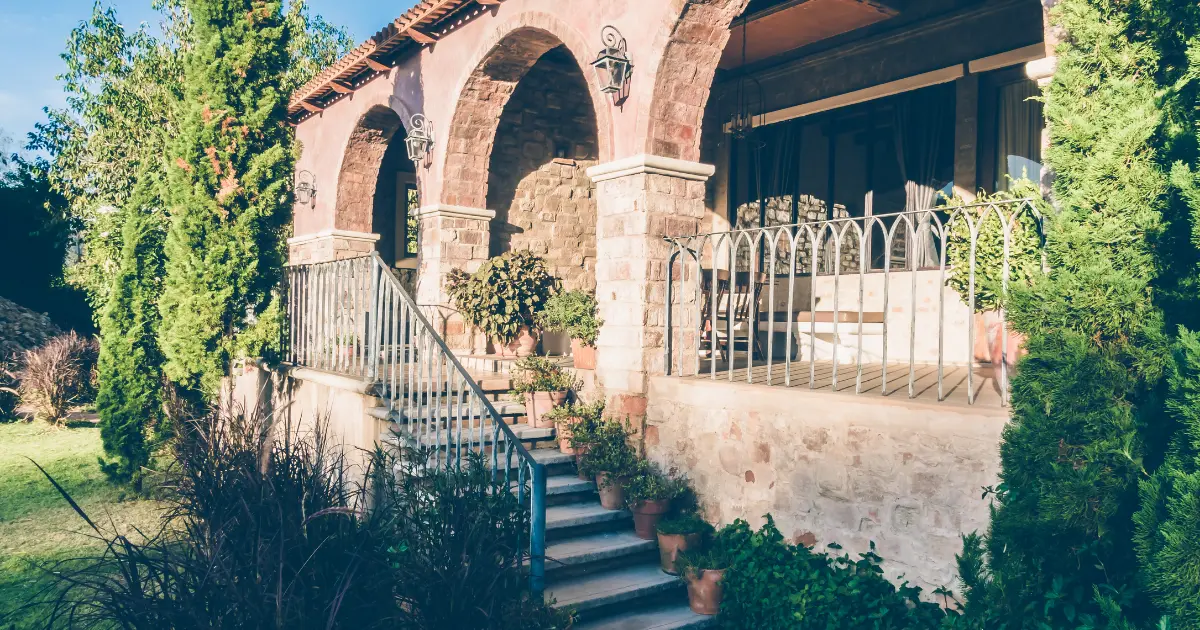
Difference between a house and a villa (the most frequently asked question)
The practical difference usually lies in these criteria:
- Private outdoor space: this is usually an essential feature of a villa, but not always of a “house.”
- Access and common elements: the villa does not usually depend on a doorway or common areas.
- Type of environment: “chalet” is more associated with low density (suburb, outskirts, countryside).
- Expectation of privacy: in a villa, usually higher.
If a property does not have its own plot or outdoor space and is accessed via common areas, it is usually better suited as an apartment or “block of flats” than as a detached house.
Common mistakes that complicate execution
- Calling any large dwelling a “chalet,” even if it is in a building (size ≠ type).
- Confusing a townhouse with a “smaller villa”: it is still a villa if it retains its single-family configuration and private access.
- Assuming that “villa” is a technical category: it is usually a marketing term.
- Don’t assume that “plot” always means a large garden: it could be a patio or a contained outdoor area.
- Reducing the difference to “luxury”: there are chalets of varying price levels and qualities.
Why it remains a desirable model
The detached house remains aspirational because it combines three things that are difficult to achieve in apartment buildings: privacy, independence, and outdoor space. It also allows the home to be adapted to different stages of life (family, teleworking, leisure at home) with more scope for personalization.
Many people choose a luxury villa in Madrid that’s custom-built.
A chalet usually refers to a detached or semi-detached single-family home, typically with outdoor spaces such as a garden or plot of land. Among the most common are detached houses, semi-detached houses, and terraced houses, each with different levels of privacy and layout. Living in a villa allows you to enjoy more space, more privacy, and outdoor areas such as a garden or terrace. Yes, an architectural project allows you to design a single-family home tailored to the needs of the client, the land, and the environment.Frequently Asked Questions
What is the difference between a villa and a house?
What types of villas are there?
What are the advantages of living in a villa?
Can a custom-built villa be designed?