

In 2025, residential architecture is undergoing a transformation that goes beyond aesthetics or functionality. Today, the home is understood as a living organism, capable of adapting to new ways of living, responding to nature, and reflecting the essence of those who occupy it. After years of social and technological change, there is a renewed interest in meaningful spaces, where beauty and intention meet.
1. Sustainability with a holistic approach
Sustainability continues to be the central focus of this evolution, but with a deeper and more holistic approach. It is no longer enough to install solar panels or energy-saving systems: the aim is to achieve material and emotional sustainability, taking into account the entire construction cycle and its impact on the environment. Natural and locally sourced materials such as wood, stone, and compacted earth are regaining prominence, not only for their thermal efficiency, but also for the feeling of warmth and rootedness they convey. The home thus becomes a refuge where the tactile and sensory take on value and te over the purely visual.
2. Presence of bioclimatic design
The bioclimatic design is reaching maturity: houses are intelligently oriented, ventilated, and lit, taking advantage of the natural resources of the environment. Interior gardens, green roofs, and plant walls are not passing trends, but expressions of a genuine desire to reconnect with nature. This approach generates architecture that breathes, that welcomes the passing of the seasons, and that reminds the inhabitant of their belonging to the landscape.
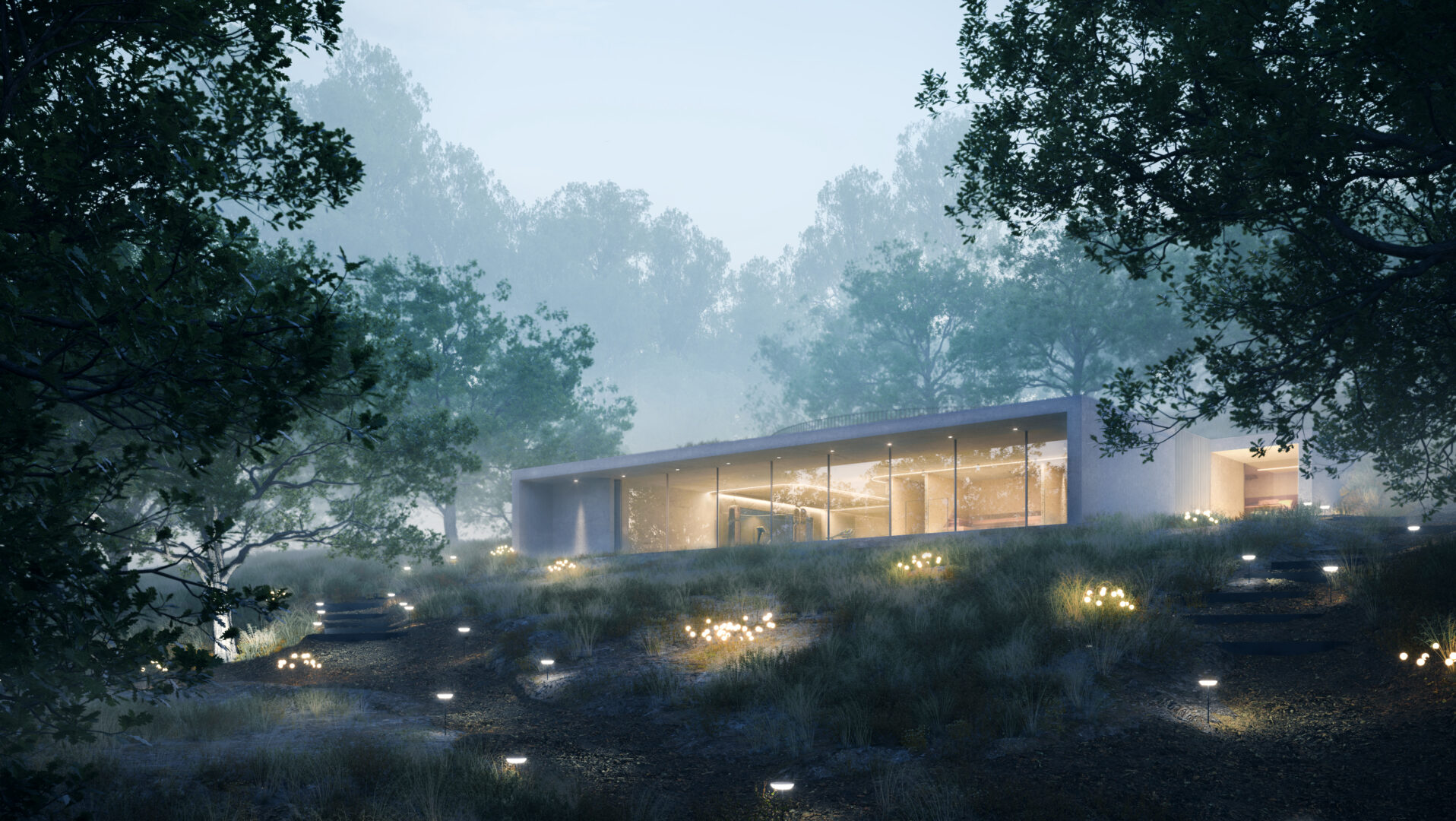
Valhauss – Porto, Portugal
3. Technology at the service of well-being
Technology is also being redefined, integrating itself almost invisibly into domestic life and ceasing to be a visible and dominant element. Intelligent lighting, climate control, and security systems learn from user habits and adjust discreetly, optimizing resources without disrupting the harmony of the space. This “silent technology” reflects a clear idea: innovation should serve well-being, not
overshadow it.
4. Flexibility and evolution
Another fundamental aspect of contemporary housing is flexibility. Social, work, and family dynamics are more changeable than ever, and architecture responds with versatile and modular spaces. Open environments allow the home to be reorganized and adapted to the needs of the moment: working, resting, sharing, or simply being. This adaptability gives freedom back to the inhabitant, enabling the use of the house as a living space that evolves with them.
5. Emotional well-being
Finally, emotional well-being is at the heart of architectural design. neuroarchitecture, which studies how spaces influence the mind and emotions, is naturally incorporated into contemporary practice. Natural light, neutral colors, balanced proportions, and honest materials createa sense of calm and rootedness. The home becomes an extension of the soul: a place that not only protects but also inspires.
In conclusion, trends in residential architecture for 2025 point to a synthesis between technology, sustainability, and well-being. The homes of the future do not seek to dazzle, but to resonate; they do not seek to impose themselves, but to belong.
At Cabana, we believe that this is the true essence of our discipline: building with intention, sensitivity, and respect for the human spirit. When architecture is born from integrity and purpose, it transcends the material and becomes a cultural act, a bridge between place, memory, and emotion. That is why, at Cabana, we seekto make each space an extension of that philosophy, a refuge where human beings can reconcile themselves with the natural and the intangible. In a present dominated by immediacy and image, we aspire to build architecture with soul, capable of moving and enduring.