
Why is office design important?
Office design has a direct impact on a company’s productivity, comfort, and professional image. A well-planned space improves concentration, fosters collaboration, optimizes resources, and instills confidence in both the team and clients and visitors.
What is meant by office design
Office design is the process of organizing and setting up a workspace so that it is functional, comfortable, and aligned with the company’s goals. It’s not just about choosing attractive furniture or pleasant colors. It also involves properly arranging the different areas, ensuring adequate lighting, facilitating movement, and creating an environment that promotes daily productivity.
Today, an office is no longer seen merely as a place to work. It also reflects a brand’s culture, the way teams interact, and the experience of anyone who enters the space. That’s why designing it well is a strategic decision, not just a decorative detail.
Improve team productivity
One of the main reasons why office design is important is its impact on productivity. When spaces are well laid out, each task can be performed more smoothly and with fewer interruptions.
A poorly designed office often leads to unnecessary noise, awkward layouts, a lack of privacy, or overcrowded areas. In contrast, a tidy and functional environment allows the team to easily find what they need and focus better on their work.
Factors such as the placement of workstations, the proximity between departments, and the designation of individual or collaborative work areas can make a significant difference in daily performance.
Promotes well-being and comfort
The team's physical and mental well-being also depends on the office design. Spending many hours in an uncomfortable environment affects mood, posture, and motivation. Therefore, space planning must take into account ergonomics, ventilation, lighting, and traffic flow.
A well-designed work environment reduces feelings of exhaustion and improves the overall experience for those who use it every day. When people feel comfortable, they work more easily and maintain a more positive attitude.
Elements that enhance well-being in an office
Among the most important factors are:
Ergonomic chairs and appropriate desks.
Plenty of natural light.
Pleasant temperature.
Functional rest areas.
Proper ventilation.
Reduction of ambient noise.
These elements help create healthier and more sustainable spaces in the long term.
Strengthens the brand image
Office design also conveys a message. A company communicates many things through its physical space: professionalism, organization, style, innovation, and approachability. The office serves as a visual extension of the brand identity.
When a client, supplier, or potential partner visits a well-maintained office, they feel more confident. The same is true for the internal team. An environment that reflects the company’s values strengthens the sense of belonging and improves perceptions of the organization.
You don't need a large or luxurious space to project a good image. What matters is that there is a balance between functionality, aesthetics, and business objectives.
Makes it easier to organize work
A well-planned layout ensures that each area has a clear purpose. This is another key reason why office design is essential. Not all teams work the same way, nor do all tasks require the same type of environment.
Some tasks require silence and concentration, while others call for constant interaction. That’s why designing an office means thinking about how it will actually be used, rather than just coming up with a generic layout.
Areas to define within an office
Depending on the type of business, it may be helpful to distinguish between:
Individual workstations.
Meeting rooms.
Areas of collaboration.
Reception or waiting area.
Rest areas.
Storage and archiving.
A clear spatial organization reduces friction and improves day-to-day operational efficiency.
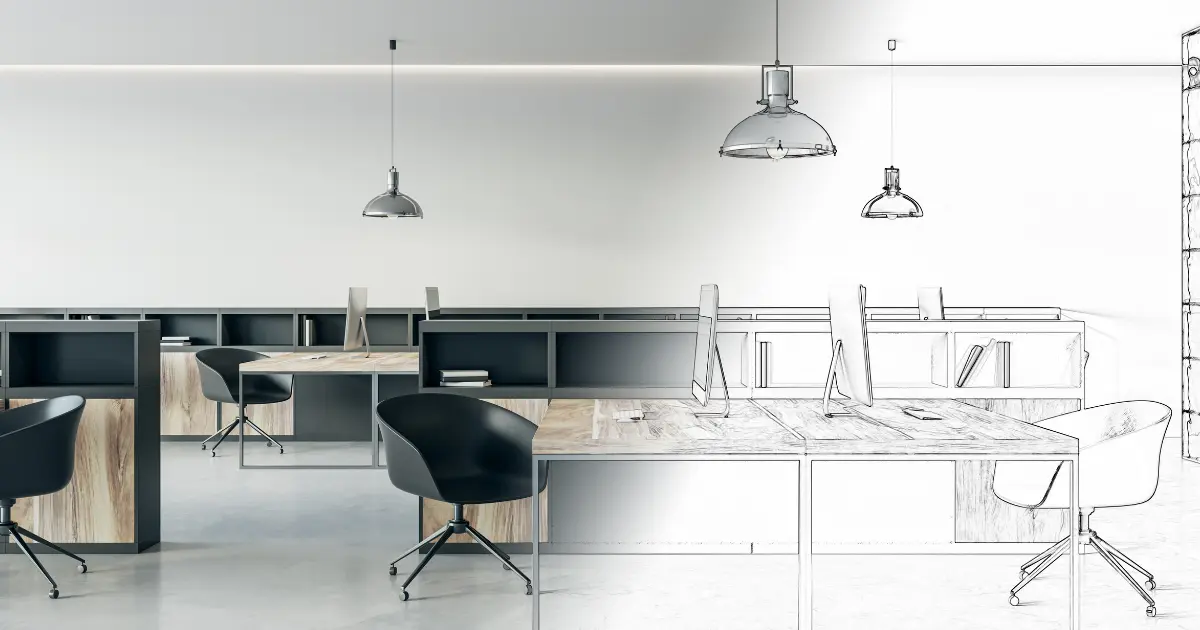
Foster collaboration among teams
Office design plays an important role in how people interact within a company. A rigid or poorly laid-out environment can hinder communication. In contrast, a space designed to foster the exchange of ideas encourages natural collaboration among colleagues and across departments.
It’s not about eliminating all partitions or always opting for completely open-plan offices. The key lies in balancing collaborative areas with spaces where it’s also possible to concentrate. This combination allows for flexibility in adapting to different ways of working without compromising team dynamics.
When the design is right, informal meetings, quick resolution of questions, and the exchange of ideas happen more naturally.
Make better use of the available space
Another key consideration is space optimization. Office design helps make the most of the available space, whether in a large or small office. Poor layout can result in wasted usable space or create a feeling of claustrophobia, even in large areas.
Good planning allows you to maximize functionality without needing to expand the space. Sometimes, small changes to the furniture layout, traffic flow, or the use of room dividers can make a significant difference.
In offices with limited space, this optimization is even more important. Choosing versatile solutions and maintaining a logical layout can greatly improve operations.
It influences motivation and corporate culture
The condition of the workspace affects how the team feels about their work. A neglected space can convey disorder, disinterest, or a lack of planning. In contrast, a pleasant, practical, and well-designed office fosters a more positive perception of the work environment.
That is why office design also influences motivation. People value working in places where they can perform their tasks comfortably and where the environment is conducive to productivity. Furthermore, design can reinforce corporate culture by incorporating values such as creativity, transparency, innovation, and approachability.
The office is no longer just a space; it has become a tool that enhances the employee experience.
The workspace has a direct impact on performance
Good office design boosts productivity, reinforces company culture, and conveys the brand identity.
Helps people adapt to new ways of working
Workplace needs have changed significantly in recent years. Many companies now combine on-site, remote, and hybrid work arrangements. In this context, office design must accommodate more flexible ways of working.
Rows of identical desks are no longer enough. Nowadays, it’s more common to look for adaptable spaces, multipurpose zones, and areas that accommodate both individual work and interaction. This shift makes design even more important.
Key Elements of a More Flexible Office Design
Some useful criteria include:
Modular furniture.
Multifunctional spaces.
Rooms equipped for hybrid meetings.
Well-organized shared workstations.
Greater emphasis on common areas.
Designing with flexibility ensures that the office remains functional as work dynamics change.
It helps reduce errors and improve processes
Although it is sometimes overlooked, office design can also help reduce inefficiencies. When the space is poorly organized, downtime, interruptions, and difficulties in coordinating tasks increase. All of this affects the quality of work.
A well-designed office facilitates internal workflows, improves access to materials and tools, and helps ensure that each process runs more smoothly. This is especially important in companies with multiple departments, customer service operations, or a high volume of meetings.
In many cases, reviewing the layout of a space can help identify operational issues that cannot be resolved simply by adding more staff or technology.
Adds long-term value
Investing in office design should not be viewed as a superficial expense. It is a decision that has a long-term impact on efficiency, brand perception, the team experience, and the use of resources.
When an office is designed with a strategic vision in mind, it becomes easier to maintain, adapt, and ensure that it continues to meet the company’s actual needs. Furthermore, a well-designed environment can help attract talent and make a better impression during business or hiring processes.
It is also important to view design as part of an overall business strategy, alongside the functionality of the space, visual identity, and user experience.
The importance of office design lies in the fact that it affects nearly every aspect of daily work. It improves productivity, enhances well-being, fosters collaboration, optimizes space, and projects a more professional image of the company.
Whether it’s a small office, a creative studio, or a corporate headquarters, a well-thought-out design always delivers real benefits. When the space is tailored to the people and the company’s operations, the result is an environment that is more efficient, more pleasant, and better equipped for growth.
Frequently Asked Questions
How does office architecture affect productivity and well-being?
Office architecture directly influences the way people work and interact. A well-designed office improves concentration, reduces interruptions, facilitates collaboration, and creates a more comfortable and healthy environment. This has an impact on both team productivity and the overall perception of the company.
When is the right time to renovate or redesign an office?
It’s a good idea to redesign an office when the space no longer supports the team’s workflow, causes discomfort, or projects an outdated image. Issues such as noise, poor layout, a lack of meeting rooms, ergonomically unsound workstations, or difficulty adapting to hybrid work often indicate that the office needs a redesign.
What does an architecture firm bring to office design?
An architectural firm analyzes the space, the company’s work processes, and its actual needs to design an office that is functional, efficient, and consistent with its brand. It defines not only the aesthetics but also the layout, circulation, lighting, acoustics, and use of space.
Want to improve your workspace?
Author
Cabana Team
Author information