

- Client
- Vila-real Town Hall
- Location
- Vila-real, Castellón
- Category
- Public
- Photography
- David Zarzoso
- Video
- Cabana Team
- Furniture
- Delinquent
- Service
- Architecture studio in Madrid
Gran Casino and Tagoba Theater:
Project report
In August 2019, work began on the comprehensive rehabilitation of two historic buildings in Villareal: the Gran Casino and Tagoba Theatre. Both buildings, acquired by the City Council in the previous legislature, are being rehabilitated by architectural firms Cabana (Madrid) and Negrosobreazul (Valencia). The goal is to restore their heritage value.
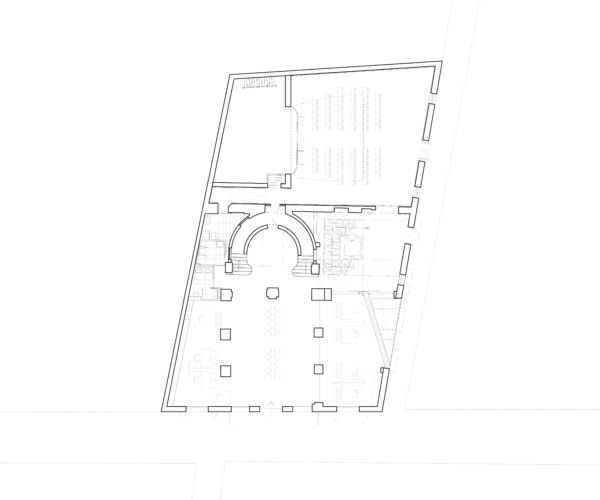
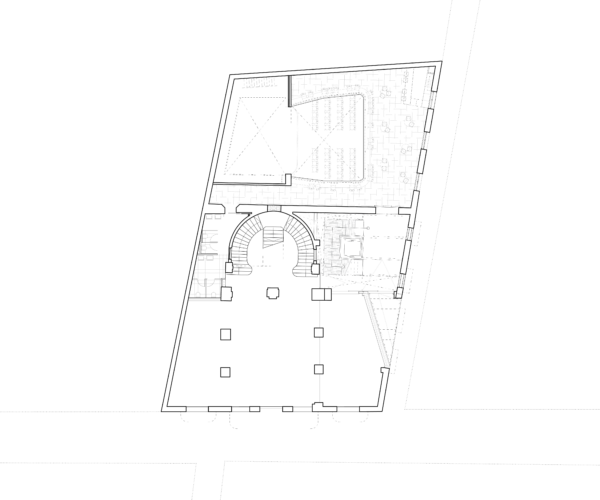
Built around 1919, the Gran Casino and the annexed Tagoba Theatre were originally integrated but later modified for different uses, including a club, a bank branch, and a popular university.
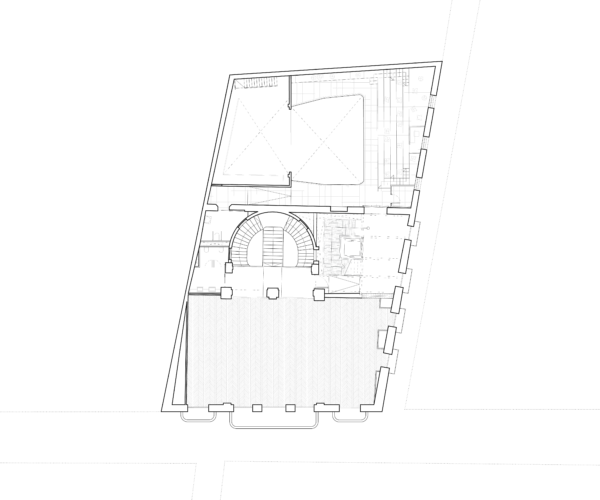
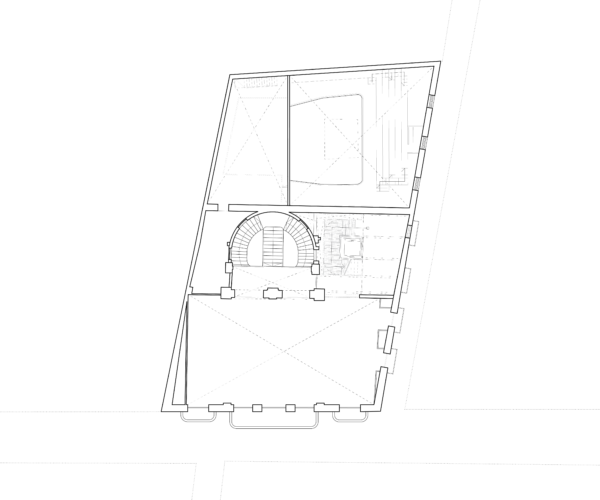
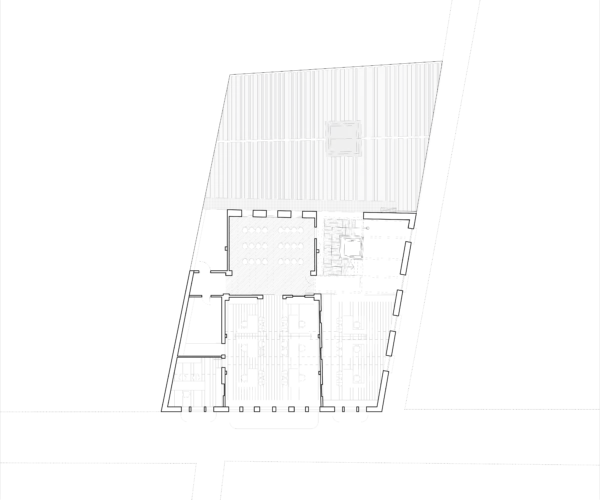
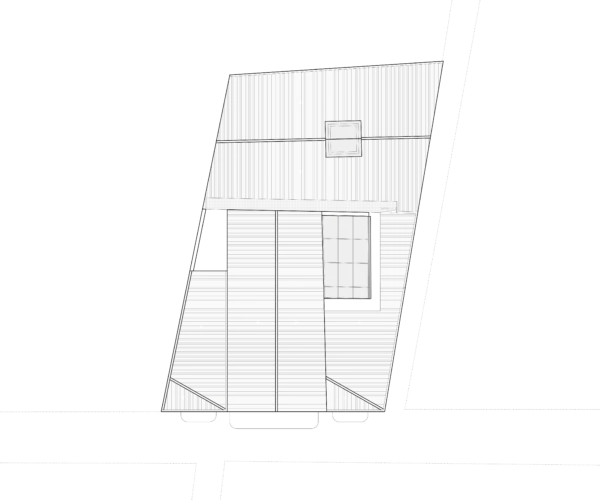
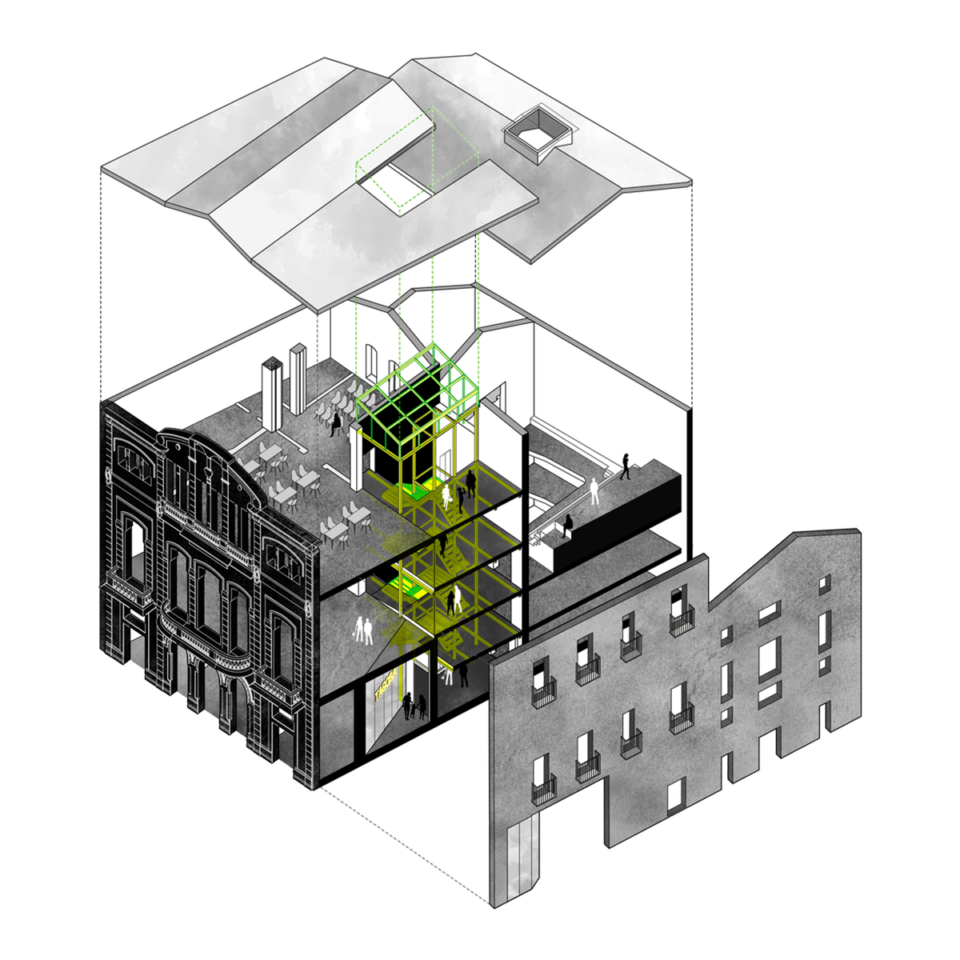
Reviving memory through architecture
About Functionality
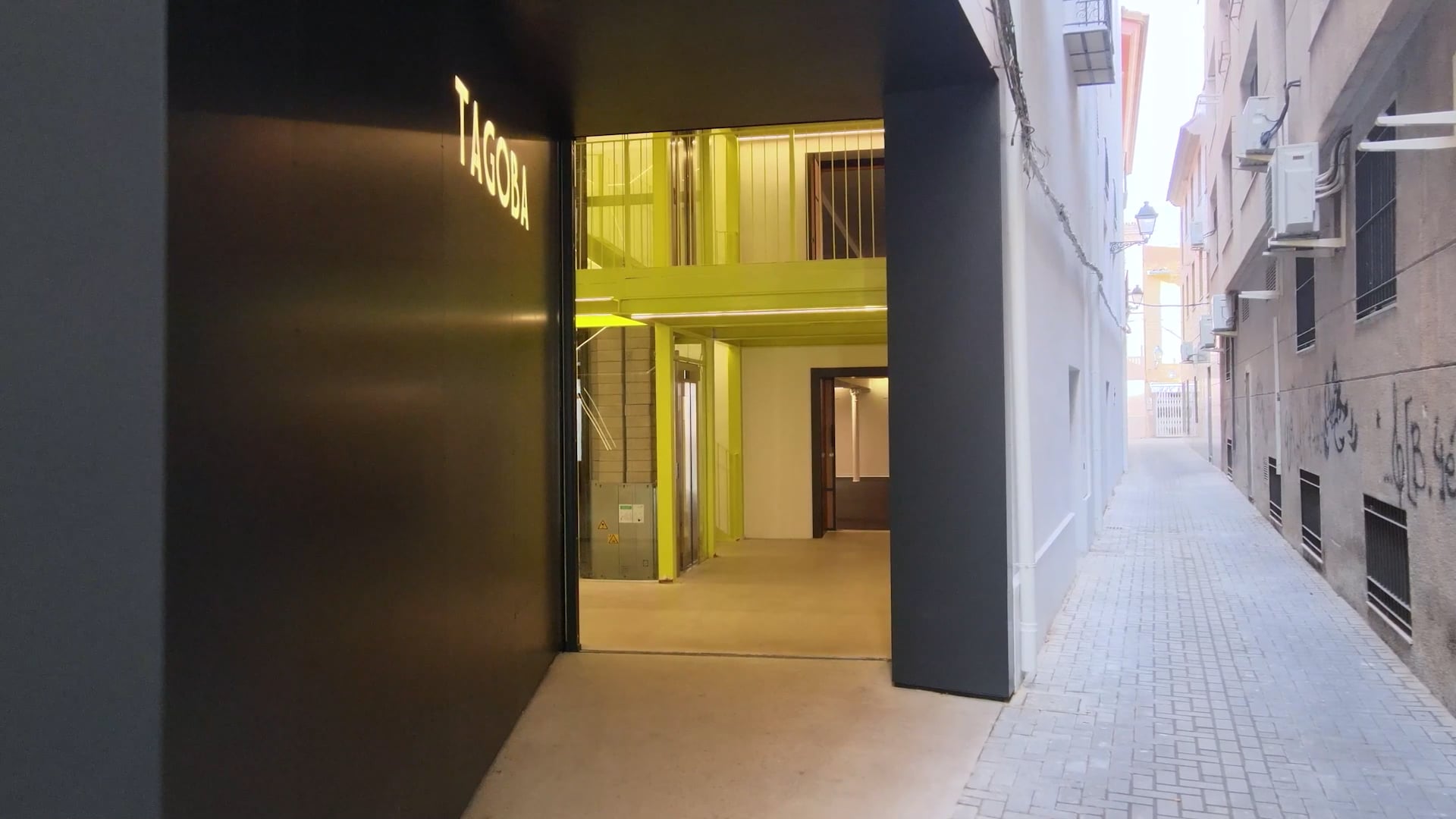
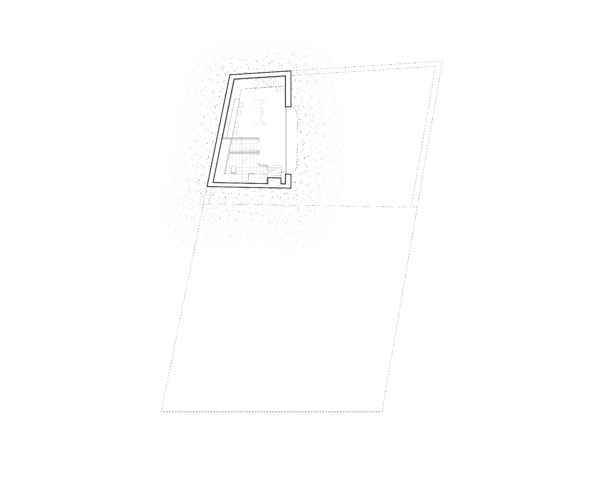
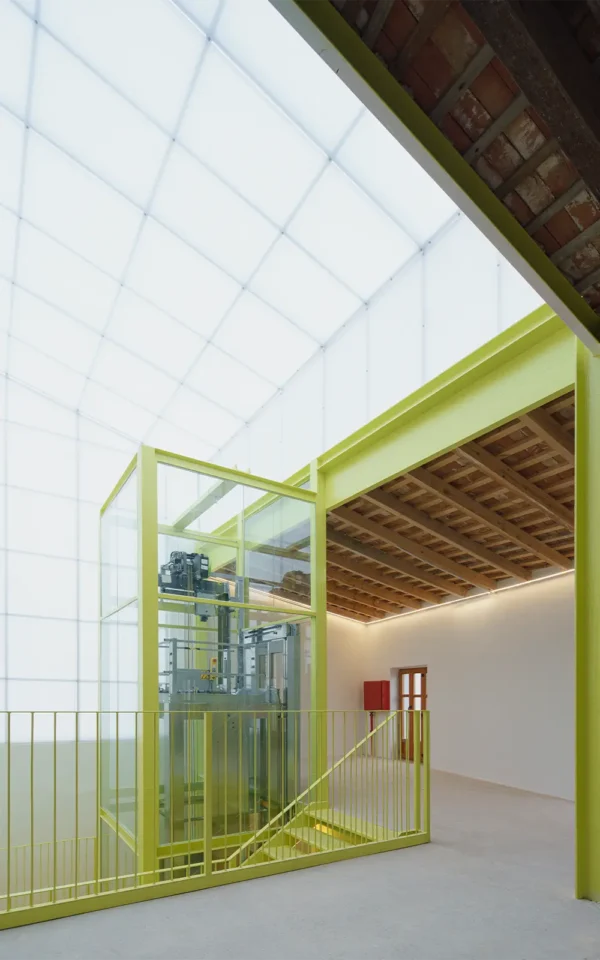
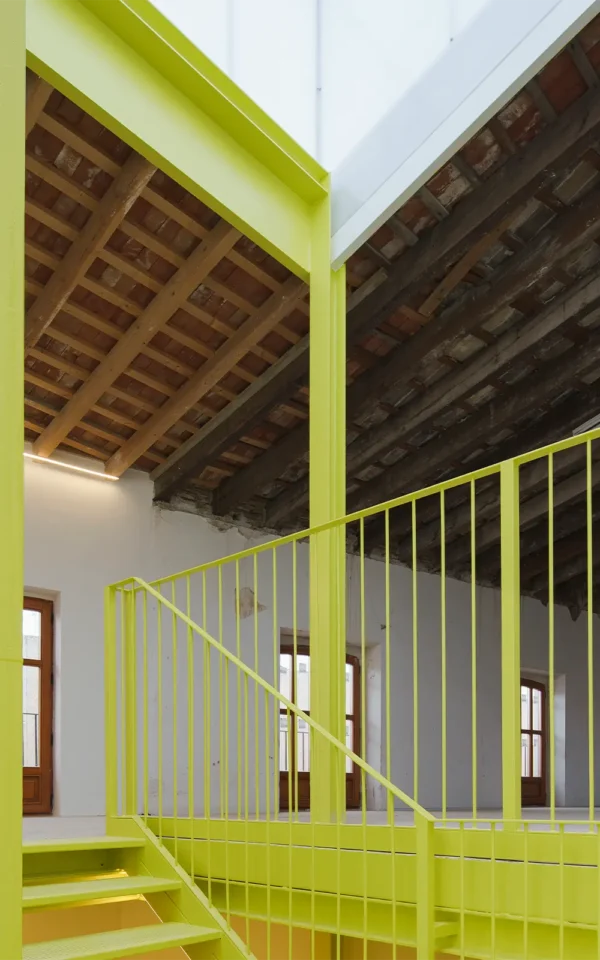
In this way, the challenge is to understand both buildings as a whole and recover it as a newbody connected with each other and with the city of Villareal. To this end, a new space hasbeen included: a space of concordance, intermediate, between these two magnificentarchitectures: the prism of light.
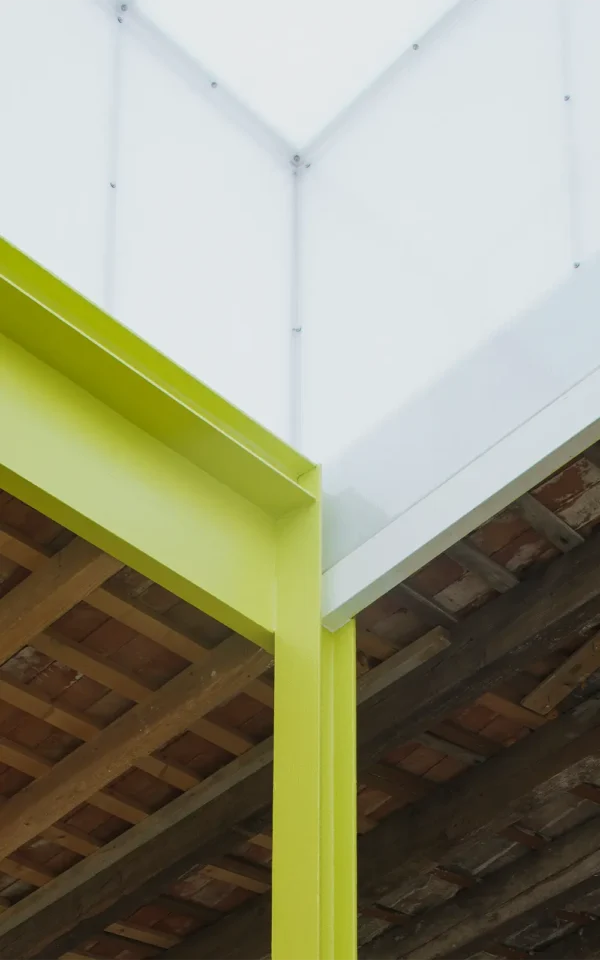
The prism of light is the «universal connector» between the buildings since it connects all thelevels of one building with the other with a common vertical core (a panoramic elevator and a lightened staircase).
Therefore, the visitor will be surprised by the appearance of this space composed mainly ofwhich is of two remarkable facts: the prominence of the staircase and the diffuse light that is contained in the prism.
About Materiality
Another fundamental ingredient in the recovery of these buildings: time.
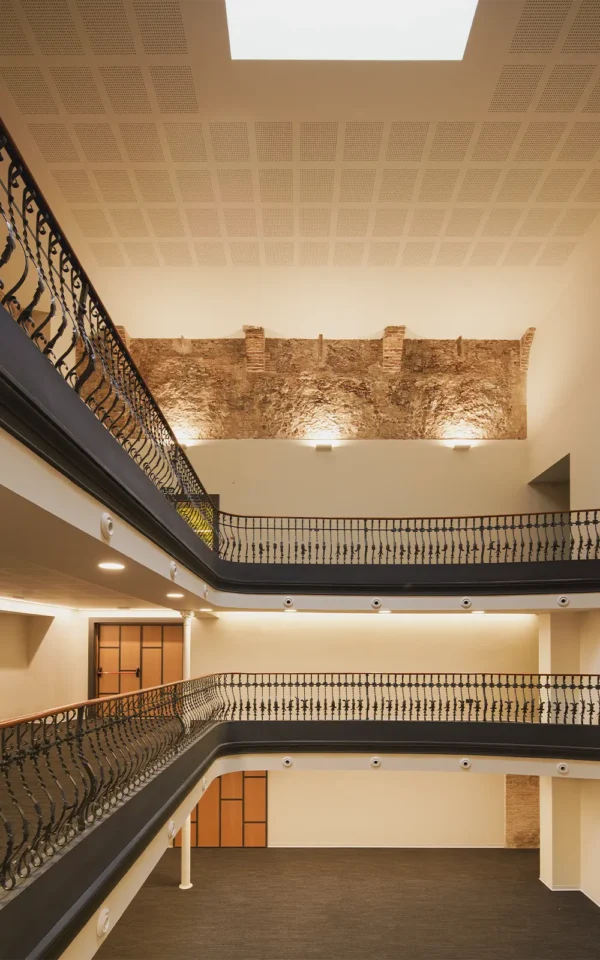
In the «new» Tagoba Theater and the Grand Casino one can contemplate constructiveelements of another era: bare and stark architectures that show the beauty of the masonry walls and mortars used at the beginning of the 20th century.
The textures have been respected and enhanced with indirect lighting that updates thesenescence of these elements.
The beauty of the passage of time: wabi-sabi.
wabi-sabi
1. Japanese aesthetic concept that describes a kind/type of aesthetic vision based on «thebeauty of imperfection».2. The art of aging.
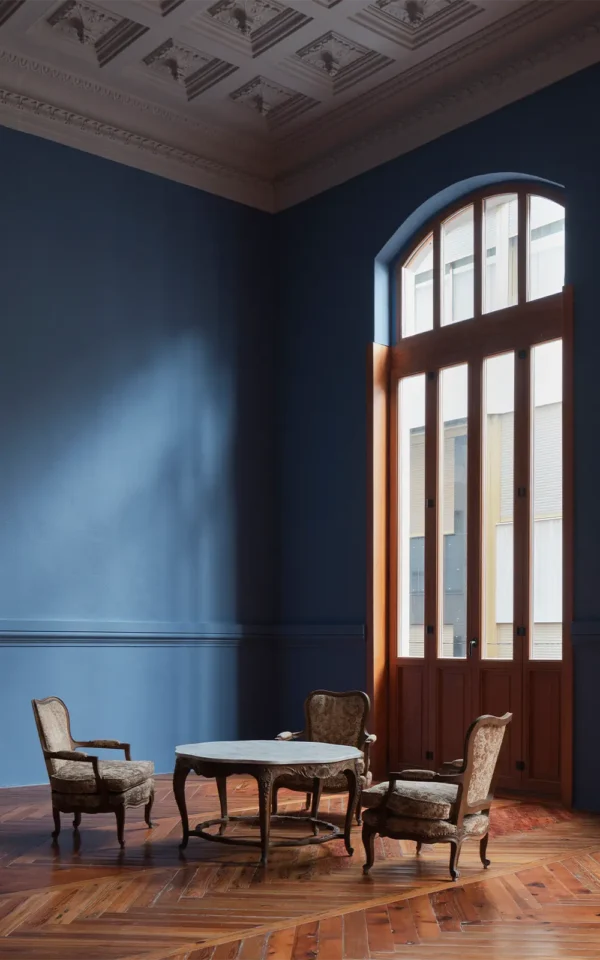
The final ingredient has been under which all other subordinate thoughts and ideas are subordinated: the recovery and restoration of historical elements. For example, the recovery of the main modernist facade of the Gran Casino, as well as various interior elements such as historicist sconces or other incunabula.
In short, the project is a firm step to reconnect Villareal with these emblematic buildings that is proposed as an experience of contrasts, between the old and the new, between recovery and criticism.
-
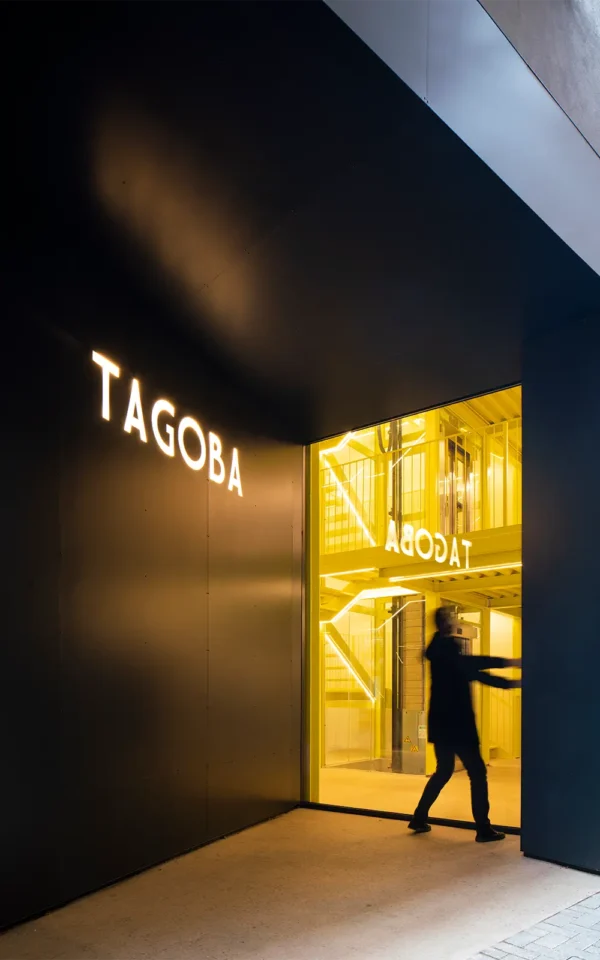
The prism of light serves as the “universal connector” between the theatre and the casino, introducing a new entrance facing Insa Street.
-
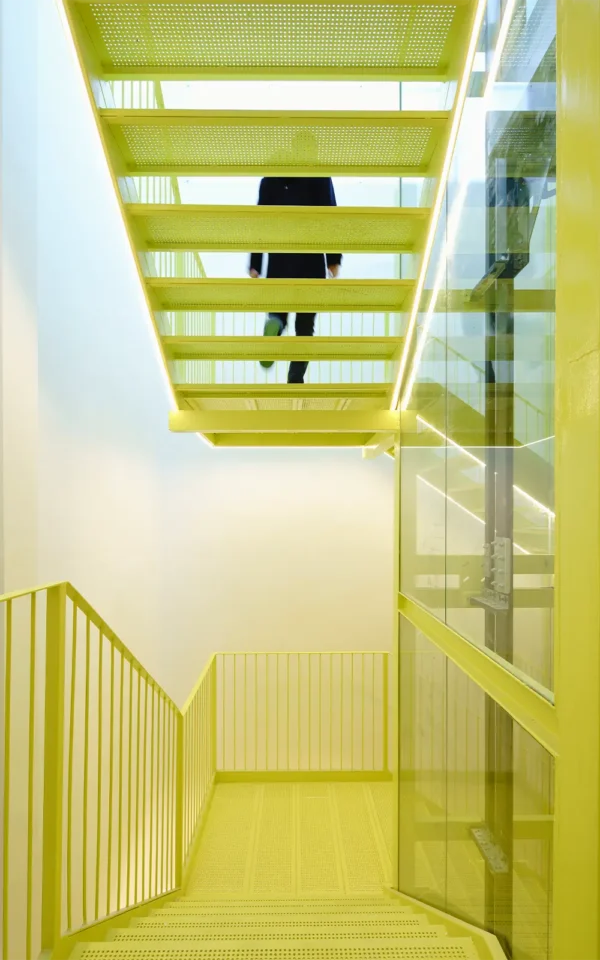
This central element contains a panoramic elevator and a light-filled staircase, seamlessly linking all levels of both buildings.
-
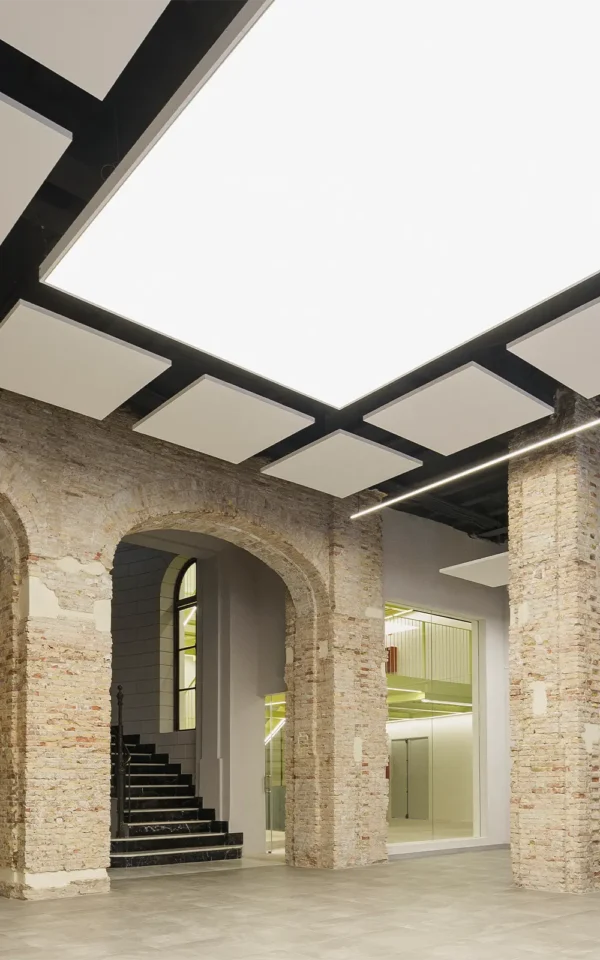
Acting as the functional heart of the project, this space ensures fluid movement between the historic structures, enhancing their unity.
-
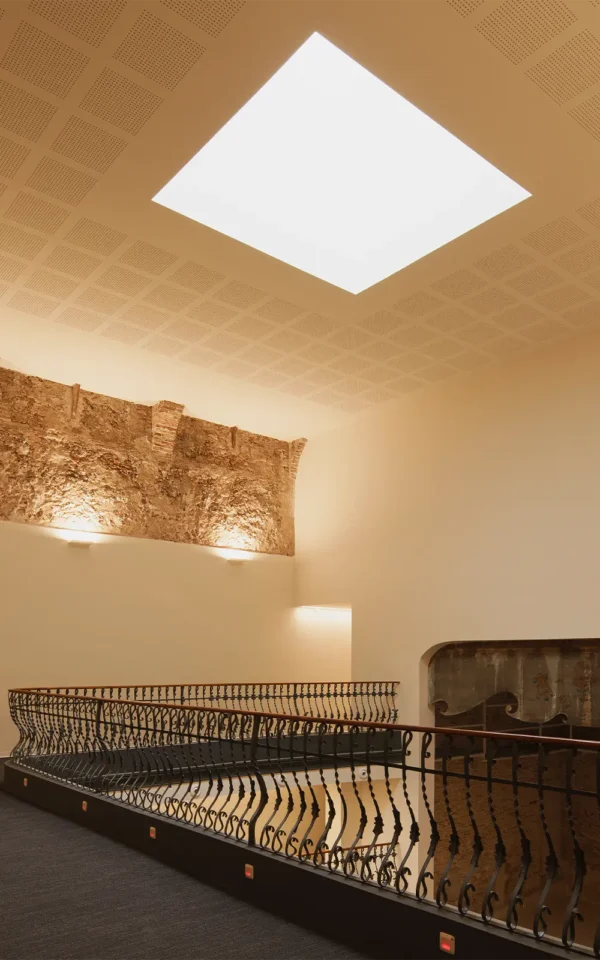
The rehabilitation process embraces the beauty of imperfection, showcasing exposed masonry and original mortars from the early 20th century.
-
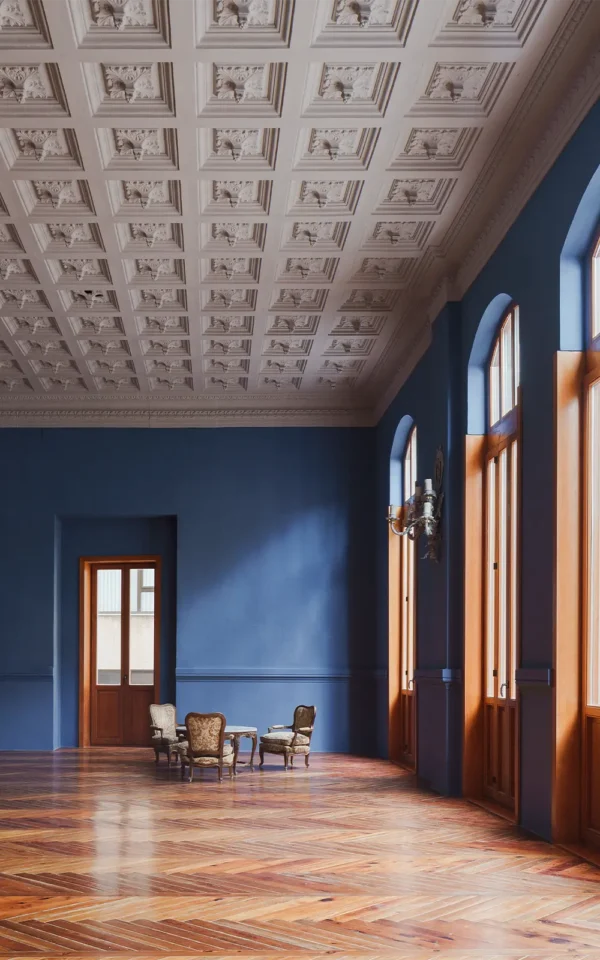
A space where history meets modernity, with restored interior elements that highlight the passage of time through delicate lighting.
-
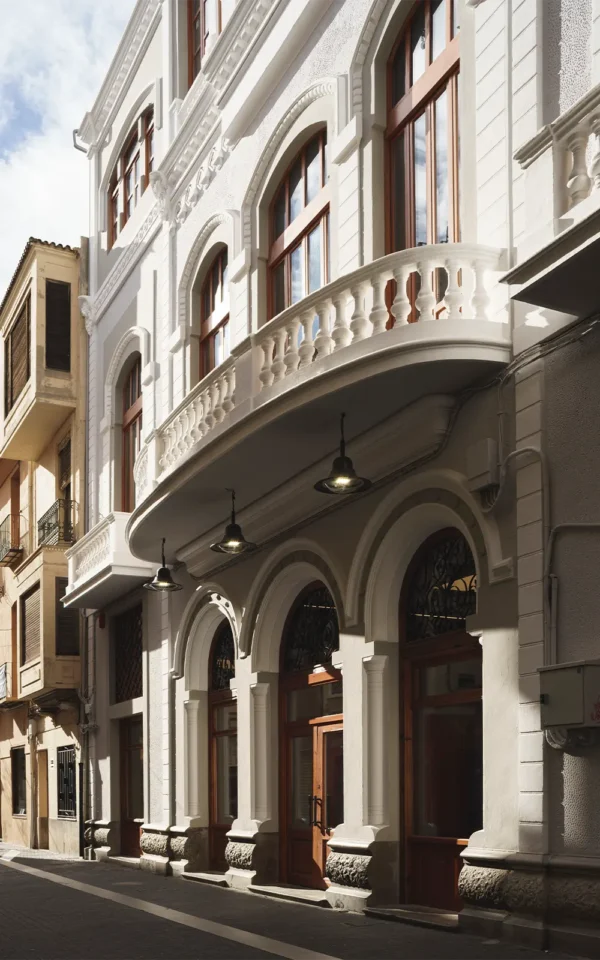
The recovery of the Gran Casino’s modernist façade, along with historical details, reconnects Villareal with its architectural heritage.
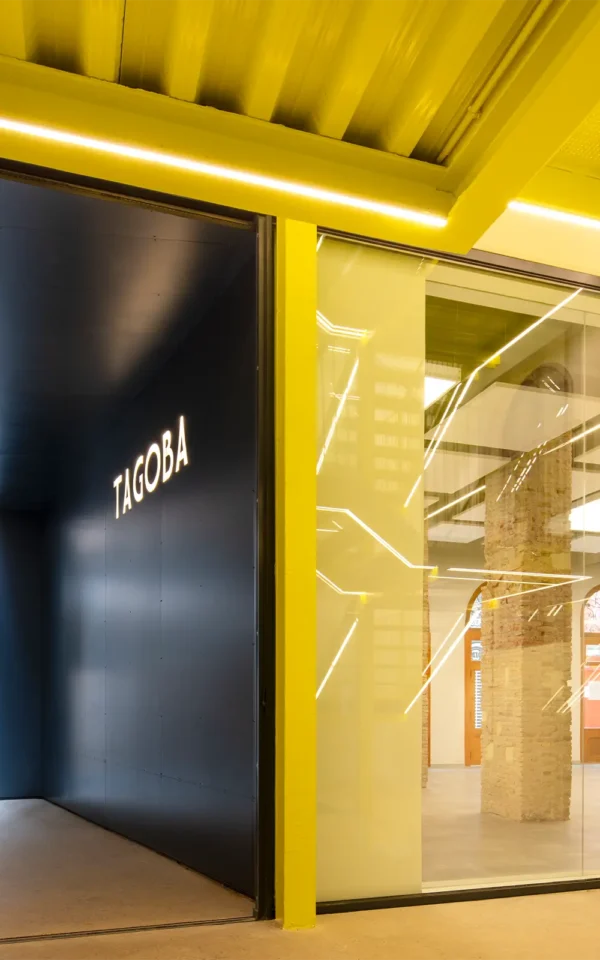
La arquitectura revela
el alma del tiempo: unir pasado y presente
transforma la memoria
en experiencia viva
Architecture reveals the soul of time: uniting past and present transforms memory into a living experience
Have a similar project?
Tell us what you need and we will tell you how we would approach it.