
Shopping center revitalization is the process of renovating, updating, and improving a commercial property to adapt it to new market needs, optimize its performance, and enhance its appeal. It goes beyond simply renovating a building; it involves rethinking its value proposition, functionality, and user experience.
Shopping Center Renovation: Definition and Strategic Approach
Shopping center renovation involves upgrading an existing retail space to modernize it, address outdated features, and make it more competitive. This can involve changes to the architecture, layout, branding, access points, amenities, retail offerings, or even the overall positioning of the property.
This type of project typically arises when a property loses its appeal, sees a decline in foot traffic, begins to look dated, or fails to meet current consumer trends. In such cases, the renovation aims not only to “improve the appearance” but also to restore the property’s market relevance and increase its value.
That is why revitalizing commercial properties requires combining real estate vision, business strategy, and user experience.
What is meant by a business asset
Before delving deeper, it is worth clarifying what a commercial property is. It refers to a building or group of buildings intended for commercial use and designed to generate revenue. It can be a shopping mall, a retail park, a shopping arcade, a large retail space, or a mixed-use complex with a significant retail component.
When a commercial property is renovated, the work goes beyond the physical structure. It also involves an economic asset that must remain profitable, attractive, and useful to operators, owners, and visitors.
That is why renovation involves much more than just cosmetic changes.
We unlock the potential of every asset
We analyze the condition of the asset, its positioning, and opportunities for transformation to adapt it to the current market, through projects for the commercial property renovations.
What is the purpose of commercial property renovation?
The renovation of commercial properties serves to revitalize spaces that have lost their competitive edge or need to adapt to new demands. Its primary goal is to extend the property’s useful life and improve its performance in terms of image, occupancy, foot traffic, and perceived value.
Among its most common objectives are:
Modernize facilities and common areas.
Improve the visitor experience.
Increase the property's appeal.
Adapt the space to accommodate new operators.
Correct functional or circulatory problems.
Enhance efficiency and sustainability.
Regain ground against the competition.
In many cases, it also makes it possible to reposition a center for different audiences or redefine its role within the urban and commercial environment.
When does a shopping center need renovation?
Not all assets require a major overhaul at the same time, but there are clear signs of wear and tear or a loss of competitiveness. Detecting these signs early is key to preventing a prolonged decline in asset performance.
Common signs of obsolescence
One of the most obvious issues is the space’s outdated appearance. Other issues include an inefficient layout, underutilized common areas, awkward access points, and an experience that no longer meets the expectations of today’s visitors.
Other common signs include:
A steady decline in attendance.
Difficulty in attracting or retaining operators.
Outdated image.
Low differentiation compared to other assets.
Accessibility or comfort issues.
Declining appeal in the restaurant and leisure sectors.
Situations where it adds the most value
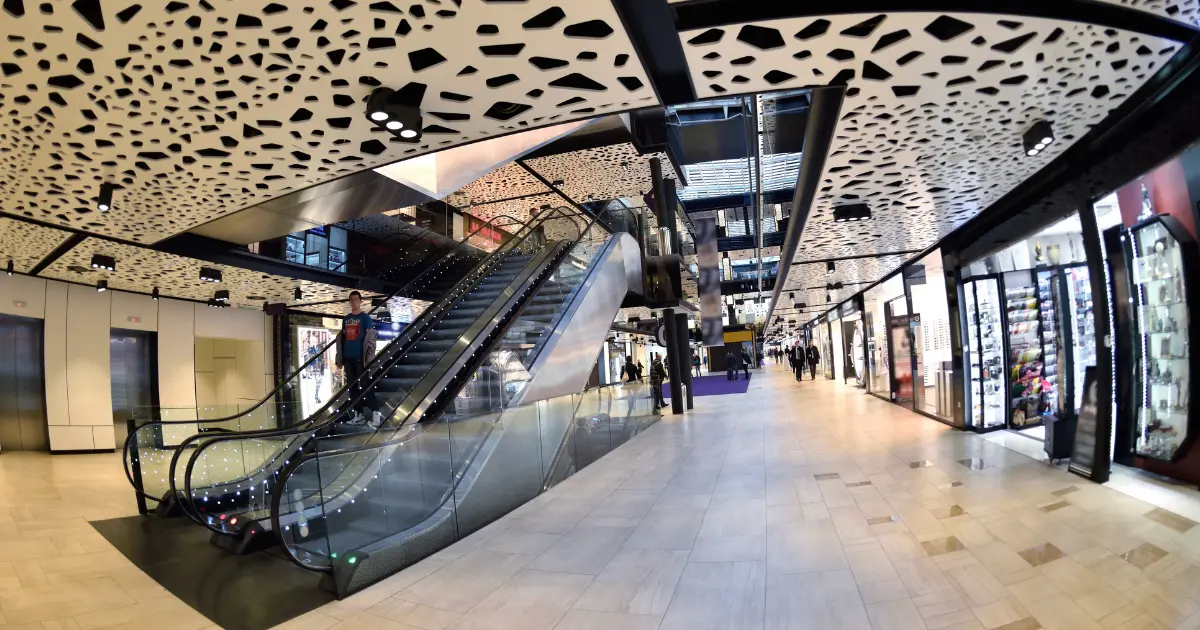
Shopping center renovations are particularly useful when the property still has potential but needs an update to regain its competitiveness. They are also recommended when the goal is to adapt the space to new shopping habits, integrate complementary services, or enhance the relationship between the brand, the surroundings, and the overall experience.
What does the renovation of commercial properties involve?
The scope of a renovation can vary depending on the type of property, its condition, and the project’s objectives. In some cases, the work focuses on specific elements; in others, the spatial layout is almost entirely redesigned.
The most common areas of intervention are:
Facades and exterior appearance.
Common areas and walking routes.
Lighting, materials, and finishes.
Access, parking, and signage.
Internal layout.
Recreational and dining areas.
Energy efficiency and technical systems.
Compliance with new regulations.
Renewal of the retail mix.
The key is that all these improvements should be guided by a strategic approach, rather than being isolated changes made without a broader perspective.
Stages of a shopping center renovation
Shopping mall renovations are typically carried out in phases to minimize risks, optimize investment, and ensure that the project meets realistic objectives. The goal is not to proceed without a thorough assessment, but rather to plan each decision based on technical and commercial criteria.
1. Asset Analysis
First, we assess the current state of the space, its performance, its location, its weaknesses, and its opportunities. This analysis takes into account both physical and commercial factors.
2. Setting Goals
Next, we determine what we want to achieve: increase foot traffic, refresh the image, attract new operators, optimize routes, enhance recreational opportunities, or increase the property’s value.
3. Intervention Design
This phase involves the implementation of the following elements: architecture, interior design, accessibility, layout redesign, utilities, spatial identity, and technical upgrades.
4. Implementation and Monitoring
Finally, the changes are implemented, and their impact is assessed. In many cases, the renovation is carried out in phases to allow some operations to continue during construction.
The difference between renovation, remodeling, and repositioning
Although they are often used interchangeably, they do not mean exactly the same thing. Renovation typically focuses on specific physical changes. Rehabilitation has a broader scope and aims to restore the asset’s functionality, competitiveness, and value.
Repositioning, on the other hand, has a more direct impact on the brand’s positioning and the place the brand aims to occupy in the market. It may involve a shift in the target audience, a new narrative, a redefinition of the product mix, or a different customer experience.
In practice, many projects incorporate all three dimensions. The space is renovated, the property is refurbished, and the concept is repositioned to make it more relevant.
The same principle guides a comprehensive reform of housing policy.
Benefits of Renovating a Commercial Property
Renovating a commercial property can yield significant benefits for both the property owner and the operators and users. When the project is well-planned, the impact goes far beyond just the building’s appearance.
Some of the most common benefits include:
Improved spatial awareness.
Increased appeal to brands and visitors.
Greater competitiveness compared to other assets.
Route and usage optimization.
Appreciation in the property's value.
Technical and regulatory updates.
Improving the overall experience.
In addition, a well-executed renovation can help revitalize underutilized areas, create new points of interest, and enhance the property’s ability to adapt to market changes.
Common challenges in this type of project
The renovation of commercial properties also presents significant challenges. One of the main challenges is carrying out the work without unduly disrupting daily operations, especially when the facility remains open to the public.
Another common challenge is striking a balance between investment, timeline, and expected return. Not all improvements have the same impact, so it’s important to set clear priorities. It’s also essential to align architecture, business strategy, customer experience, and technical feasibility.
Added to this is the need to avoid superficial changes. Refreshing finishes without reviewing the layout, offerings, or positioning may result in a temporary visual improvement, but it will not solve the underlying problem.
How to Tell If a Renovation Is Well-Planned
A well-planned project not only enhances the space but also addresses a clear need and improves the asset’s performance. There must be consistency between the assessment, objectives, and proposed solutions.
Some signs of a good approach include:
There is a pre-existing strategic vision.
These improvements address real-world problems.
Both visitors and operators are taken into account.
The procedure improves both function and appearance.
The asset's positioning becomes clearer.
It is also important that the project take into account the relationship between space, brand, and actual use.
Common Mistakes in the Renovation of Commercial Properties
One of the most common mistakes is to view renovation as merely a cosmetic update. Changing finishes or furniture can give a space a fresh look, but it doesn’t always solve underlying issues related to traffic flow, tenant mix, or value proposition.
Another common mistake is taking action without a clear understanding of the competitive landscape. A commercial property competes not only on location, but also on the experience it offers, its utility, and its adaptability.
It is also common to underestimate the importance of the strategic phase. When there is no clear definition of objectives, the renovation runs the risk of becoming a series of disconnected improvements.
Conclusion
Understanding what commercial property renovation entails reveals that it is not merely about renovating a building, but about restoring its competitiveness, functionality, and value. It is a key tool for adapting commercial spaces to new market expectations and enhancing their appeal in the medium and long term.
Shopping center renovations add value when they combine physical improvements, strategic vision, and user experience. In an environment where consumer habits are changing rapidly, successfully renovating a property can mean the difference between becoming obsolete and repositioning itself strongly.
Frequently Asked Questions
How long can the renovation of a commercial property take?
The duration of a renovation depends on the size of the property and the scope of the work. Some projects are carried out in phases to keep the facility operational during construction, while others require partial closures or more intensive work that can last for several months.
What professionals are involved in a commercial renovation project?
These types of projects typically involve architects, strategic consultants, retail specialists, interior designers, engineers, and real estate managers. Collaboration among these professionals allows for a comprehensive approach to both the technical aspects of the building and the commercial strategy for the property.
What are the benefits of renovating a shopping center compared to building a new one?
Renovating a shopping center allows developers to leverage existing infrastructure, shorten development timelines, and optimize their investment. Furthermore, it can revitalize established commercial areas and adapt existing properties to meet new market demands without the need to develop an entirely new project.
Do you want to unlock the potential of a commercial asset?
Author
Cabana Team
Author information