
Architecture has always communicated through its form, but today it is its textures that construct the most intimate narrative. The skin of buildings is no longer a simple finish, but rather an emotional language that generates memory, identity, and sensory connection.
1. Texture as a new architectural language
Contemporary users don't just want to inhabit spaces, they want to feel them. Surfaces take on a narrative role, defining atmospheres through their roughness, their temperature, and the way they interact with light. Wood with visible grain, hand-troweled concrete, deeply tactile mineral stucco... all restore the physical link between people and architecture. This return to the sensory responds to a clear desire: authenticity versus absolute digitalization. The manual, the imperfect, and the deeply material are once again of transcendental value.
2. Artisanal tradition and advanced technology
Far from being opposed, craftsmanship and innovation reinforce each other. Today, it is possible to work with textures using the precision of an algorithm and the soul of an ancestral craft. Digitally woven facades, extruded ceramics with unique patterns, pigmented concrete that evokes local earth tones, or biomimetic coatings that respond to the climate: architectural skin has reached a level of customization that was previously unthinkable. This dialogue between past and future offers creative freedom and an unprecedented ability to adapt the building to its cultural and climatic context.
3. The narrative of the journey: textures that guide, reveal, and accompany
Each texture adds a layer of meaning: a relief that casts shadows sets the rhythm of a façade; a warm surface softens the entrance; a rough pavement anticipates a transition. Materiality becomes a sensory script that accompanies the visitor and transforms each step into an experience.
In contemporary projects, skin is no longer a limitation: it is a narrative device. It tells the story of the place, of those who design it, and of those who inhabit it.
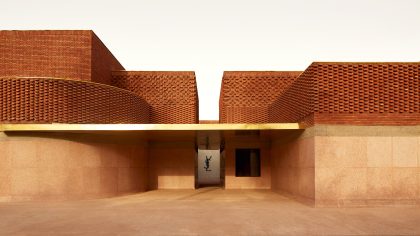
Yves Saint Laurent Museum – Marrakech, Morocco. Studio KO
4. The architect as curator of materials
Selecting textures involves understanding their origin, cultural significance, and impact. Every surface speaks: of the geology of a territory, of a revived craft, of an innovative technological gesture. That is why architects take on an almost editorial role, composing a language made up of layers, memories, and intentions. This process transforms the skin into identity, and architecture into an object with soul.
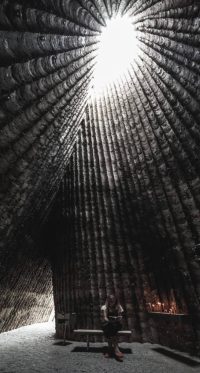
Bruder Klaus Country Chapel – Mechernich, Eifel, Germany. Peter Zumthor
The new architecture is written from the material. It understands textures not as decoration, but as a way of communicating values, stories, and emotions. They are what connect visitors to the place, what sustain memory, and what give meaning to space.
At Cabana, we approach textures from this technical and cultural perspective. We select materials that dialogue with the location, that support a solid narrative, and that add depth to the project. Because well-constructed architecture is not only recognized by its form, but also by the quality and intention of its skin.
Author
Cabana Team
Author information