

Building permit: this is the municipal permit you need to apply for when a renovation or construction project affects the structure, facade/roof, or use of the property. If the work is interior and “minor” (without affecting the structure, exterior, or common elements), prior notification or a responsible declaration is usually sufficient. Identifying the correct procedure will prevent penalties, stoppages, and delays due to having to regularize the situation later.
What is a building permit and why is it required?
It is a planning permission granted by the local council that verifies that your project complies with the applicable regulations (planning, safety, accessibility, etc.). If you carry out work that requires this permission without having it, the local council can halt the work, impose penalties, and require subsequent legalization.
In comprehensive renovations, it is common for other permits to be involved (e.g., occupation of public roads, waste management, or protection requirements).
What procedure do you need depending on the type of action?
Rule of thumb: the greater the impact, the greater the requirements. If you do not touch protected or common elements and the scope is limited, a notification may suffice. If you alter the structure, envelope (facade/roof), or use, a building permit is usually required.
| Performance | Standard procedure | Comments |
|---|---|---|
| Knocking down or opening holes in load-bearing walls, slabs, beams | Building permit (major) | Requires technical project and professional supervision. |
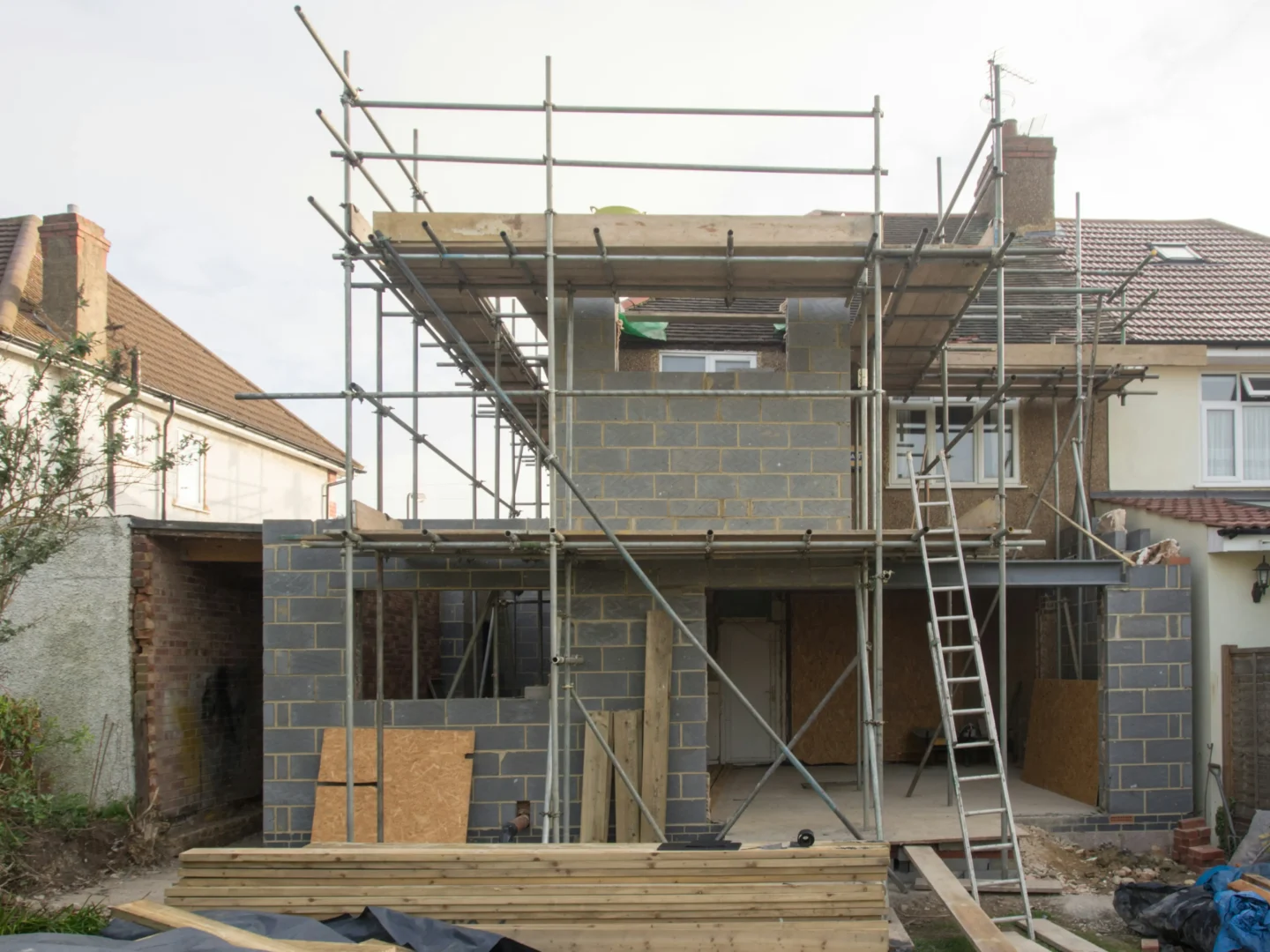
| Modify facade or roof (new windows, terrace enclosure, skylights) | Building permit | In protected buildings, a specific report may be required. |
| Extensions (habitable attics, annexes, increase in buildable area) | Building permit | It usually requires adjustments to planning and structural calculations. |
| Change of use (e.g., commercial to residential) | Building permit | It usually involves full technical compliance and habitability conditions. |
| Interior renovations without structural work (non-load-bearing partitions, finishes) | Prior notification / responsible declaration | A report, simple plans, and a budget are usually sufficient. |
| Renovation of private facilities without affecting common elements | Prior notification | If you modify general connections, you may need to obtain a license. |
| Outdoor air conditioning unit on the facade or roof | Building permit | It also usually requires authorization from the community. |
Clear signs that you need a building permit
In a comprehensive home renovation, knowing whether you need a permit helps avoid delays.
- You are going to intervene in the structure or open holes in the facade.
- You want to enclose a terrace, change the exterior appearance, or create a new entrance.
- You increase the usable or built area.
- You change the use of the property.
- Affects common elements (courtyards, shunts, slabs, general downspouts).
Documentation and standard fees
Building permit (major work)
It usually requires a technical project, safety documentation, project management, waste management, urban planning fees, and, where applicable, associated bonds. Community authorization and additional documentation may also be required if there is protection.

Prior notification or affidavit (minor work)
Normally: descriptive report, sketches/basic plans, measurements, budget, and reduced rates. Even if it is “minor,” keep receipts and photographs: they help during inspections.
Deadlines and how they fit into your schedule
The times depend on the municipality. As a practical guideline:
- Building permit (major): usually takes weeks or months.
- Prior notification: you can start almost immediately if the documentation is complete.
Integrate the building permit into the critical path of the schedule (purchasing materials and hiring tradespeople) to avoid delays.
Frequent casuistry
Interior renovations
Redistributions with non-load-bearing partitions, changing floors and tiling, replacing bathroom fixtures and kitchen furniture are usually covered by a communication. If you move general downspouts or touch the structure, you will need a building permit.
Facade and roof
Replacing windows while maintaining dimensions and color may vary depending on the local council: some require a permit, while others accept a declaration of responsibility. Enclosing terraces, creating new openings, or making changes that alter the appearance of the building usually require a permit.
Facilities
Outdoor air conditioning units, chimneys, smoke vents, or equipment on the roof usually require a license and community agreement. Changes in power or connections may require additional technical documentation.
Communities and common elements
Even if you have a license, acting on common elements usually requires permission from the homeowners’ association. Secure access, schedules, protection of common areas, and elevator use. Keep approval records.
Penalties, inspections, and retroactive legalization
Working without a building permit when one is required involves the risk of stoppage, fines, the obligation to restore or legalize with additional costs and delays. If you have already completed part of the work, consult a technician to discuss legalization with an “as built” project.
Common mistakes that complicate execution
- Start with “communication” when in reality there is structural damage or damage to the facade/roof.
- Not checking whether the action affects common elements (and forgetting about the community).
- Defining solutions without reviewing ordinances/aesthetic conditions and ending up redrawing plans.
- Process late applications for occupation of public roads (scaffolding/containers) and delay the start of work.
- Submitting inconsistent documentation (plans, reports, and measurements that do not “fit”).
Tips for speeding up processing
- Submit complete and consistent documentation: plans, reports, and aligned measurements.
- Review municipal criteria before finalizing solutions (alignments, occupancy, aesthetics).
- If possible, request a preliminary technical consultation with the Urban Planning Department before registering.
- If you anticipate occupying public roads, process this in parallel.
- Use digital signatures/visas to avoid back-and-forth communication.
Work affecting the structure of the building, the façade, the roof, or the use of the property usually requires a building permit. For simple interior renovations, prior notification or a responsible declaration is usually sufficient. It depends on the type of work. Changes to finishes or redistributions that do not affect the structure can be processed with prior notification, but work on structural elements or the façade requires a municipal license. The documentation is usually prepared by an architect or technician responsible for the project, who is in charge of drafting the technical project and processing the application with the city council. The timeframe depends on the municipality and the type of license. Major building permits can take several weeks or months, while other simpler procedures are resolved more quickly.Frequently Asked Questions
What types of construction require a building permit?
Can renovations be carried out without a building permit?
Who applies for the building permit?
How long does it take to obtain a building permit?