

Stone is once again taking center stage in today’s architecture. Not as a nostalgic gesture, but as a precise response to contemporary needs: durability, presence, character, and a deep connection to the land. In a fast-paced world, its symbolic and physical weight offers a pause, a certainty.
1. The resurgence of an eternal material
For decades, architecture focused on industrial, lightweight, and modular materials. Today, the pendulum is swinging back toward mineral solidity. Stone provides a tactile and visual authenticity that contrasts with the volatility of artificial surfaces. Its ability to age gracefully, and even improve, makes it an ally of conscious architecture, which seeks to transcend trends and embrace permanence.
2. Stone and modernity: a renewed dialogue
The return of stone does not mean a repetition of historical aesthetics or styles. The key lies in how it is worked: precise cuts, geometric sections, contemporary fittings, combinations with glass or steel that visually refine its mass. Current studies reinterpret its character, achieving ventilated facades, optimized load-bearing walls, or prefabricated elements that allow for structural lightness without losing presence. Technology has allowed stone to be traditional and, at the same time, deeply modern.
3. Connection to the location and sustainability
Using stone is no longer just an aesthetic decision. It is a sustainable strategy when it comes from nearby quarries, reducing the transport footprint and reinforcing zero-kilometer architecture. Local materials anchor projects to the territory and convey cultural identity. In addition, their thermal inertia contributes to interior comfort, while their durability reduces the need for long-term maintenance, making them a competitive material for buildings with high energy requirements.
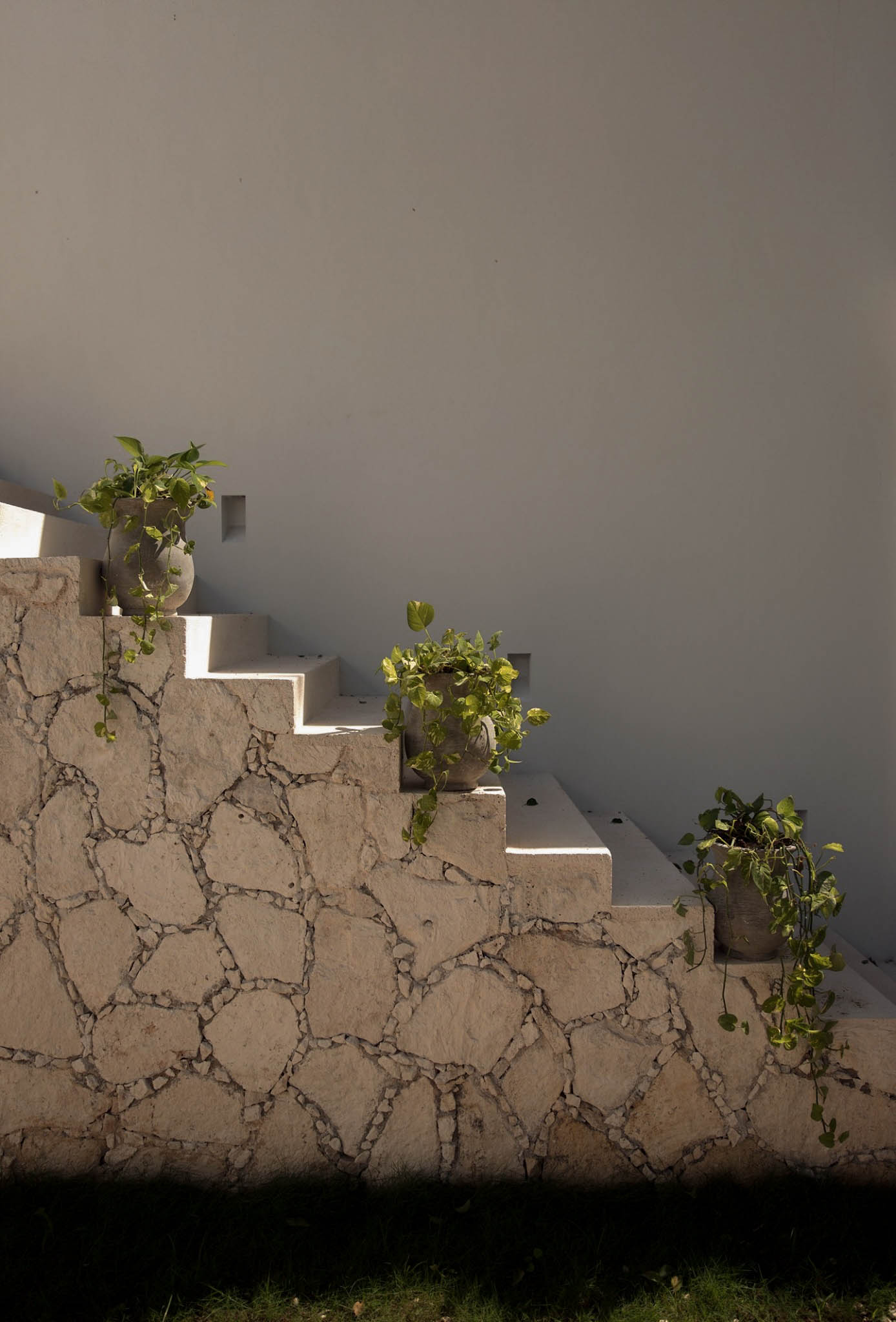
Can Ros – Ibiza, Spain.
4. New languages for an ancient material
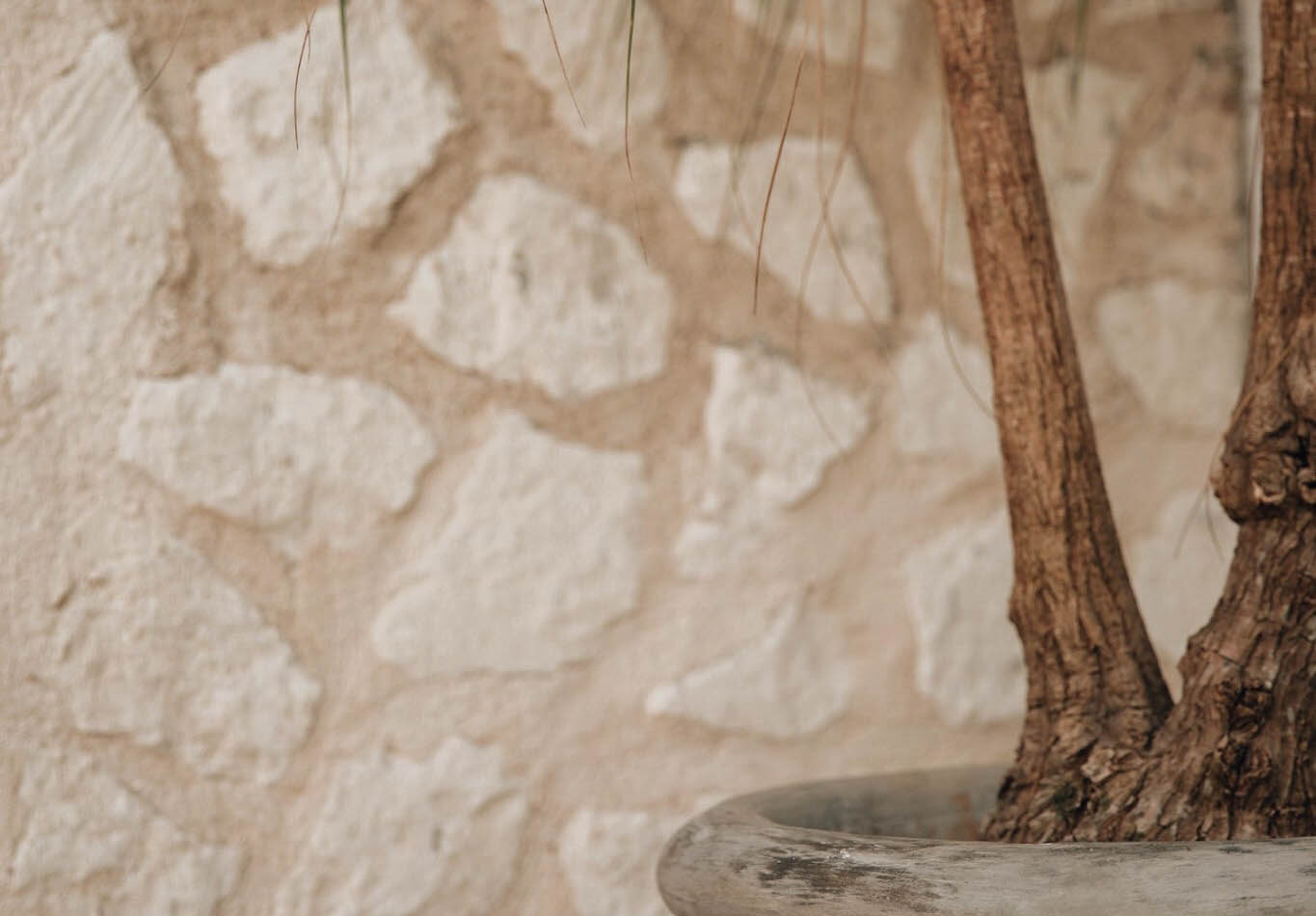
Stone is now the star of minimalist single-family homes, boutique hotels, museums, and institutional buildings. Its use is no longer limited to rusticity: it can be polished to sculptural purity or left rough for a primitive, tactile effect. The architectures that adopt it explore contrasts: stone walls in dialogue with diaphanous interiors, light roofs over solid foundations, or courtyards framed by mineral textures that filter light and shadow with great drama.
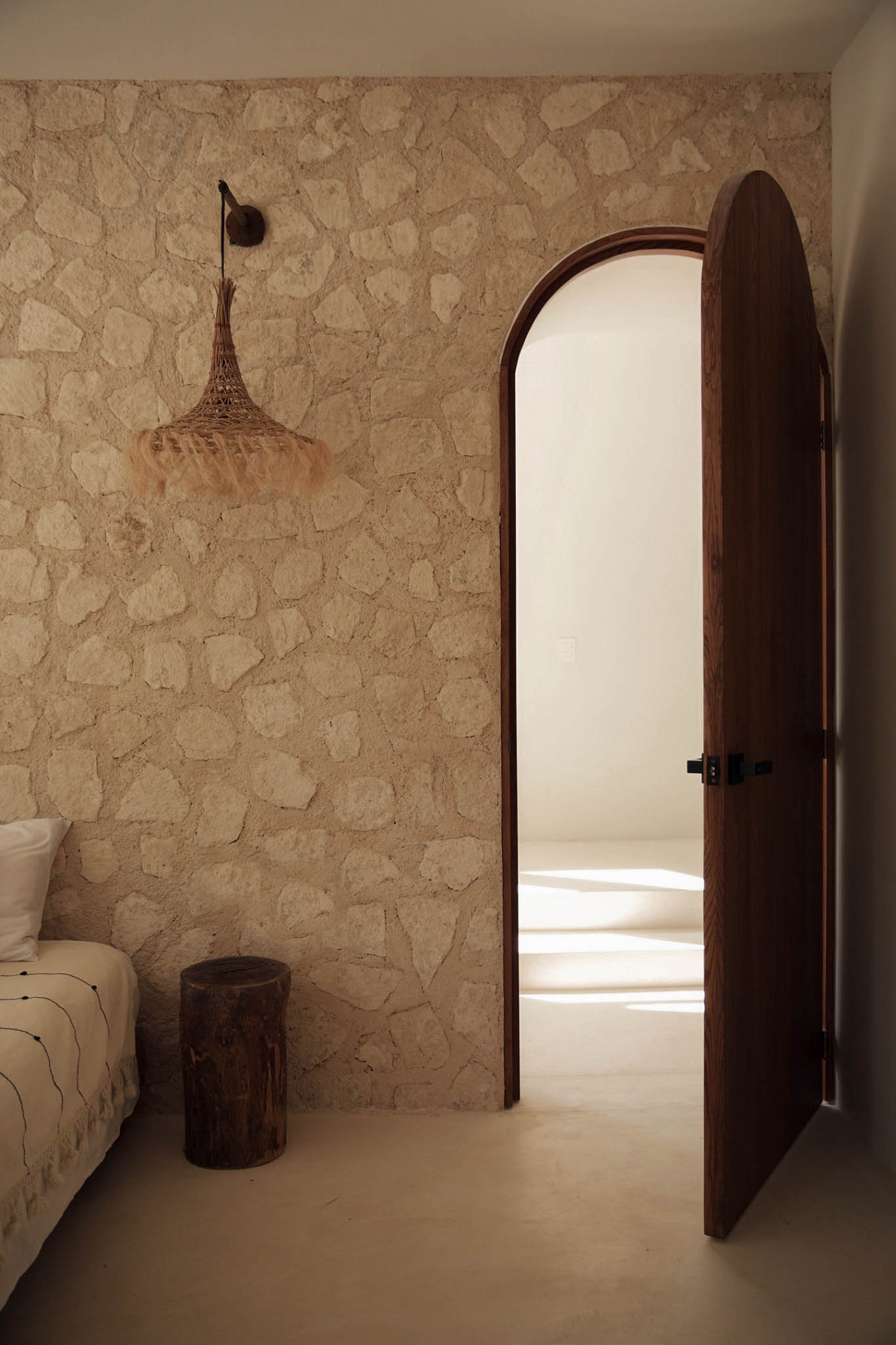
Can Ros – Ibiza, Spain.
The return of stone is not a romantic gesture, but a return to the essentials. At a time that demands constructive rigor, material roots, and enduring aesthetics, stone emerges as a solid, contemporary response. Its ability to unite tradition and modernity demonstrates that the future of architecture is written with both innovation and memory.
For this reason, at Cabana, we see stone as a bridge between what we were and what we aspire to build. We select materials with history, worked with modern criteria and technical sensitivity, so that each project exudes authenticity, permanence, and a beauty that only mineral matter can offer.