

Renovating a facade involves working on the exterior envelope to improve its condition, appearance, and, if applicable, its thermal performance. Before you begin, define the scope (aesthetic vs. technical), check whether you need a permit or a simplified procedure, and verify whether there are any urban planning or community restrictions. With a preliminary assessment and the right construction system, you can reduce risks and avoid penalties.
What does renovating a facade mean and why do it?
Renovating a facade is not just about “changing its appearance”: it can include repairs, replacements, insulation improvements, or restoration of elements. The most common reasons are:
- Protection against moisture, leaks, and environmental wear.
- Aesthetic improvement and updating of the exterior appearance.
- Thermal insulation and interior comfort (e.g., ETICS or ventilated facade).
- Energy efficiency by improving the building envelope.
- Conservation in old buildings (including ornamental elements).
What can be modified on the façade and what should be reviewed beforehand
A facade renovation may involve, among other things:
- Coverings (mortar, paint, ceramic, stone).
- Cracks and fissures (sealing, stitching, support repair).
- Exterior carpentry (windows, balconies) and finishing touches.
- External thermal insulation.
- Cleaning and restoration of ornaments or moldings.
- Decorative or structural elements (cornices, railings).
- Ventilated facade systems or other upgrade packages.
Minimum diagnosis before deciding on the system
Before deciding “how” to renovate, check “what” the facade needs:
- Condition of the substrate (adhesion, detachment, cavities).
- Presence of damp (source and path).
- Cracks: whether they are superficial or indicate movement.
- Unique features: joints, crowns, balconies, flashings, seams.
- Primary objective: aesthetics, durability, insulation, or a combination thereof.
Permits for renovating facades and how to know which one you need
Permission depends on the scope and the municipality. In practice, it usually falls into one of these categories:
- Minor works license: minor intervention, usually aesthetic, without changes to structure or volume.
- Major building permit: if there are significant modifications, structural alterations, changes in volume, or extensive work on common elements.
- Prior notification/affidavit: in some municipalities for less intensive projects.
Operating rule: if in doubt, consult urban planning before contracting and planning, because the final decision is made by the city council.
If it is a building: approval from the homeowners’ association
If the façade is a common element, the intervention must be approved by the board (except in very specific cases). As a practical guideline:
- Maintenance (cracks, waterproofing): usually requires a simple majority agreement.
- Aesthetic improvement: may require reinforced majorities (often 3/5, depending on the type of action and statutes).
If you say “it depends,” it depends on the type of work (maintenance vs. improvement), whether it affects common elements, and what is established in the statutes and applicable regulations.
Regulations that usually come into play (without going into specific cases)
When renovating a facade, you must normally comply with:
- Municipal urban planning regulations: aesthetics, colors, materials, alignments.
- CTE: if the intervention affects the structure or the thermal envelope.
- LOE: technical responsibilities and minimum standards.
- Heritage protection: if the building is listed or located in a protected area.
- Regional urban planning regulations: depending on the territory.
Standard documentation for processing licenses or permits
The usual requirements (adjustable depending on the municipality and type of work):
- Official request from the city council.
- Technical report (current status and planned actions).
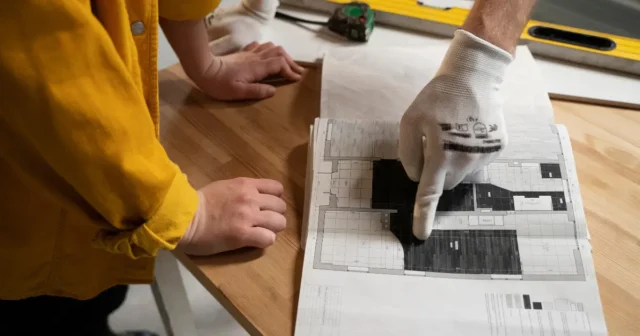
- Facade plans (elevations, sections, and details).
- Detailed budget.
- Technical project approved when required (major work).
- Certificates or studies (state tests, stability tests, etc., if applicable).
- Document of ownership/community authorization.
- Payment of fees and, if applicable, deposit.
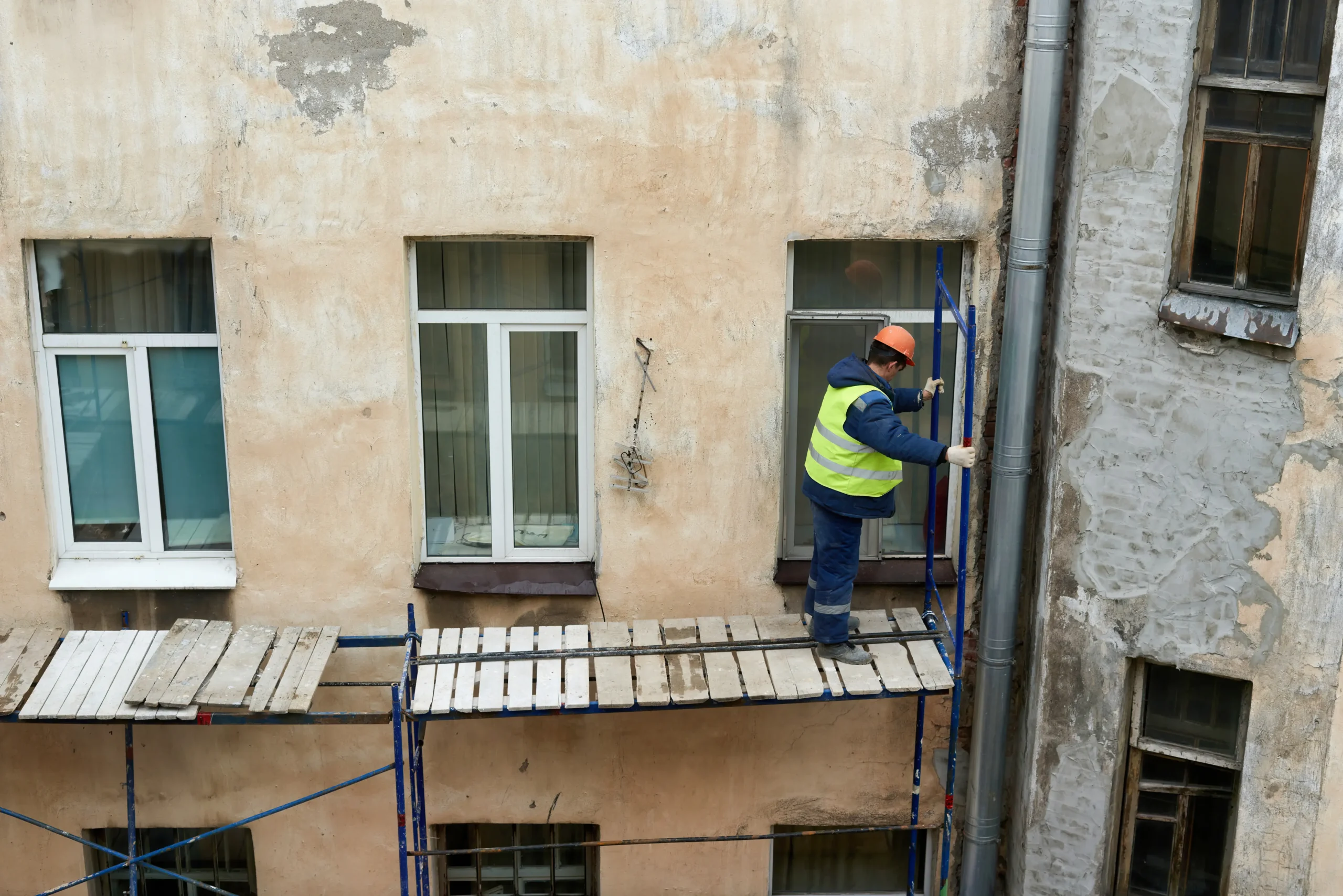
- If there is a public thoroughfare: occupancy permit (scaffolding, containers).
Techniques and systems for renovating facades: which one fits your objective?
The choice depends on the condition of the substrate, the thermal objective, and the budget. These are the most common systems:
Ventilated facade
- What it is: coating separated from the substrate by an air gap.
- When it usually fits: when you are looking for an outer “skin” solution with thermal improvement and good moisture management.
- Critical points: anchors, joints, finishes, and compatibility with existing supports.
ETICS (External Thermal Insulation Composite System)
- What it is: continuous exterior insulation + protective finish.
- When it usually fits: when the primary objective is to improve the thermal envelope with a continuous solution.
- Critical points: substrate preparation, fixing, mesh, and details in openings and copings.
Single-layer plaster and other coatings
- What it is: finishing mortar on existing facade (with variations).
- When it usually fits: renovations where the support is reasonable and you are looking to renew the finish.
- Critical points: compatibility, adhesion, cracking, and joints.
Specific rehabilitation
- What it is: repairing specific areas (cracks, ornaments, detachments) without intervening on the entire facade.
- When it usually fits: when the problem is localized or the budget requires prioritization.
- Critical points: do not “cover up symptoms”; if the source is moisture or movement, the cause must be addressed.
Quick table: choose system according to criteria
| Criterion | Best regular fit | What to check beforehand |
|---|---|---|
| Aesthetic priority with limited construction | Coating / single layer | Adherence and previous pathologies |
| Install thermal insulation | SATE or ventilated | Thermal bridges and details in openings |
| Recurring moisture | Ventilated or vapor-managed solution | Source of moisture and finishing touches |
| Old building with ornaments | Rehabilitation/restoration + compatible solution | State of support and heritage protection |
| Action by area | Specific rehabilitation | Let it not be a systemic problem. |
Steps to carry out the facade renovation (from start to finish)
- Inspection and diagnosis of the condition of the facade.
- Define scope and objectives (aesthetics, repair, insulation, mixed).
- Decide on the construction system and key details (joints and finishes).
- Project/technical report as required.
- Municipal processing and, if applicable, community approval.
- Hire a specialized company and define safety/auxiliary measures.
- Execution with technical supervision.
- Quality control (support, fastenings, finishes, specific points).
- Completion of work and final documentation (final certificate if applicable).
- Municipal inspection, if applicable.
What happens if I renovate the facade without permission?
Typical risks of executing without the correct procedure:
- Fines for unauthorized construction work.
- Work stoppage.
- Obligation to revert to the previous state (at a cost).
- Problems with insurance, sales, or appraisals.
- Conflicts with the community if it is a building.
Common mistakes that complicate execution
- Starting with the finish without diagnosis (e.g., painting without resolving moisture issues).
- Do not finalize the permission/license criteria before hiring and planning.
- Do not detail joints and finishes (gaps, coping, balconies), where many faults arise.
- Choose a system based on “trends” rather than compatibility with support and objectives.
- Lack of coordination with the community (if applicable) and changes in scope midway through the process.
Practical tips for architecture studios
- Support the proposal with images/visualizations to facilitate agreements.
- Coordinate with urban planning from the outset to avoid rework.
- Includes permit management as part of the scope of service.
- Provide clear and complete documentation, in line with local regulations.
- Communicate realistic deadlines (times can vary greatly).
- If there is an option for grants/subsidies, treat it as a separate block of the project (requirements, documentation, and compatibility), without promising availability.
A facade may need renovation when it shows signs of deterioration, insulation problems, structural damage, or when you want to improve the building’s appearance. Yes. In most cases, it is necessary to apply for a building permit, especially if the work alters the exterior appearance of the building. The cost depends on the size of the building, the type of work involved, the materials used, and the current condition of the facade. Normally, an architect is responsible for drafting the technical project, managing licenses, and supervising the execution of the work.Frequently Asked Questions
When is it necessary to renovate a facade?
Is a permit required to renovate a facade?
How much does it cost to renovate a facade?
How much does it cost to renovate a facade?