


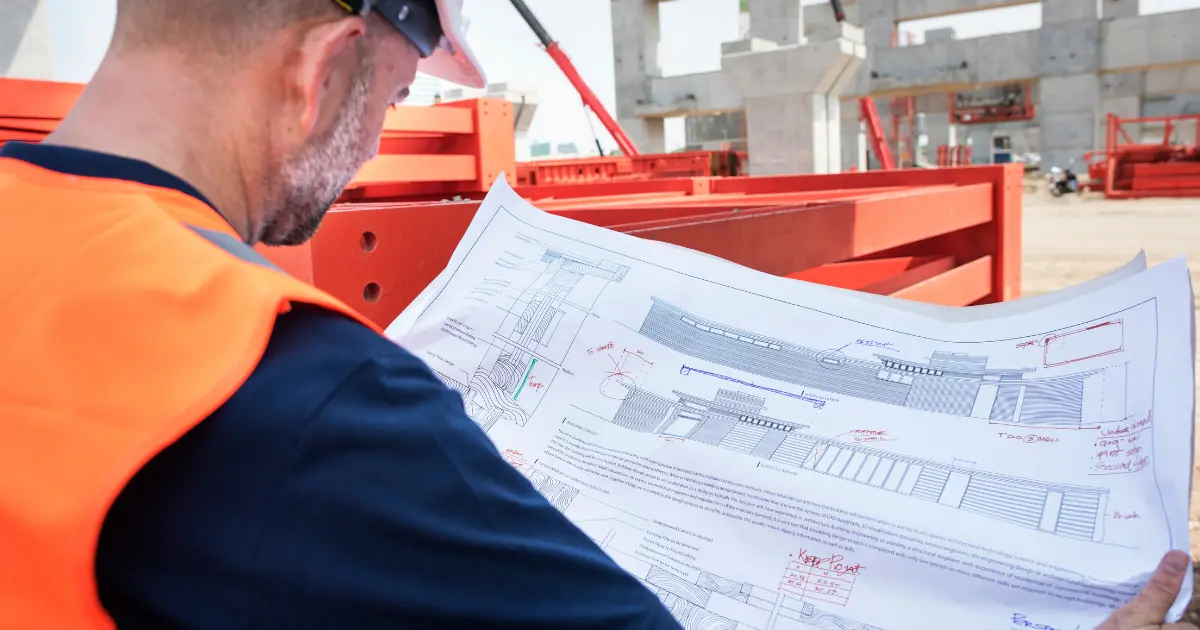
The dirección facultativa (site supervision team) is the technical team appointed by the developer to direct the works and supervise their execution: the works director (director de obra), the construction execution director (director de la ejecución de la obra) and, for health and safety, the health and safety coordinator. It does not build or hire trades: it checks that what is executed matches the project, the permit and the regulations, and certifies it with its signature.
What the dirección facultativa is according to the LOE
Law 38/1999 on Building Regulation (Ley de Ordenación de la Edificación, LOE) does not devote a specific article to it. It names it when regulating the works director (Art. 12) and the construction execution director (Art. 13), of whom it says that they act “as part of the dirección facultativa”.
The express definition is found in Royal Decree 1627/1997 on health and safety on construction sites: the competent technician or technicians appointed by the developer, responsible for directing and supervising the execution of the works. The same regulation includes within it the health and safety coordinator during execution. It is therefore hired by the developer, not by the contractor.
Who makes up the dirección facultativa and what qualifications are required
The qualification depends on the main use of the building, which Art. 2.1 of the LOE arranges in three groups: a) administrative, healthcare, religious, residential, educational and cultural; b) uses linked to engineering, such as industrial or agricultural; c) all others.
| Role | Usual qualification | Main function | What they sign |
|---|---|---|---|
| Works director (Art. 12 LOE) | Architect in group a); engineer, technical engineer or architect in group b); architect, technical architect, engineer or technical engineer in group c) | Directs the works in their technical, aesthetic, planning and environmental aspects | Commencement certificate and final works certificate |
| Construction execution director (Art. 13 LOE) | Technical architect (arquitecto técnico) in group a) and in group b) works directed by architects; in all other cases, any of the four technical qualifications | Directs the physical execution and controls the quality of what is built | Commencement certificate, payment certificates and final works certificate |
| Health and safety coordinator (RD 1627/1997) | Architect, technical architect, engineer or technical engineer (fourth additional provision of the LOE) | Coordinates risk prevention between companies and self-employed workers | Approval of the health and safety plan |
| Technicians for partial projects (Art. 12.2 LOE) | Whichever corresponds to their speciality | Direct the works of their partial project under the coordination of the works director | Whatever relates to their part of the works |
In a house or an office building, both in group a), the works director is an architect and the construction execution director is a technical architect.
Functions of each role
- Works director: verifies the setting out and the suitability of the foundations and structure for the ground, resolves contingencies and drafts the project modifications the works require, at the developer’s request or with their consent.
- Construction execution director: verifies the receipt of products, orders tests and trials and checks setting out, materials and the correct execution of construction elements and services.
- Health and safety coordinator: approves each contractor’s health and safety plan, organises preventive coordination and controls access to the site.
The developer must appoint a coordinator when more than one company, one company and self-employed workers, or several self-employed workers take part in the execution. If it is not compulsory, the plan is approved by the dirección facultativa.
Documents it signs
- Setting-out or commencement certificate: signed by the two directors and the contractor, it fixes the start date. It is not the same as the order to commence works.
- Libro de Órdenes y Asistencias (site instructions book): regulated by Decree 462/1971. The directors record their instructions in it.
- Interim payment certificates and final account: prepared by the construction execution director and endorsed by the works director. They are the basis for each payment to the contractor.
- Final works certificate: the construction execution director certifies having directed the physical execution and controlled the construction; the works director, that the building has been built under their direction and in accordance with the project covered by the permit.
- As-built documentation: prepared by the works director and incorporated into the Libro del Edificio (Building Logbook).
Differences from the contractor, the site manager and the project manager
| Role | Who appoints them | What they do | Regulation |
|---|---|---|---|
| Dirección facultativa | The developer | Directs the works, supervises their execution and certifies the result | Arts. 12 and 13 of the LOE and RD 1627/1997 |
| Contractor | The developer, through the construction contract | Executes the works in accordance with the project and the instructions of the dirección facultativa | Art. 11 of the LOE |
| Site manager | The contractor | Acts as the contractor’s technical representative on site | Art. 11 of the LOE |
| Project manager | The developer | Manages deadlines, costs and procurement on behalf of the developer | Not among the parties listed in the LOE; governed by their contract |
The site manager takes orders from the dirección facultativa, but belongs to the construction company. The project manager represents the developer, but does not take on the functions of the supervision team or sign the final works certificate in that capacity.
When it is compulsory
It is compulsory for works that require a project, which Art. 2.2 of the LOE groups into three cases.
- New build: except for constructions of minor scale and technical simplicity, on a single storey and with no residential or public character.
- Existing buildings: total interventions, or partial ones that substantially alter the external composition, the massing or the structural system as a whole, or that change the characteristic use.
- Listed or protected buildings: total interventions and partial ones affecting the protected elements.
An interior refurbishment outside those cases does not require a dirección facultativa under the LOE, although the municipal by-laws may require a responsible technician. The start of the process is explained in how the construction of a building begins.
Liabilities and guarantee periods under the LOE
Art. 17 makes the building agents, including the directors, liable for material damage appearing in the building within three periods, counted from the acceptance of the works without reservations or from the remedying of those reservations.
| Type of damage | Period | Who is liable |
|---|---|---|
| Defects in foundations, supports, beams, floor slabs, load-bearing walls or other structural elements that compromise strength and stability | 10 years | The agents who took part |
| Defects in construction elements or services that fail to meet habitability requirements | 3 years | The agents who took part |
| Execution defects in finishing elements | 1 year | The contractor |
| Action to claim for such damage (Art. 18) | Time-barred 2 years after the damage occurs | The agent or agents responsible |
Liability is personal and individual, and becomes joint and several when the cause of the damage or the degree of involvement of each agent cannot be determined. The directors who sign the final works certificate are liable for its truthfulness and accuracy.
How often it visits the site and what the developer should ask for
The LOE does not set a number of visits. The norm is a regular visit, often weekly, plus additional visits at the points that cannot be checked afterwards: setting out, foundations, structural reinforcement before concreting, waterproofing and services before they are covered up.
The developer should agree four points in the commission: a written schedule of visits, minutes of each site meeting, payment certificates with detailed measurements before each payment, and modifications priced and accepted before they are carried out. Lack of technical oversight is among the common mistakes when building a house.
Why it is better for the designer to direct the works
The LOE allows design and direction to fall to different technicians, with one consequence: whoever agrees to direct works whose project they did not prepare assumes the liabilities arising from its omissions, deficiencies or imperfections, without prejudice to later claiming against the designer.
The author of the project knows every decision and resolves site queries sooner.
The dirección facultativa in Cabana’s projects
Cabana is an architecture studio in Madrid that takes on the direction of the works for the projects it designs, in detached housing, full refurbishment and corporate architecture. The same team that designs follows the execution and hands the final documentation over to the developer.
In summary
The dirección facultativa is the technical team appointed by the developer to direct and supervise the works: works director, construction execution director and health and safety coordinator. The LOE requires it for works that need a project and assigns it the signing of the commencement certificate, the payment certificates and the final works certificate.
It is independent of the contractor and their site manager, and a project manager is no substitute for it. It is liable for damage to the building for ten or three years depending on its nature, so it is in the developer’s interest to agree the schedule of visits in writing.
Frequently Asked Questions
Is works direction (dirección de obra) the same as dirección facultativa?
No. Works direction is the function of the works director, one of the members. The dirección facultativa is the whole team, which also includes the construction execution director and the health and safety coordinator.
Who pays the dirección facultativa?
The developer, through a fee agreement separate from the contract with the construction company. The fact that these technicians do not depend financially on whoever carries out the works is what allows them to reject badly executed items or refuse to endorse a payment certificate.
Is a dirección facultativa needed to refurbish a flat?
It depends on the scope. If the refurbishment affects the structural system, changes the use or alters the configuration of the building, it requires a project and a dirección facultativa. If it is limited to finishes, or to layout changes that do not affect the structure or services, the LOE does not require it, although the council may ask for a technician depending on the type of works.
Can the dirección facultativa halt the works?
On safety grounds, yes. Royal Decree 1627/1997 allows the coordinator or any other member of the dirección facultativa to halt a task or the entire works in the event of a serious and imminent risk, recording it in the incident book.
Can the dirección facultativa be changed once the works have started?
Yes. It is advisable to document the state of the works at the time of the handover and to notify the professional body and the council of the change, following each one’s procedure. The incoming technician takes over direction from that point.