


Coliving is a shared housing model in which several people live in the same building, with private spaces and communal areas designed for living together, working and socialising. It works by combining flexible accommodation, included services and a more community-oriented experience than traditional renting.
What exactly is coliving
Coliving is a residential formula designed for sharing a home in a more organised, flexible way that is adapted to today’s lifestyles. Unlike a conventional flat-share, coliving is usually designed from the outset to balance privacy, community and comfort.
In this model, each resident normally has a private space, which may be a bedroom or a small individual unit, while sharing areas such as the kitchen, living room, dining room, laundry, terrace or work areas with the other residents. The proposition is not only about accommodation, but also about the experience of living together.
That is why coliving is understood as a housing solution that combines a home, services and community.
How coliving works
Coliving works through a structure in which the resident pays a fee for the use of their private space and for access to a range of services and communal areas. In many cases, that fee includes utilities, an internet connection, cleaning of the shared areas and other services that simplify daily life.
Management is usually more organised than in a traditional rental. There may be an operating company or a centralised administration model that regulates house rules, maintenance, contracts and the use of facilities. This makes for a more stable, less improvised experience.
In addition, the way coliving works is designed to offer flexibility, something particularly valued by people who move between cities, work remotely or are looking for medium-term stays.
How it differs from a flat-share
Although at first glance they may look alike, coliving and a flat-share are not exactly the same thing. In a traditional flat-share, several people rent a home and split the expenses, usually without any specific design or professional management geared towards living together.
Coliving, on the other hand, was born as a more structured concept. The space is usually designed for that use, the services are more integrated and the experience rests on a logic of community and flexibility. It is not just about sharing in order to save money, but about living in an environment prepared to combine privacy with shared life.
Main differences between coliving and a flat-share
Some common differences are:
- Coliving usually includes more services.
- Management is more professional.
- Communal spaces are designed with greater intent.
- Contracts tend to be more flexible.
- Living together is part of the value proposition.
These differences explain why coliving has established itself as a model in its own right.
What spaces a coliving usually includes
Coliving is characterised by a very specific spatial organisation. The key lies in combining sufficient private areas with communal zones that genuinely add value to the daily experience. The balance between the two is one of the most important factors in making the model work well.
Normally, each resident has a private bedroom and, in some cases, their own bathroom as well. Added to this are shared spaces where much of everyday life takes place. The quality of these areas has a strong influence on how the accommodation is perceived.
Typical spaces within a coliving
A coliving may include areas such as:
- Private bedrooms.
- Private or shared bathrooms.
- Communal kitchen.
- Living room or lounge area.
- Shared dining room.
- Laundry.
- Terraces or outdoor areas.
- Work or study spaces.
The specific configuration depends on the type of building and the user profile it is aimed at.
What services are usually offered
One of the elements that best defines coliving is the inclusion of services within the monthly fee. This simplifies day-to-day management and makes the experience more comfortable for those who do not want to deal with multiple contracts or organisational tasks.
Services may vary from project to project, but they are generally geared towards making everyday life easier and improving the residential experience. In many cases, this model is attractive precisely because it cuts down on paperwork and makes the monthly cost more predictable.
The most common services include an internet connection, utilities, cleaning of shared areas and maintenance. Some spaces also add activities, events or complementary services to strengthen the community.
What kind of people live in coliving
Coliving tends to attract people who value flexibility, mobility and the chance to live in a shared environment without giving up privacy altogether. It is a common model among young professionals, people relocating for work, postgraduate students, entrepreneurs and profiles linked to remote working.
It can also appeal to those arriving in a new city who are looking for a quick, functional housing solution with a certain social dimension. Rather than starting from scratch in a conventional home, coliving offers a ready-made environment and a potential community to connect with.
This does not mean that all residents are looking for the same thing. Some prioritise savings, others comfort, others socialising and others contractual flexibility.
Why coliving has grown in popularity
The growth of coliving is linked to several social and labour-market changes. More and more people are looking for flexible, well-located housing solutions adapted to lifestyles that are less settled than they were a few years ago. Remote working, professional mobility and the difficulty of accessing certain types of housing have driven this kind of proposition.
In addition, many people value not only the space where they live, but also the experience that place offers them. In that context, coliving responds to a twofold need: solving accommodation and, at the same time, creating a way of living together that is more in tune with current habits.
Advantages of coliving
Coliving offers several advantages over other forms of accommodation, especially for those who prioritise comfort, simplicity and flexibility. One of its main strengths is that it reduces the complexity of traditional renting by integrating services, management and communal spaces within a single proposition.
It can also make it easier to build social ties, which matters for people who move on their own or spend temporary periods in a city. Added to this is the possibility of accessing locations and services that would be less affordable on an individual basis.
Most common benefits of coliving
Its main advantages usually include:
- Greater flexibility in the length of stay.
- Services included in a single fee.
- Less administrative hassle.
- The chance to socialise.
- More complete communal spaces.
- A good fit with mobile lifestyles.
These advantages explain why coliving is seen as a practical, contemporary alternative.
Possible limits or challenges of the model
Although coliving has clear advantages, it does not always suit every person or every stage of life. Sharing spaces means accepting certain rules, adapting to shared dynamics and living alongside a diverse range of people. For some, this may be less comfortable than a fully independent home.
There can also be differences between projects. Not all colivings offer the same level of privacy, design, services or management. As a result, the experience can vary considerably depending on how the space is conceived and what kind of community forms within it.
Furthermore, the balance between shared living and privacy is a delicate one. If that point is not resolved well, the model can lose part of its appeal.
The role of design in a coliving space
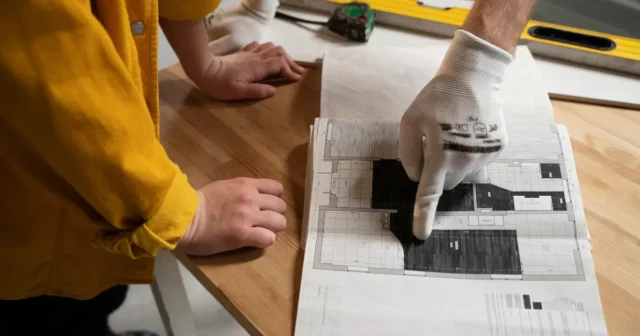
Design is fundamental for coliving to work properly. It is not enough to put together some bedrooms and a shared kitchen. The space must be planned to facilitate living together, organise circulation routes, avoid conflicts of use and offer a comfortable experience in both the private and the shared areas.
A poor layout can lead to noise, a lack of privacy or a feeling of overcrowding. A well-resolved project, on the other hand, improves communal life and adds value to the model. That is why coliving design usually pays close attention to functionality, storage, flexibility and the identity of the space.
Defining those criteria together with an interior design studio in Madrid at the preliminary design stage avoids corrections once the communal areas have already been built.
Coliving as a contemporary housing alternative
More than a passing trend, coliving has established itself as a housing alternative linked to new ways of living and working. Its proposition combines accommodation, services and community in a format that responds to a more flexible, less traditional demand.
It does not replace every form of housing, but it does meet a specific need: offering a practical residential solution for people who value mobility, simplicity and a shared experience. Its growth also reflects a shift in how the home is understood, especially in more dynamic urban and professional contexts.
In summary: what coliving is and how it works
Coliving is a shared housing model that combines private spaces, communal areas and integrated services within a more flexible, community-oriented residential experience. It works through a fee that usually covers accommodation and a range of services, with more structured management than that of a conventional flat-share.
Its appeal lies in offering comfort, simplifying paperwork and adapting well to people with mobile or collaborative lifestyles. That is why coliving has become an increasingly relevant option among the new ways of living and sharing space.
Although both models offer flexible accommodation, coliving places greater emphasis on communal living and the spaces shared between residents. Flex living, on the other hand, usually focuses on fully equipped private homes with integrated services, where the community dimension is not necessarily the main element. The design of a coliving usually seeks a balance between privacy and shared life. This means combining well-resolved individual bedrooms with spacious, functional communal areas such as kitchens, work areas, social spaces or terraces. The layout must facilitate living together without compromising personal comfort. Coliving can offer greater flexibility in the length of stay, less administrative paperwork and services integrated into a single fee. It also encourages social interaction between residents and can be especially useful for people relocating to a new city.Frequently Asked Questions
How does coliving differ from flex living?
How is a coliving space designed architecturally?
What advantages does coliving offer over traditional renting?