
What types of shopping centers are there?
Shopping centers vary depending on their size, location, offerings, and target audience. Understanding these differences helps us better grasp how these spaces are planned, what functions they serve, and why each format meets different consumer, leisure, and service needs within the urban and commercial environment.
What Are the Different Types of Shopping Centers?
When we talk about types of shopping centers, we are referring to the different categories into which a shopping center can be classified based on its structure, size, retail mix, and catchment area. Not all of them operate the same way, nor are they designed for the same type of visitor.
Some are geared toward quick, local shopping, while others aim to become destinations for leisure, dining, and spending time. There are also more specialized formats—open, enclosed, or integrated into specific urban areas.
Understanding these types allows us to better analyze how the retail sector is evolving and what characteristics define each model.
Regional shopping centers
One of the best-known types of shopping centers is the regional shopping center. It is a large-scale format that attracts visitors from a wide area and offers a wide variety of stores, restaurants, entertainment, and services.
They typically include major brands, supermarkets or hypermarkets, movie theaters, dining areas, and common spaces designed to encourage visitors to stay longer. Their goal is to become a landmark within a city or nearby region.
This type of shopping center stands out for its ability to bring together a wide variety of offerings in one place, making it a very competitive option for shopping and entertainment.
Community or neighborhood shopping centers
Among the different types of shopping centers are community or neighborhood centers. These are smaller in scale and are designed to meet the everyday needs of a specific area, typically nearby neighborhoods or residential areas.
Their offerings typically focus on everyday services: grocery stores, pharmacies, basic fashion, fast food, small shops, and personal services. They do not rely so much on attracting visitors from far away, but rather on generating repeat business among those who live or work in the area.
What characterizes a neighborhood shopping center
Among its most common features are:
Location near residential areas.
An offer geared toward frequent shoppers.
Smaller than a regional center.
Quick and convenient access.
High value for daily consumption.
This format is particularly useful when convenience takes precedence over the experience of a prolonged stay.
Superregional shopping centers
Superregional shopping centers are among the largest types of shopping centers. They typically have a large floor area, a very wide range of offerings, and the ability to attract visitors even from other cities. In many cases, they serve as all-day shopping and leisure destinations.
This format features anchor stores, a strong selection of restaurants, entertainment areas, events, and often more striking or experiential architecture. It goes beyond simply meeting everyday shopping needs; rather, it aims to offer a complete experience.
Given their size and complexity, these centers require very careful planning in terms of circulation, access points, retail mix, and positioning.
Open-air shopping centers
Another major type of shopping center is the open-air shopping center. Unlike the traditional enclosed model, this format integrates various retail businesses into an urban or semi-urban setting—typically at street level—but under a unified strategy for branding, revitalization, and customer experience.
Although there isn't always a single building, there is a coordinated business organization. This makes it possible to develop the space's identity, signage, joint promotion, and relationship with the surrounding area.
Open-air shopping centers often add value to established urban areas because they combine commercial activity with neighborhood life, pedestrian traffic, and greater integration with public spaces.
Are you developing a shopping center?
We work with you to design and develop commercial spaces tailored to each business model.
Closed shopping centers
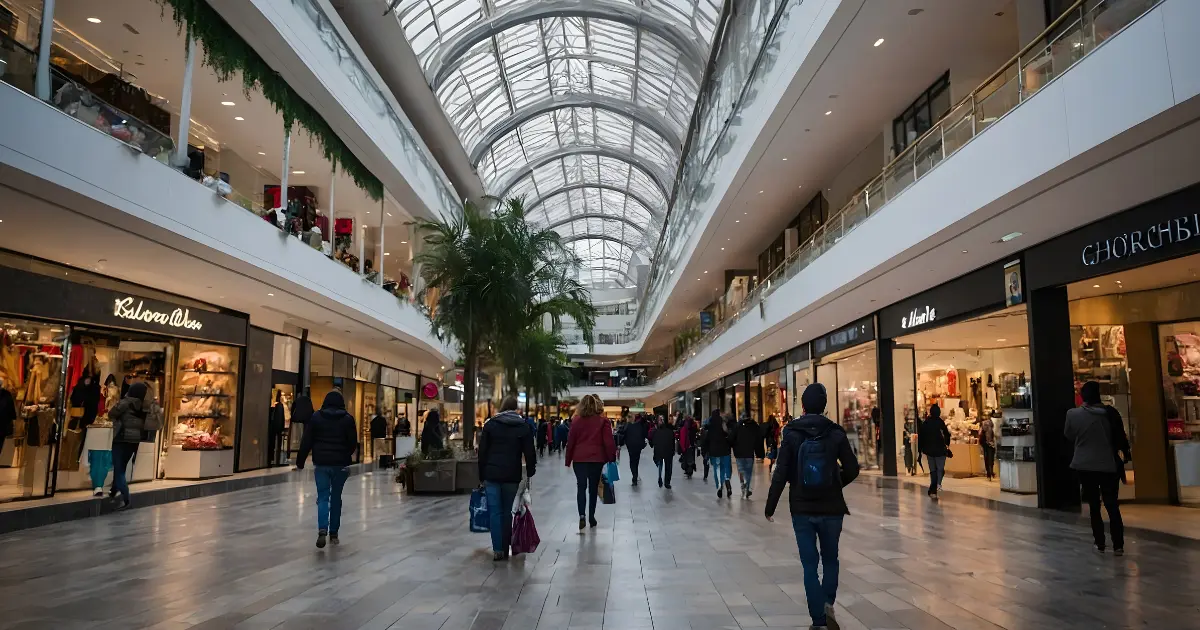
The enclosed model remains one of the most common types of shopping centers. It is characterized by having all the stores located within a single air-conditioned building or complex, with controlled access and shared common areas.
This format provides a more consistent and predictable experience for visitors. It also makes it easier to manage environmental comfort, safety, wayfinding, and the organization of internal traffic flows. In many cities, it has been the dominant model for years due to its ability to concentrate amenities and create an experience that is sheltered from the elements.
Common Advantages of the Closed Format
Among its most common benefits are:
Greater control over the indoor environment.
More clearly defined sales routes.
A consistent visitor experience.
Better integration of leisure and dining.
Centralized management of shared services.
This format remains highly competitive when the overall user experience is a priority.
Themed or specialty shopping centers
Not all types of shopping centers aim for a general-interest offering. Some focus on a specific category or a specialized concept. This is the case with centers geared toward home decor, outlet fashion, technology, home goods, luxury, or even specific family experiences.
These centers stand out because they attract a customer base with more specific interests and tend to develop a more clearly defined concept in terms of branding, tenant mix, and customer experience. Rather than trying to cover everything, they focus on positioning themselves more effectively within a specific segment.
This format can work very well when there is clear demand or when standing out from other institutions is key.
En estos casos, el diseño de locales comerciales debe reforzar el concepto del centro y no limitarse a replicar la imagen estándar de cada marca.
Outlet malls
Outlet malls are also a type of shopping center, although they have their own unique characteristics. They are typically located in outlying areas and consist of large retail spaces with direct access from outdoor parking lots.
They typically house retailers specializing in home goods, DIY, electronics, sports, automotive, and food. Unlike traditional shopping malls, the experience here tends to be more functional than experiential. Visitors come with a more direct intention to make a purchase and place less emphasis on strolling through the mall.
This model stands out for its practicality, easy vehicle access, and ability to accommodate large-format spaces.
Outlets and discount malls
Outlet malls are another of the most recognizable types of shopping centers. Their business model revolves around selling discounted products, often from previous seasons or as part of specific clearance sales.
These spaces tend to attract a price-sensitive audience and can position themselves as destinations for impulse shopping. In many cases, they combine fashion, accessories, sports, and dining, seeking to strike a balance between savings and the shopping experience.
In addition to their commercial concept, the design of these centers typically places a strong emphasis on circulation and dwell time to encourage visitors to stop by multiple stores.
Urban shopping centers
Among the various types of shopping centers, urban centers play a prominent role due to their integration with the city. They are located in downtown or established areas and tend to adapt to environments with high pedestrian traffic, space constraints, and a strong connection to the architectural context.
Unlike other types of out-of-town shopping centers, these centers rely heavily on urban foot traffic, public transportation, and their connection to daily city life. They typically combine retail, services, and dining, and in many cases prioritize accessibility and convenience over large-scale development.
This type of shopping center is particularly important in cities where land is limited and pedestrian traffic plays a significant role.
Mixed-use or combined-use shopping centers
Mixed-use developments are one of the types of shopping centers that are currently generating the most interest. These are complexes that combine commercial use with other uses such as offices, hotels, housing, restaurants, entertainment, and service spaces.
Their main advantage is that they generate more consistent foot traffic throughout the day and diversify the user profile. They do not rely solely on occasional shoppers, but also on residents, workers, and visitors to other activities integrated into the same area.
Why Blended Models Are Gaining Prominence
These formats tend to stand out for several reasons:
They make better use of the available land.
They create more daily momentum.
They enhance the complementarity of uses.
They improve the overall profitability.
They enhance the overall experience.
Its development typically requires a more strategic view of the space and very precise functional coordination.
| Type of shopping center | Standard size | Key Features | Target Audience | Usual location |
|---|---|---|---|---|
| Regional shopping center | Large | A wide variety of shops, entertainment, and dining options | Audience from various nearby areas | Cities or urban suburbs |
| Superregional shopping center | Very big | A wide range of retail options, anchor stores, entertainment, and events | Visitors from cities or large regions | Major metropolitan areas |
| Neighborhood shopping center | Small or medium | Essential Services and Everyday Shopping | Neighborhood residents | Residential Areas |
| Open-air shopping center | Variable | Street-Level Businesses with a Joint Strategy | Typical urban audience | Historic districts or shopping districts |
| Closed shopping center | Medium or large | Air-conditioned building with common areas | Shoppers and leisure visitors | Urban or suburban areas |
| Themed shopping center | Variable | Specialized offerings in a specific category | Audience with specific interests | Shopping or tourist areas |
| Outlet mall | Large | Large stores with direct access from the parking lot | Planned and Functional Purchases | Urban peripheries |
| Outlet | Medium or large | Discounted products or products from previous seasons | Price-sensitive consumers | Outlying or tourist areas |
| Urban shopping center | Small or medium | Integrated into the urban and pedestrian fabric | Downtown users | Downtown Areas |
| Mixed-use shopping center | Large | Combines retail with office space, leisure, or residential use | Various users | Large-scale urban developments |
How Shopping Malls Are Actually Classified
The classification of shopping centers is not based on a single criterion. In practice, these spaces can be grouped by size, location, catchment area, architectural structure, retail concept, or level of specialization.
For this reason, a single center may share characteristics of several categories. For example, it may be urban and enclosed, or mixed-use and regional. The important thing is to understand what function it serves, what audience it targets, and how it organizes its offerings to meet a specific demand.
This broader perspective allows us to analyze the shopping center not only as a collection of stores, but as a space designed to stimulate consumption, services, and experiences.
In summary: What types of shopping centers are there?
Types of shopping centers include regional, superregional, neighborhood, open-air, enclosed, themed, outlet, retail parks, urban centers, and mixed-use models. Each is based on a different set of criteria regarding size, location, use, and consumer behavior.
Understanding these types helps us better appreciate how these spaces are designed and why they do not all pursue the same objectives. Some prioritize convenience, others leisure, others specialization, and still others urban integration. In all cases, their structure reflects a specific business strategy.
Frequently Asked Questions
What role does architecture play in the design of a shopping mall?
Architecture defines visitor flow, the visibility of storefronts, and the overall experience of the space. Elements such as the layout of aisles, natural lighting, rest areas, and the relationship between retail and leisure areas directly influence visitor behavior within the center.
Why are shopping centers evolving toward mixed-use models?
Many shopping centers incorporate mixed-use elements such as offices, residential units, hotels, and entertainment spaces to generate consistent activity throughout the day. This combination improves the asset’s profitability, diversifies the visitor profile, and creates more dynamic and sustainable urban environments.
What factors determine the type of shopping center that is developed?
The type of shopping center depends on factors such as the size of the project, the catchment area, the location, the profile of the target audience, and the planned retail mix. Urban planning considerations, accessibility, nearby competition, and the predominant consumption pattern in the area also play a role.
We analyze and design retail spaces tailored to each business model
Author
Cabana Team
Author information